
Explore the functionality, applications, and advancements of Rotary Paddle Level Sensors in various industries.
Introduction to Rotary Paddle Level Sensors
Rotary Paddle Level Sensors are versatile and reliable devices utilized in a broad range of industries for material level detection. They serve a critical role in maintaining the efficiency and safety of various processes, such as manufacturing, agriculture, and bulk handling.
Working Principle
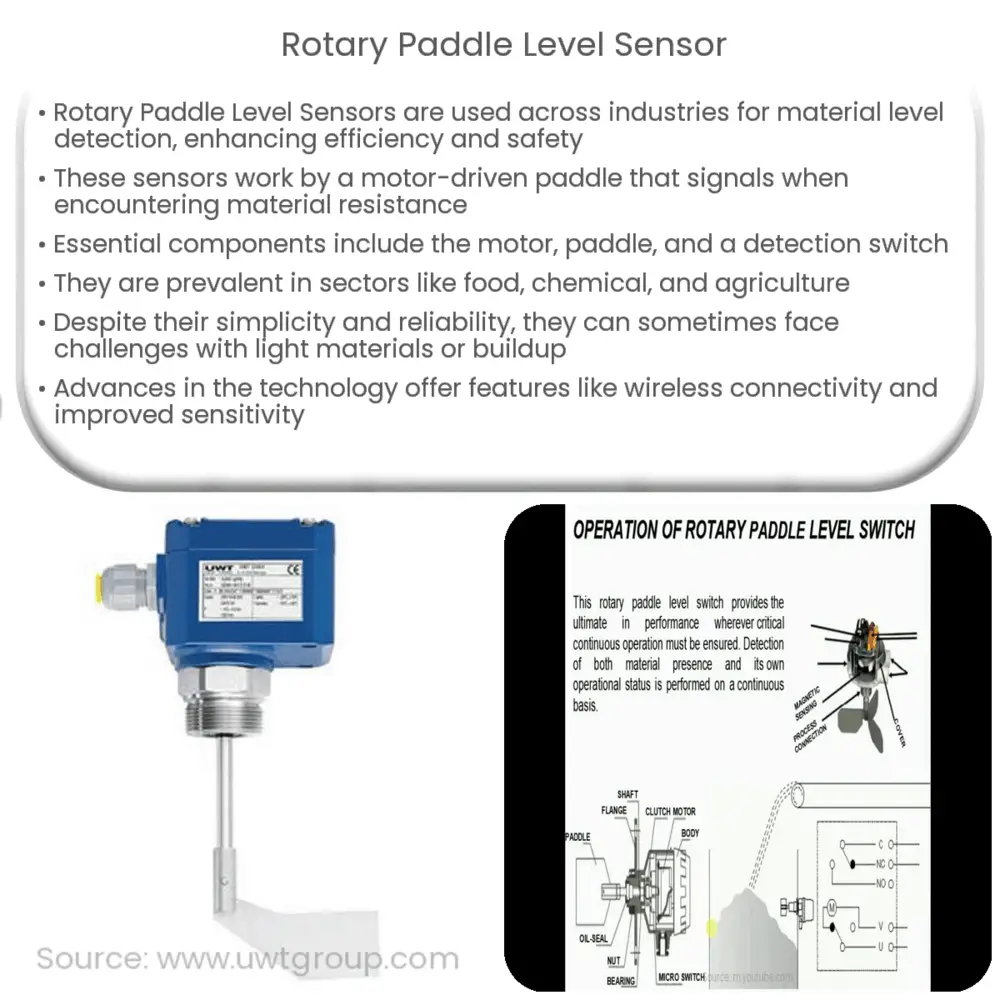
The operation of a Rotary Paddle Level Sensor is elegantly simple. It consists of a motor that drives a paddle which rotates freely in the absence of material. When the paddle encounters resistance due to the presence of material, the motor rotates with a reduced speed, activating a switch that signals the detection of the material.
Key Components
- Motor: The motor is an essential component that powers the rotation of the paddle. It is often designed to operate under low power conditions to ensure long-term reliability.
- Paddle: The paddle is a rotating element, usually made from durable materials like stainless steel or plastic, depending on the nature of the material to be detected.
- Switch: The switch is triggered when the paddle encounters resistance. It can be a simple mechanical switch or a more complex electronic circuitry.
Applications
Rotary Paddle Level Sensors find widespread use in industries that require material level detection in bins, tanks, silos, and hoppers. Some of the industries that use these sensors include:
- Food and Beverage Industry: Used in silos holding grains, cereals, and other bulk food items to prevent overfilling and ensure consistent production.
- Chemical Industry: They are used to detect the level of bulk chemicals and other substances in storage vessels, ensuring safe and efficient operations.
- Agriculture: These sensors are used in grain storage facilities to manage inventory and prevent spoilage.
Advantages and Limitations
One of the primary advantages of Rotary Paddle Level Sensors is their simplicity and reliability. They are mechanically robust and can operate in a wide range of temperatures and pressures. However, they can sometimes struggle with very light, fluffy materials, or if the material is prone to buildup on the paddle.
Installation and Maintenance
Installation of Rotary Paddle Level Sensors is typically straightforward, often requiring a simple mounting point on the container’s side or top. They can be vertically or horizontally positioned depending on the specific requirement. Regular maintenance is important to ensure the longevity of the sensor. This may include checking for wear and tear on the paddle, ensuring the motor is functioning correctly, and removing any material buildup on the paddle.
Varieties and Options
Several varieties of Rotary Paddle Level Sensors are available, catering to different needs and specifications. These differences can include the paddle size, motor power, and even the materials used for the paddle and casing. Some models come with additional features such as adjustable sensitivity settings, allowing for greater customization to suit specific applications.
Recent Advancements
As with many areas of technology, there have been recent advancements in the design and function of Rotary Paddle Level Sensors. Some models now feature wireless connectivity, providing remote monitoring capabilities. Others have improved sensitivity and the ability to automatically compensate for material buildup on the paddle, reducing false alarms and improving reliability.
Conclusion
In conclusion, Rotary Paddle Level Sensors are simple yet effective tools in managing material levels in various industries. Their robust design and versatility make them a preferred choice for material detection in bins, silos, tanks, and hoppers. Despite certain limitations, their reliability and cost-effectiveness continue to drive their widespread use. With ongoing advancements, these sensors are set to become even more efficient and user-friendly, ensuring they remain a staple in industries requiring bulk material handling.



