
Pyroelectric infrared sensors detect human & animal presence by sensing emitted infrared radiation, offering low power consumption & high sensitivity.
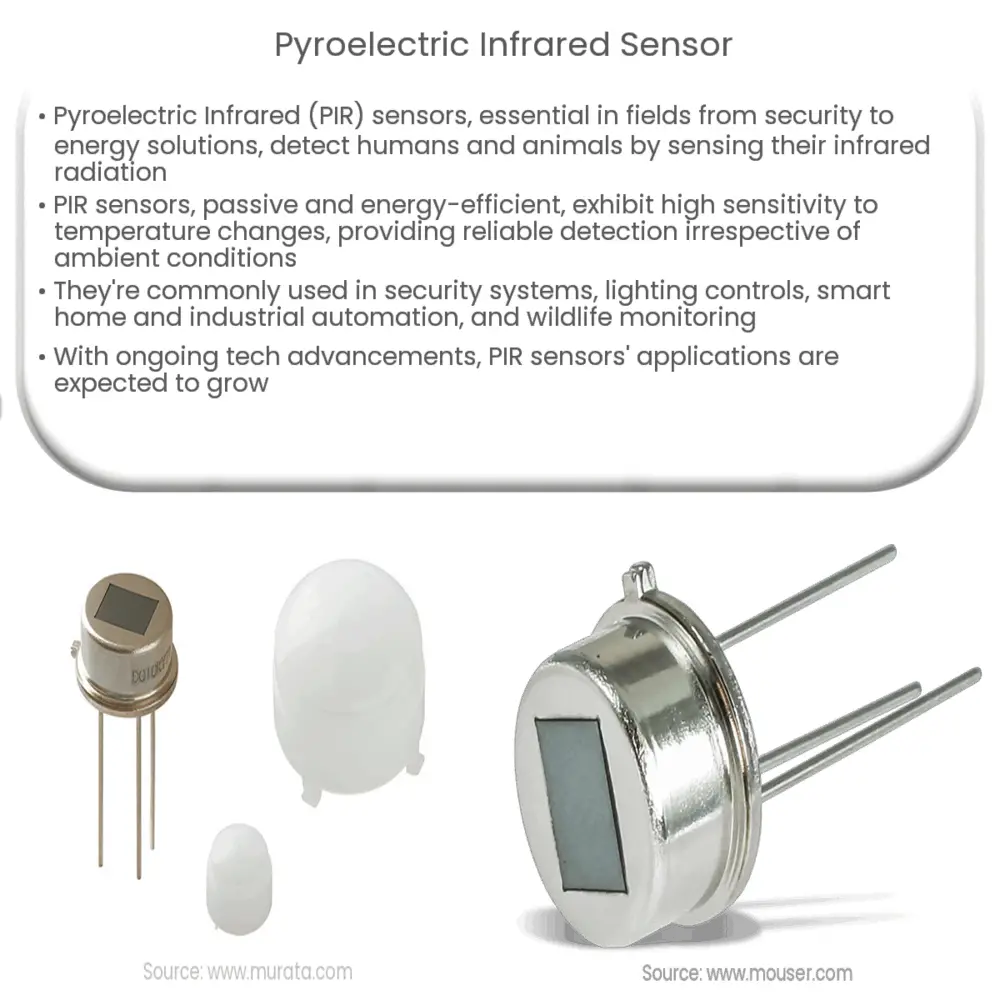
Pyroelectric Infrared Sensors: Principles and Applications
Introduction
Pyroelectric infrared (PIR) sensors have become an essential component in various applications, ranging from security systems to energy-saving solutions. These sensors are able to detect the presence of humans and animals by sensing the infrared radiation emitted by their bodies. In this article, we will explore the fundamental principles behind PIR sensors and delve into their common applications.
Principles of Pyroelectric Infrared Sensors
PIR sensors are a type of passive infrared sensors, which means they do not emit any energy but rather detect the infrared radiation naturally emitted by objects in their field of view. The core component of a PIR sensor is the pyroelectric element, a crystalline material that exhibits the pyroelectric effect. When exposed to changes in temperature, the pyroelectric material generates an electric charge proportional to the temperature difference.
Infrared radiation emitted by humans and animals is absorbed by the pyroelectric material, causing a change in temperature and subsequently generating an electric charge. This charge is then amplified and processed by the sensor’s circuitry to produce a measurable output signal, which can be used to trigger various actions such as activating an alarm or turning on lights.
PIR sensors are typically designed with one or more Fresnel lenses, which help to focus the incoming infrared radiation onto the pyroelectric element. These lenses also determine the sensor’s field of view and detection range, with wider lenses providing a broader coverage area.
Advantages of Pyroelectric Infrared Sensors
PIR sensors offer several advantages that make them an ideal choice for a wide range of applications:
- Low power consumption: Since PIR sensors are passive and only detect emitted infrared radiation, they consume very little power. This makes them suitable for battery-powered and energy-efficient devices.
- High sensitivity: PIR sensors are highly sensitive to infrared radiation, allowing them to effectively detect even the slightest temperature changes caused by the presence of humans or animals.
- Reliable and robust: PIR sensors are not affected by environmental factors such as ambient light or temperature, ensuring consistent performance in various conditions.
- Cost-effective: The manufacturing process of PIR sensors is relatively simple, which contributes to their affordability and widespread use in various applications.
Common Applications of Pyroelectric Infrared Sensors
Thanks to their unique characteristics, PIR sensors are employed in a diverse range of applications. Some of the most common uses include:
- Security systems: PIR sensors are widely used in motion detection systems, such as burglar alarms, to sense the presence of intruders. Their high sensitivity and reliability make them an ideal choice for both residential and commercial security applications.
- Lighting control: PIR sensors can be integrated with lighting systems to automatically turn lights on or off based on the presence of people in a room. This energy-saving feature is commonly used in public spaces, such as restrooms, hallways, and parking lots.
- Smart home automation: In home automation systems, PIR sensors can be used for various purposes, such as adjusting the thermostat based on occupancy or activating security cameras when motion is detected.
- Industrial automation: PIR sensors can be employed in industrial settings to monitor the presence of workers in hazardous areas and to control machinery based on human presence, ensuring enhanced safety and efficiency.
- Wildlife monitoring: Researchers and conservationists utilize PIR sensors to study animal behavior and population dynamics in their natural habitats. By detecting the presence of animals, these sensors can trigger cameras to capture images or videos for further analysis.
Conclusion
Pyroelectric infrared sensors are versatile and cost-effective devices that have found their way into a wide range of applications. Their ability to detect human and animal presence by sensing emitted infrared radiation, coupled with their low power consumption and high sensitivity, make them an ideal choice for various industries, from security to energy management. As technology continues to evolve, it is likely that the capabilities and applications of PIR sensors will only expand, further solidifying their position as a valuable tool in modern society.