
Explore the world of power meters, their types, benefits, and how to choose the right one for improving your cycling performance.
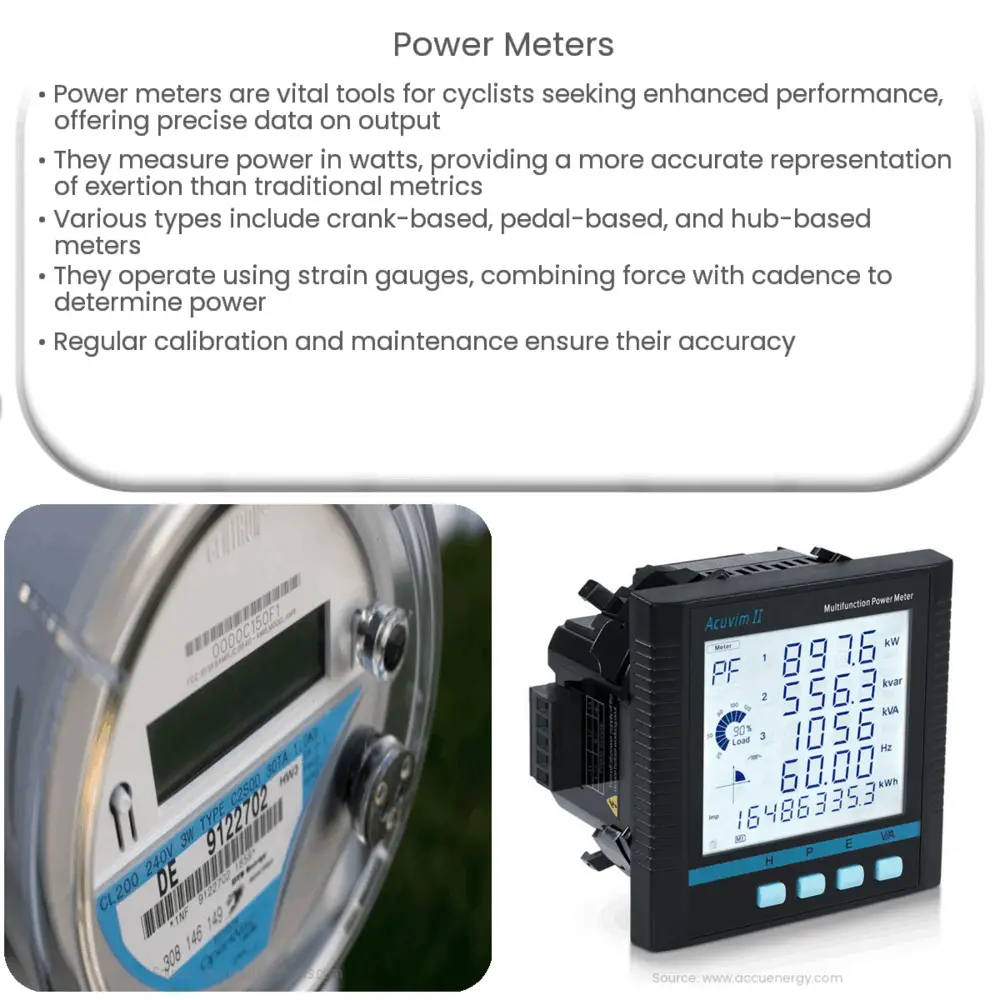
Understanding Power Meters
Power meters have become an essential tool for cyclists and athletes who are serious about improving their performance. They provide accurate and actionable data regarding an individual’s output, enabling users to train more effectively and efficiently. But what exactly are power meters, and how do they function? In this article, we will explore these aspects and more.
What Are Power Meters?
A power meter is a device that measures the amount of power that a cyclist produces when they pedal. Power is measured in watts, and the data provided by a power meter is a more precise indicator of physical exertion than traditional metrics such as heart rate or speed.
Types of Power Meters
- Crank-based Power Meters: These power meters are installed in the crank arm of the bike. They are popular due to their accuracy and consistency, though they are typically more expensive.
- Pedal-based Power Meters: These power meters are installed in the pedals of the bike. They are easy to switch between bikes, making them a favorite among cyclists with multiple bikes.
- Hub-based Power Meters: These are installed in the rear wheel hub. They are known for their accuracy, but the downside is they can only be used with the bike they are installed on.
How Power Meters Work
Power meters use strain gauges to measure the force (or torque) that the cyclist applies to the pedal, crank, or hub. This torque is then combined with cadence—the number of revolutions per minute (RPM)—to calculate power (watts). In essence, the equation is: Power (W) = Torque (Nm) x Cadence (RPM) / 60.
Power meters are exceptional tools for cyclists looking to improve their training. They can give you a clear and objective measure of your physical output, helping you to train smarter, not harder. Stay tuned for the second part of this article where we will delve deeper into the benefits and applications of power meters, as well as tips on choosing the right one for you.
Benefits and Applications of Power Meters
Power meters have a multitude of benefits and applications. Here are some key ones:
- Objective Measurement: Power meters provide an objective measure of effort, unaffected by external factors like wind, temperature, or terrain. This is invaluable for athletes looking to gauge their true performance.
- Personalized Training: By quantifying power output, athletes can tailor their training to target specific areas of improvement, making training sessions more effective.
- Pacing: Power meters allow athletes to pace themselves effectively during races or long rides, preventing premature exhaustion.
Choosing the Right Power Meter
When choosing a power meter, several factors should be considered. Firstly, compatibility with your bike is crucial. Secondly, the type of cycling you do may influence your choice. For example, mountain bikers may prefer crank-based meters for their durability, while road cyclists may lean towards pedal-based meters for their ease of transfer between bikes. Price is another important consideration as power meters can vary significantly in cost.
Calibrating and Maintaining Your Power Meter
Once you’ve chosen a power meter, it’s important to calibrate it regularly for accurate readings. Calibration involves zeroing the device before a ride to account for temperature changes and other factors. Additionally, proper maintenance of your power meter, like keeping it clean and checking for any physical damage, will ensure its longevity and accuracy.
Conclusion
In conclusion, power meters are instrumental in providing precise, objective, and actionable data for cyclists. They help to personalize training, pace efforts, and improve overall performance. Choosing the right power meter involves considerations like compatibility, type of cycling, and budget. Regular calibration and proper maintenance are crucial for ensuring the device’s effectiveness. By incorporating a power meter into your training regimen, you are sure to gain a competitive edge, enhancing your cycling performance and achieving your goals.



