
Explore the world of optical attenuators, their functions, types, applications, and future prospects in telecommunications.
Introduction to Optical Attenuators
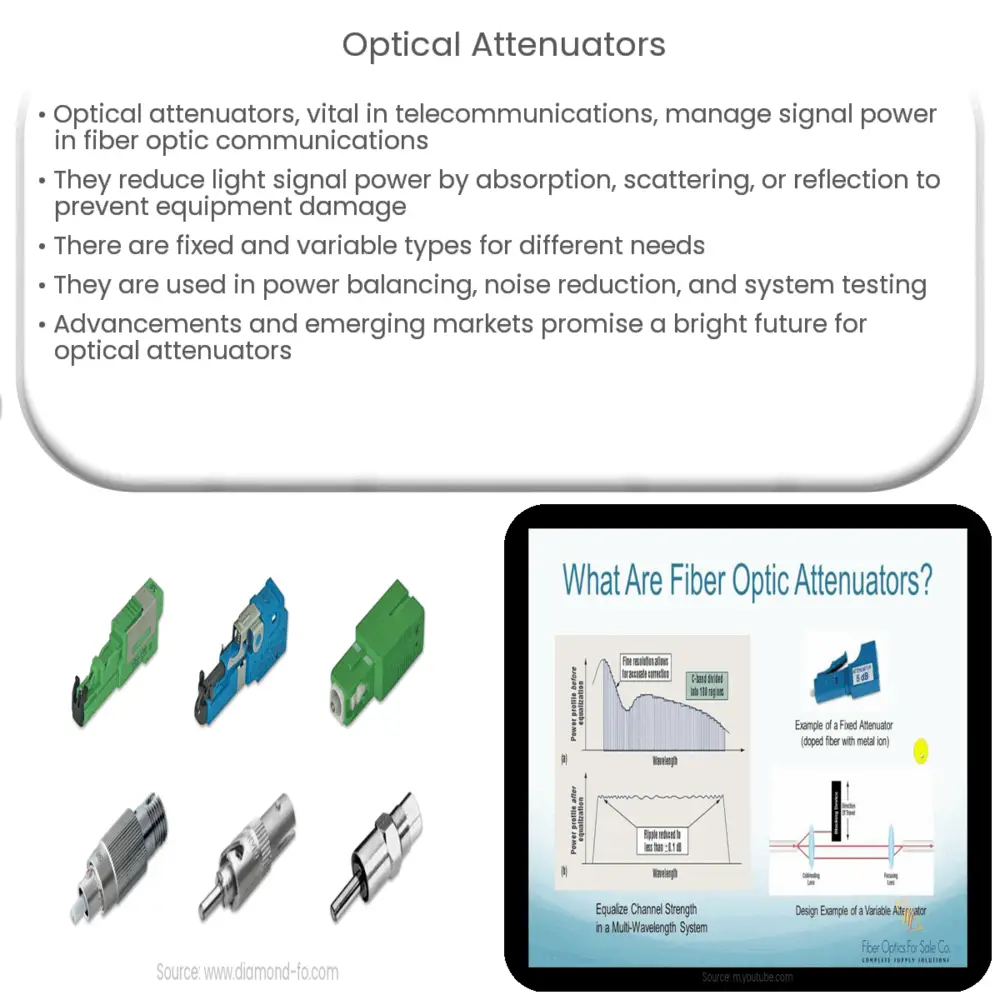
Optical Attenuators play a crucial role in modern telecommunications, ensuring that signal power is properly managed and controlled. These devices are particularly significant within the field of fiber optic communications where the intensity of light signals often needs adjustment.
Function of Optical Attenuators
Optical attenuators are used to reduce or ‘attenuate’ the power level of a light signal in an optical fiber. They function by absorbing the light, scattering it, reflecting it, or by a combination of these methods. The ultimate goal is to prevent signals from becoming too strong and causing overload or damage to the receiving equipment. This control ensures the reliable transmission of data over long distances.
Types of Optical Attenuators
- Fixed Attenuators: These types of attenuators reduce light signals by a predetermined factor independent of the level of the input signal. They are primarily used when a specific degree of attenuation is needed.
- Variable Attenuators: These allow the degree of attenuation to be adjusted to suit the needs of the current situation. Variable attenuators are often used in testing environments or in situations where signal strengths can vary significantly.
Applications of Optical Attenuators
The diverse applications of optical attenuators extend across various industries. They are predominantly used in fiber optic communication systems to control the power level of optical signals. Other common uses include power balancing in multi-channel systems, signal noise reduction, and testing of the linearity and dynamic range of optical systems.
Operating Principles of Optical Attenuators
The operating principle of optical attenuators is founded on the interaction of light with certain materials. For example, certain materials absorb light when it passes through them, effectively reducing the power level of the signal. Other materials scatter light in various directions, and yet others reflect light back towards its source. The exact functioning of an optical attenuator depends on its design, but the general concept remains the same: the control and reduction of light signal power.
Please note that the rest of this article will dive deeper into the intricate aspects of optical attenuators, such as their design and manufacturing, along with a more detailed exploration of their applications and future prospects in the industry.
Design and Manufacturing of Optical Attenuators
Designing an optical attenuator requires careful consideration of the type of application it will be used for. The design process typically involves selecting the right type of material that can absorb, scatter, or reflect light in the desired manner. For fixed attenuators, the material and design are selected to provide a specific level of attenuation, whereas variable attenuators require components that allow adjustment of the level of attenuation.
Manufacturing processes of optical attenuators depend heavily on the design and the chosen materials. The processes often involve precision engineering to ensure that the attenuators can consistently perform their function of attenuating the light signal to the required level.
Future Prospects and Conclusion
The need for high-speed data transmission and growing demands of the telecommunications industry make optical attenuators a vital piece of technology in the foreseeable future. The advent of new materials and technologies will continue to enhance the performance and efficiency of these devices.
- Advancements in Technology: New technologies are continually being developed, which could improve the performance of optical attenuators. For instance, the application of nanotechnologies in the field may lead to the creation of more efficient and precise attenuators.
- Emerging Markets: Emerging markets in developing countries offer new opportunities for the use of optical attenuators, as these countries seek to upgrade their telecommunications infrastructure to meet increasing demands.
In conclusion, optical attenuators are a key element in the telecommunications sector, particularly in fiber optic communications. Their role in controlling and reducing light signal power ensures the smooth functioning of complex communications systems. As the demands on data transmission continue to rise, the importance and utility of optical attenuators are set to grow. Technological advancements and emerging markets present promising prospects for the future of optical attenuators, solidifying their place as an integral part of our increasingly interconnected world.



