
Explore the crucial role of motor wiring harnesses in engines and motors, their types, manufacturing process, maintenance, and future trends.
Introduction to Motor Wiring Harnesses
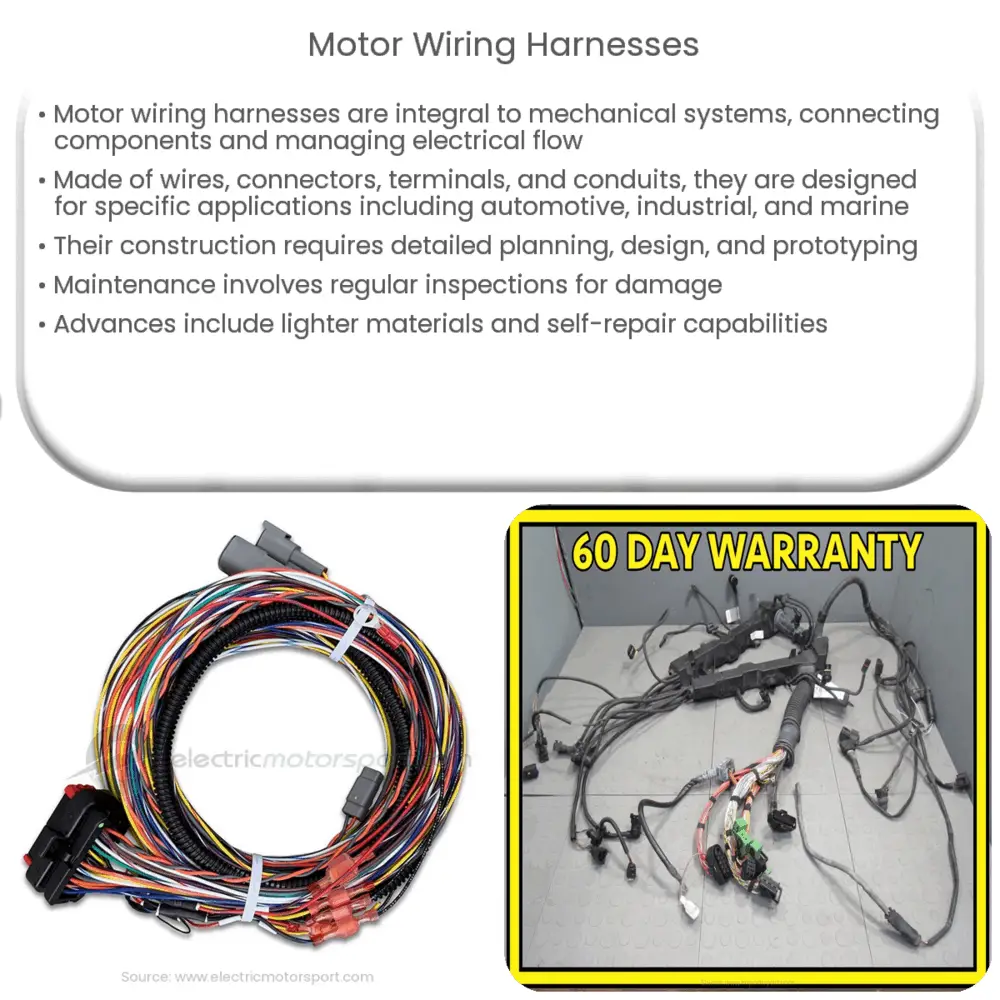
A motor wiring harness is an essential part of many mechanical systems. It serves as the central nervous system for engines and motors, offering a neat and safe solution to connect various components, manage electrical flow, and ensure optimal operation.
The Composition of a Wiring Harness
A wiring harness typically comprises multiple parts:
Types of Wiring Harnesses
There are several types of wiring harnesses, each designed to meet specific needs:
Importance of Wiring Harnesses
A motor wiring harness is integral to a motor’s or an engine’s proper functioning. It simplifies the installation process by neatly bundling wires together, reducing the chance of misconnections. Furthermore, it aids in protecting the cables and wires from wear and tear, environmental factors, and potential damages due to heat or vibrations. Hence, they significantly extend the operational life of the overall system.
The Wiring Process
The wiring process involves complex assemblies, often requiring the use of detailed schematics and highly trained technicians. Accurate wiring diagrams are crucial for creating reliable harnesses. They specify the routing paths, lengths, and connections for all wires and components. Incorrectly installed or poorly maintained harnesses can lead to serious problems, including system failure, overheating, and even electrical fires.
Design and Manufacturing
Designing and manufacturing a motor wiring harness requires specialized knowledge and expertise. Computer-aided design (CAD) software often helps in creating precise schematics. The process involves several stages:
Maintenance and Repair
Maintenance of a motor wiring harness involves regular inspection for damage or wear and tear. This includes checking for loose connections, frayed wires, or signs of overheating. Timely repairs can prevent system failures and extend the lifespan of the harness.
Future Trends
As technology advances, motor wiring harnesses continue to evolve. Modern trends include the use of lighter, more flexible materials for reduced weight and increased efficiency, as well as smart harnesses capable of diagnostics and self-repair. The growth of electric vehicles also necessitates more complex wiring systems to manage the high voltages and currents involved.
Conclusion
In conclusion, a motor wiring harness is a crucial component that allows electrical systems within engines and motors to function correctly. From automotive to industrial applications, these assemblies are the lifelines that manage power flow, protect wiring integrity, and ensure safe and efficient operation. As the demands for more advanced, more efficient, and safer motors increase, the importance and complexity of wiring harnesses will only continue to grow. Therefore, understanding their design, function, and maintenance is fundamental for anyone involved in motor or engine systems.