
Explore the importance, functionality, and applications of Motor Soft Braking Units in electric motors for safe and efficient operations.
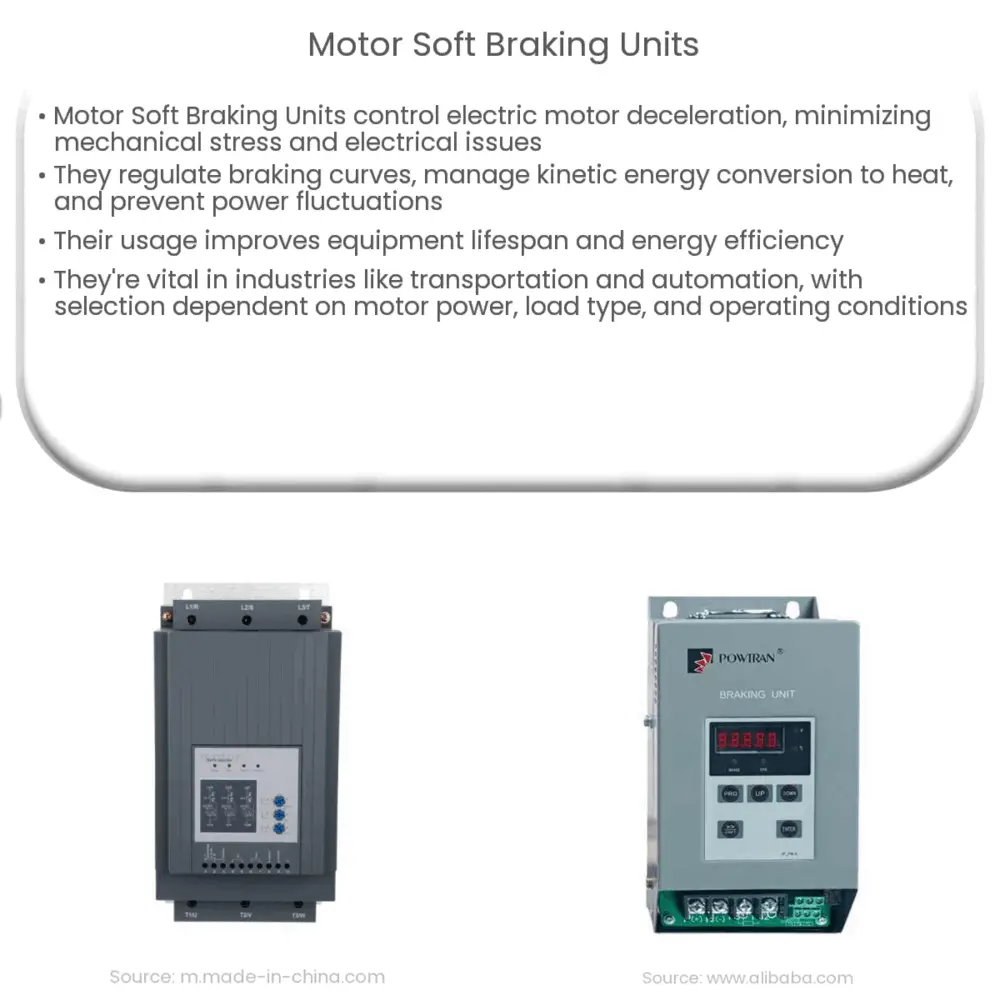
Understanding Motor Soft Braking Units
Electric motors are ubiquitous in numerous sectors, driving machines that range from small appliances to heavy industrial equipment. As vital as these motors are to our daily operations, the way we stop them is equally important. This brings us to the concept of ‘Motor Soft Braking Units’.
When an electric motor is switched off, it doesn’t immediately stop; instead, it decelerates over time. The duration and method of this deceleration can have significant impacts on the mechanical systems connected to the motor, as well as the power supply network. That’s where Motor Soft Braking Units come in to save the day.
What are Motor Soft Braking Units?
Motor Soft Braking Units, often referred to as ‘Soft Brakers’, are devices designed to control the deceleration of electric motors in a way that minimizes stress on mechanical systems and prevents electrical issues such as power surges or dips. They achieve this by absorbing the kinetic energy generated by the spinning motor and converting it into heat, which is then dissipated into the surrounding environment.
Functionality of Motor Soft Braking Units
- Braking Curve Regulation: The units control the braking curve, ensuring a gradual deceleration rather than an abrupt stop. This helps to reduce mechanical stress and prolong the lifespan of the equipment.
- Energy Dissipation: They manage the kinetic energy produced during braking, converting it into heat energy which is safely dissipated.
- Preventing Power Fluctuations: By controlling the release of energy during braking, these units help maintain stability in the power supply network, preventing power surges or dips that could harm other equipment or disrupt operations.
Benefits of Using Motor Soft Braking Units
- Improved Equipment Lifespan: By controlling deceleration and preventing sudden stops, these units help to reduce wear and tear on mechanical systems, ultimately extending their useful life.
- Energy Efficiency: Although these units do generate heat during operation, they help to minimize the amount of energy wasted during braking, making them an energy-efficient solution in many cases.
Now that we’ve covered the basics of what Motor Soft Braking Units are and why they’re important, we’ll delve deeper into their working principles, common applications, and key considerations for selecting the right unit in the next section.
Working Principles of Motor Soft Braking Units
Motor Soft Braking Units operate on the principle of dynamic braking. When the motor is switched off, its kinetic energy is converted into electrical energy, which is then transferred to the braking unit. Within the unit, this energy is transformed into heat by power resistors and then dissipated.
Common Applications of Motor Soft Braking Units
- Industrial Machinery: These units are extensively used in various industries where sudden motor stops could lead to mechanical damage or affect product quality. Examples include conveyors, cranes, and elevators.
- Transportation: Motor Soft Braking Units are crucial in electric vehicles and trains, where they provide a smoother ride by preventing sudden stops and help in energy regeneration.
- Automation Systems: In automation and robotics, precise movement is paramount, and these units contribute to ensuring smooth motion control.
Selecting the Right Motor Soft Braking Unit
Choosing the appropriate Motor Soft Braking Unit depends on several factors:
- Motor Power: The power of the motor determines the energy to be dissipated, which affects the size and rating of the braking unit.
- Load Type: The type of load – constant, variable, or regenerative – influences the selection of the braking unit.
- Operating Conditions: Environmental factors, such as ambient temperature and installation location, should also be considered.
Therefore, it’s crucial to consult with an expert or a reputable manufacturer when choosing a braking unit for your specific needs.
Conclusion
Motor Soft Braking Units play an essential role in many industries by ensuring the safe and efficient operation of electric motors. They protect mechanical systems from the stresses of sudden deceleration, promote energy efficiency, and contribute to system reliability and longevity. Their careful selection, based on motor power, load type, and operating conditions, is vital for optimizing performance and cost-effectiveness. As we continue to depend heavily on electric motors, the importance of Motor Soft Braking Units will only become more pronounced, solidifying their place in our technologically-driven world.



