
Explore the vital role of motor sealants in vehicle maintenance, their types, applications, selection criteria, and safety measures.
Introduction to Motor Sealants
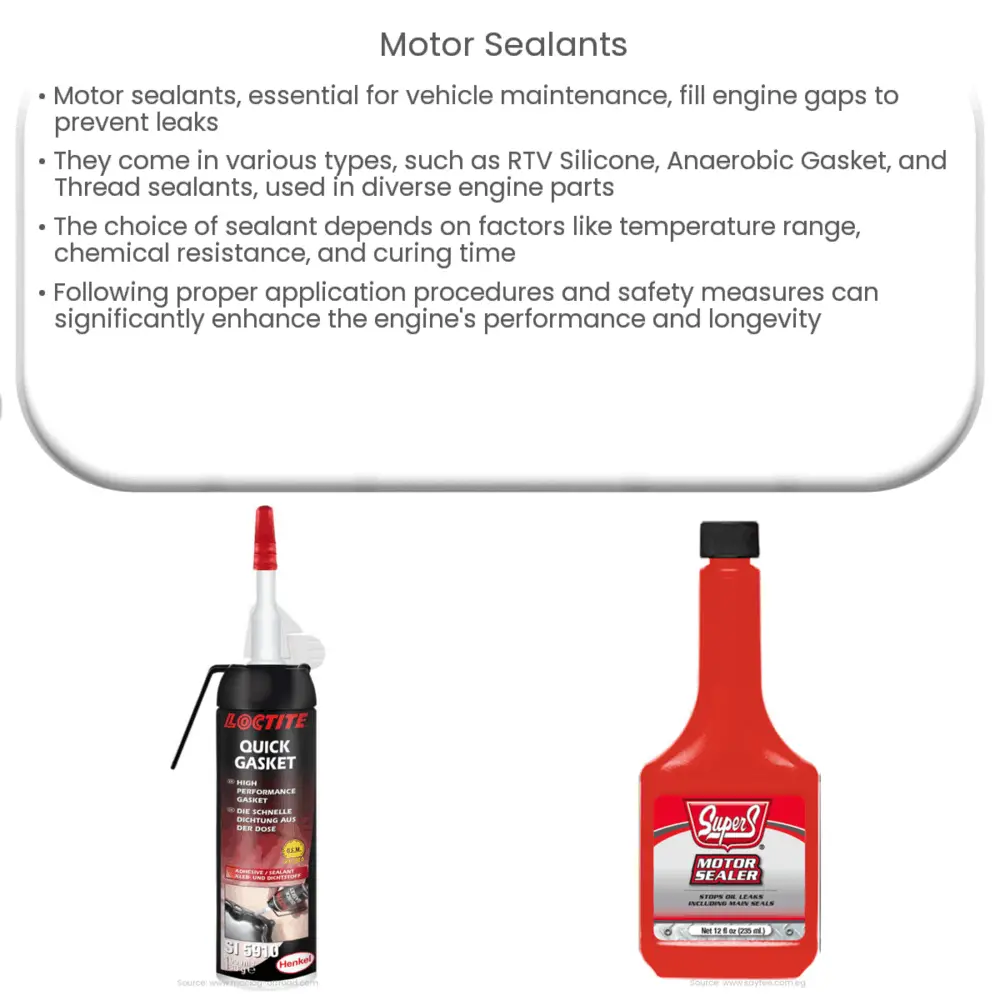
Motor sealants, also known as engine sealants, play a pivotal role in vehicle maintenance and repair. Their primary function is to fill gaps and prevent leaks in various parts of the engine. Here, we’ll explore their importance, types, and applications.
The Importance of Motor Sealants
Motor sealants are vital in creating a leak-proof, secure environment within an engine. They fill up spaces where two parts connect, effectively blocking the escape of fluids, like coolant or oil. These sealants can help prevent damage to the engine and other components, extending the vehicle’s life span and improving performance.
Types of Motor Sealants
- RTV Silicone Sealant: Room Temperature Vulcanizing (RTV) silicone is a versatile sealant widely used in automotive applications. It’s resistant to temperature extremes, making it suitable for areas exposed to high heat, such as exhaust systems.
- Anaerobic Gasket Sealant: Anaerobic sealants cure in the absence of air and presence of metal ions. They’re typically used on rigid machined assemblies with a close fit, like a cylinder head or transmission casing.
- Thread Sealants: Also known as pipe dope, thread sealants are used on the threads of fasteners and fittings to prevent leaks of gases or liquids.
Applications of Motor Sealants
Motor sealants are used in various parts of the engine, including:
- Oil Pan: The sealant is applied to the oil pan gasket to prevent oil leakage.
- Valve Cover: It is used on the valve cover gasket to prevent oil leakage from the top of the engine.
- Water Pump: Sealant on the water pump gasket prevents coolant leakage, maintaining optimal engine temperature.
In the next section, we will dive deeper into the considerations for choosing the right sealant, the process of applying it, and safety measures to keep in mind. Stay tuned for more insights on motor sealants1.
Considerations for Choosing the Right Motor Sealant
Several factors should be taken into account when selecting a motor sealant:
- Temperature Range: The sealant must be able to withstand the engine’s operating temperature. High-performance engines might require sealants that can tolerate higher temperatures.
- Chemical Resistance: The sealant should be resistant to the various fluids present in the engine, such as oil, coolant, and gasoline.
- Curing Time: The time it takes for the sealant to fully cure may influence the choice of sealant, especially in a professional repair setting where time is crucial.
How to Apply Motor Sealants
Applying motor sealants correctly can significantly improve the engine’s performance and longevity. Here are some general steps:
- Preparation: Thoroughly clean and dry the surfaces to be sealed. This ensures that the sealant will adhere properly.
- Application: Apply the sealant evenly to the sealing surfaces. Avoid applying too much as it could squeeze out and potentially cause problems in the engine.
- Curing: After assembly, allow the sealant to cure fully according to the manufacturer’s instructions before starting the engine.
Safety Measures
While motor sealants are essential tools in automotive repair and maintenance, they should be used with caution. Always follow manufacturer’s instructions and take care to avoid skin and eye contact. Additionally, some sealants can produce fumes that can be harmful if inhaled, so always work in a well-ventilated area.
Conclusion
In conclusion, motor sealants are a vital part of maintaining and repairing vehicles. They provide an efficient solution to prevent leakage in different engine parts, ultimately extending the vehicle’s life span and improving its performance. Selecting the right sealant based on factors such as temperature range, chemical resistance, and curing time is crucial for its effectiveness. With proper application and safety measures, motor sealants can greatly enhance your vehicle’s reliability and longevity.



