
Explore the crucial role of motor phase monitors in protecting three-phase motors, including their functionality, types, and future advancements.
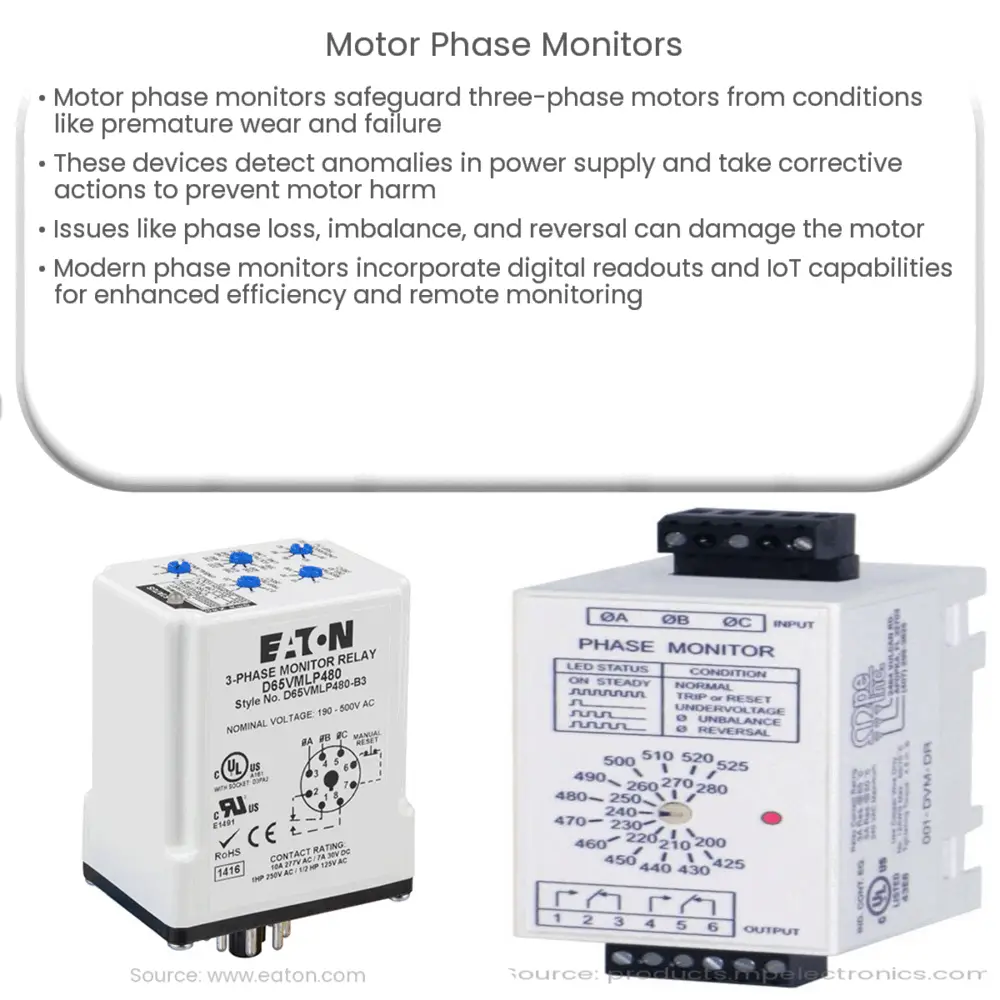
Understanding Motor Phase Monitors
Motor phase monitors, also known as phase failure relays or phase protection relays, are essential devices in the field of electrical engineering. They play a vital role in safeguarding three-phase motors from conditions that can lead to premature wear and failure. Let’s delve into their workings and importance in motor protection.
Functionality and Importance of Motor Phase Monitors
Three-phase electric motors are used extensively in industrial applications due to their high power output and efficiency. However, they can be subject to various adverse conditions, such as phase loss, phase imbalance, and phase reversal, all of which can damage the motor, leading to costly repairs or replacement.
Motor phase monitors come into play here. These devices constantly monitor the motor’s power supply conditions and take corrective measures if anomalies are detected. They can disconnect the motor from its power supply, preventing potential harm. Understanding the various conditions these monitors protect against will further underscore their importance.
- Phase Loss: This happens when one of the three phases of power is interrupted. If a motor continues to operate under this condition, it can overheat and fail.
- Phase Imbalance: This refers to the condition where the voltage or current in one or more of the phases differs significantly from the others. A significant imbalance can result in excessive motor heat and premature wear.
- Phase Reversal: This situation occurs when the sequence of the phases is altered. Phase reversal can cause motors to run in reverse, potentially damaging the equipment the motor is driving.
Types of Motor Phase Monitors
Motor phase monitors come in two main types: voltage-based monitors and current-based monitors. Voltage-based monitors are the more common type, monitoring the voltage levels and phase sequence of the three phases. They are often chosen for their simplicity and cost-effectiveness. Current-based monitors, on the other hand, detect phase loss and imbalance by monitoring the current in each phase. These monitors are generally more sophisticated and are used when precise monitoring is needed, for example, in sensitive equipment or high-stake industrial applications.
Motor phase monitors are invaluable tools in ensuring the longevity and efficiency of three-phase motors. In the following section, we will explore the installation and selection considerations for these devices, along with technological advancements that are shaping the future of motor protection.
Installation and Selection Considerations
While motor phase monitors are relatively easy to install, it is crucial to ensure they are set up correctly for optimal operation. The monitor should be installed near the motor and connected to all three phases. Most devices come with detailed installation instructions that need to be followed meticulously.
The choice of a motor phase monitor should be based on the specific needs and operational conditions of the motor. Variables such as the motor’s horsepower, operating voltage, and the sensitivity of the load it drives all play a part in the selection process. Other factors to consider include whether the monitor has features like adjustable restart delays, trip delays, and indication lights, which can provide valuable feedback and added protection.
Technological Advancements in Motor Protection
As technology progresses, so do the capabilities of motor phase monitors. Modern devices now come equipped with digital readouts, providing real-time phase voltage and current data, which allows for easier troubleshooting. Some monitors also incorporate advanced self-diagnostic features that can predict potential problems before they occur.
Moreover, the advent of Industry 4.0 and the Internet of Things (IoT) is paving the way for connected devices and remote monitoring capabilities. With smart motor phase monitors, it is possible to track and manage the health of motors remotely, reducing downtime and facilitating predictive maintenance strategies. This integration of technology and phase monitoring offers a promising avenue for more efficient and effective motor protection.
Conclusion
In conclusion, motor phase monitors are vital components in preserving the health and extending the lifespan of three-phase motors. They act as a safety net against harmful conditions like phase loss, imbalance, and reversal, thus preventing expensive repairs or replacements. Although their implementation necessitates proper installation and selection based on the motor’s specific needs, the benefits they offer in terms of motor protection are undeniable.
With the advent of digital readouts, self-diagnostic features, and IoT-based remote monitoring, the future of motor phase monitoring appears promising. These advancements will likely foster improved efficiency and predictability, transforming the way we safeguard our motors and ultimately impacting the sustainability and profitability of various industries.



