
Explore the types, functionalities, and considerations of motor phase converters, pivotal tools in converting single-phase to three-phase power.
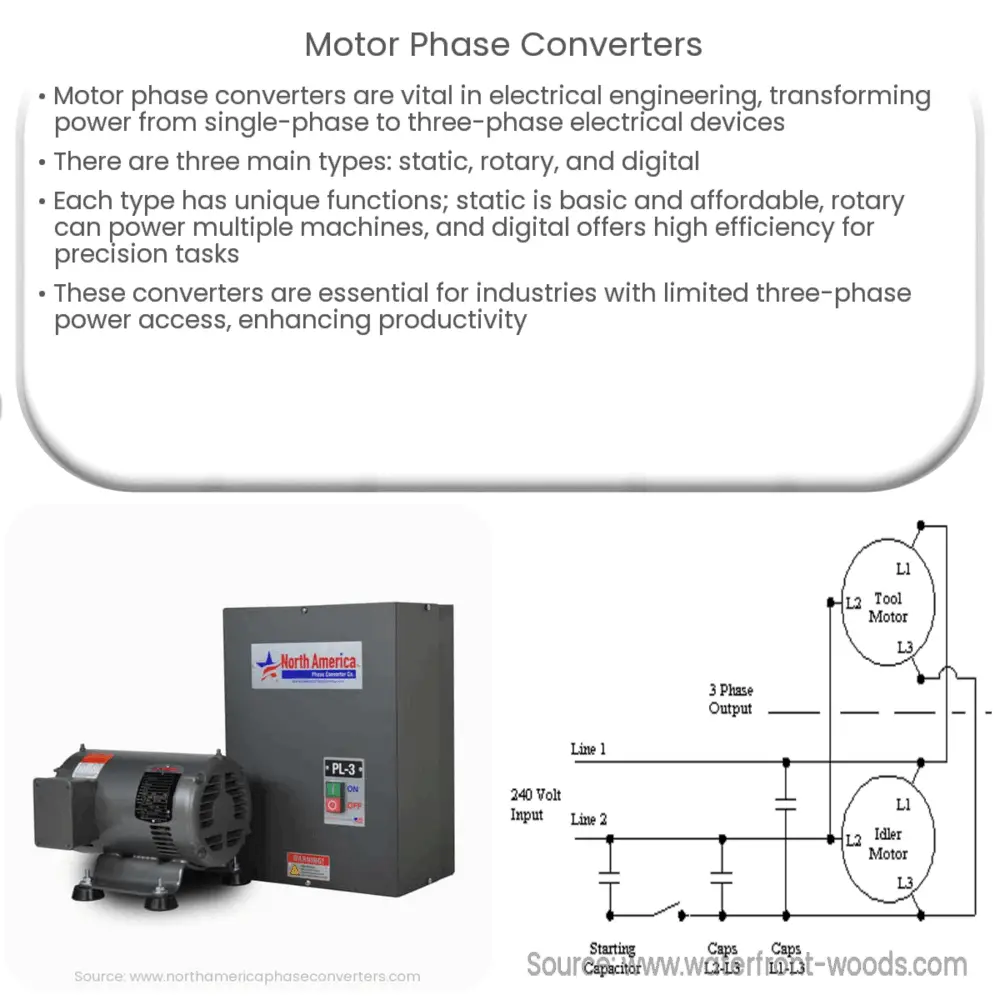
Introduction to Motor Phase Converters
Motor phase converters are crucial instruments in electrical engineering, utilized to convert electric power. They transform the energy provided by single-phase electrical sources into a form of power that can be used by three-phase electrical devices. This makes them critical in areas where only single-phase power is accessible.
Types of Motor Phase Converters
There are primarily three types of motor phase converters, each with its unique functionalities and applications:
Static Phase Converters
Static phase converters are the most basic type of motor phase converters. They utilize capacitors and start circuitry to initiate a second phase from a single-phase power source. Although they can only supply about 2/3 of the rated horsepower1 to the equipment, their affordability and simplicity make them suitable for less demanding applications where the motor doesn’t need to operate continuously at full capacity.
Rotary Phase Converters
Rotary phase converters, on the other hand, utilize an idler motor to generate a balanced three-phase power supply from a single-phase source. They can power multiple machines simultaneously, and unlike static phase converters, they can deliver full power output to the equipment.
Digital Phase Converters
Last but not least, digital phase converters use a digitally controlled inverter and rectifier to create a balanced three-phase output. They are highly efficient and reliable, producing a near-perfect sine wave2, making them ideal for sensitive equipment and precision applications.
Choosing the Right Converter
When choosing a motor phase converter, several factors need to be considered. These include the type and number of devices to be powered, the environment in which the converter will be used, the power requirements of the equipment, and the quality of the power supply.
Understanding the nuances of each converter type can aid in making an informed decision that best suits the specific needs and constraints of a given application.
Considerations for Motor Phase Converters
The ideal choice of a phase converter is not solely dependent on the type of machines to be powered. Other significant considerations include:
The Impact of Motor Phase Converters
Motor phase converters play a crucial role in powering three-phase equipment, especially in areas with limited access to three-phase power. Their ability to convert single-phase power into three-phase power has enabled the widespread use of high-performance equipment in a variety of industries, from manufacturing to agriculture and beyond.
Conclusion
In conclusion, motor phase converters are an indispensable tool in today’s electrical infrastructure. Their ability to bridge the gap between single-phase power sources and three-phase equipment has opened doors for industries located in remote areas or those with limited power supply options. By understanding the distinct types and considerations when choosing a motor phase converter, individuals and businesses can make informed decisions that best suit their power requirements, ultimately driving efficiency and productivity in their operations.
As technological advancements continue to reshape the landscape of power conversion and electrical engineering, motor phase converters will undoubtedly remain at the forefront, facilitating the seamless operation of machinery and equipment in diverse sectors around the globe.