
Magnetic gears with air gap modulation offer high efficiency, reduced wear, and precise torque control for various applications in renewable energy, electric vehicles, and robotics.
Magnetic Gear with Air Gap Modulation: Revolutionizing Mechanical Transmission
Magnetic gears have been gaining traction in various industries as a promising alternative to traditional mechanical gears. This article delves into the unique features and benefits of magnetic gears with air gap modulation, a cutting-edge technology that is redefining the landscape of power transmission.
Understanding Magnetic Gears
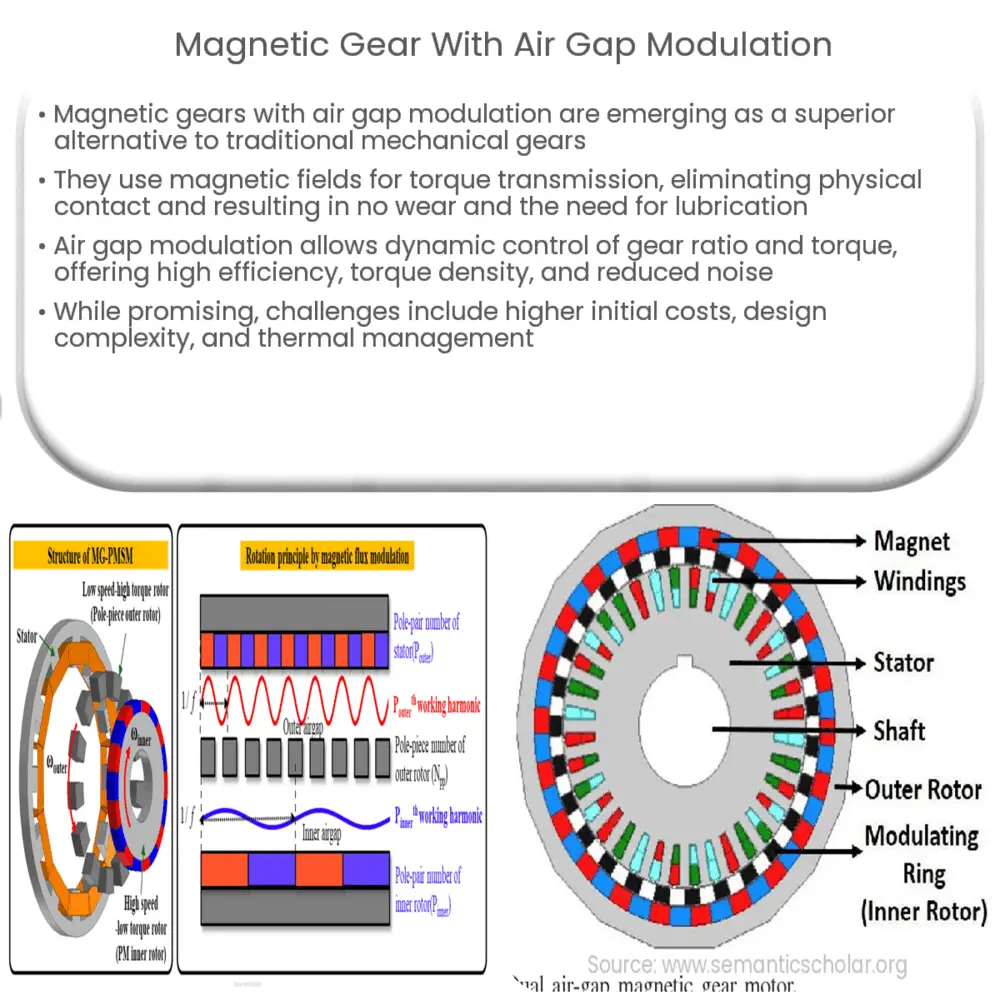
Magnetic gears rely on the interaction between magnetic fields to transmit torque, as opposed to conventional gears, which depend on direct mechanical contact. They consist of three main components: an inner rotor, an outer rotor, and a modulating ring. The inner and outer rotors are embedded with permanent magnets, while the modulating ring is made up of ferromagnetic pole pieces. The magnetic fields generated by the rotors interact with the modulating ring, transferring torque without physical contact between the components.
Air Gap Modulation: A Game Changer
Air gap modulation is a groundbreaking technology that enhances the performance of magnetic gears by manipulating the air gap between the rotors and the modulating ring. By varying the air gap, it is possible to alter the gear ratio and control the torque transmission dynamically. This opens up new possibilities in the design and implementation of magnetic gears across different industries.
Advantages of Magnetic Gears with Air Gap Modulation
- Elimination of mechanical wear and lubrication: As there is no direct contact between the rotors and the modulating ring, magnetic gears do not suffer from wear and tear or require lubrication. This significantly reduces maintenance costs and extends the service life of the gears.
- High efficiency: The non-contact nature of magnetic gears allows for reduced friction losses, leading to higher overall efficiency. Moreover, the air gap modulation technology ensures optimal performance under varying load conditions, further enhancing the system’s efficiency.
- High torque density: Magnetic gears have the ability to transmit high torque at low speeds, making them suitable for heavy-duty applications. The use of air gap modulation can further improve the torque density by providing better control over the torque transmission.
- Low noise and vibration: Owing to the absence of mechanical contact, magnetic gears with air gap modulation operate with significantly lower noise and vibration levels compared to their traditional counterparts. This makes them ideal for applications where noise and vibration are critical concerns.
In the next section, we will explore the potential applications of magnetic gears with air gap modulation and discuss the challenges and future prospects of this emerging technology.
Potential Applications of Magnetic Gears with Air Gap Modulation
With their unique advantages, magnetic gears with air gap modulation have the potential to revolutionize a wide range of industries, such as:
- Renewable energy: Magnetic gears can be employed in wind turbines and wave energy converters, where high torque at low speeds is required. Air gap modulation allows for better control over torque transmission, improving the overall efficiency and performance of these systems.
- Electric vehicles: Magnetic gears with air gap modulation can be integrated into the drivetrain of electric vehicles to enable smoother and more efficient power transmission. The reduced noise and vibration levels also contribute to a more comfortable driving experience.
- Robotics and automation: In robotic systems, precise control over torque transmission is essential. Magnetic gears with air gap modulation can provide this level of control, enabling smoother and more accurate motion in robotic applications.
- Industrial machinery: Heavy-duty machinery and equipment, such as pumps, compressors, and conveyor systems, can benefit from the high torque density and low maintenance requirements of magnetic gears with air gap modulation.
Challenges and Future Prospects
Despite their numerous advantages, magnetic gears with air gap modulation face some challenges that need to be addressed to ensure widespread adoption:
- Cost: The use of permanent magnets and advanced materials in magnetic gears can result in higher initial costs compared to conventional gears. However, the reduced maintenance and longer service life can offset these costs in the long run.
- Design complexity: The design and optimization of magnetic gears with air gap modulation can be complex, requiring advanced simulation tools and expertise. Further research and development in this area will help streamline the design process and reduce associated costs.
- Thermal management: The use of permanent magnets and ferromagnetic materials can lead to increased heat generation, necessitating the need for effective thermal management strategies. Advances in cooling technologies will be crucial in addressing this challenge.
In conclusion, magnetic gears with air gap modulation hold immense promise as a transformative technology for mechanical power transmission. While challenges remain, ongoing research and development efforts are paving the way for their widespread adoption across various industries. As the technology continues to mature, magnetic gears with air gap modulation are poised to revolutionize the way we think about and design mechanical transmission systems.