
이중 속도 유도 전동기의 기본 작동 원리 및 권선 변화를 통한 속도 조절 방법을 소개하며 현대 산업에서의 응용을 설명합니다.
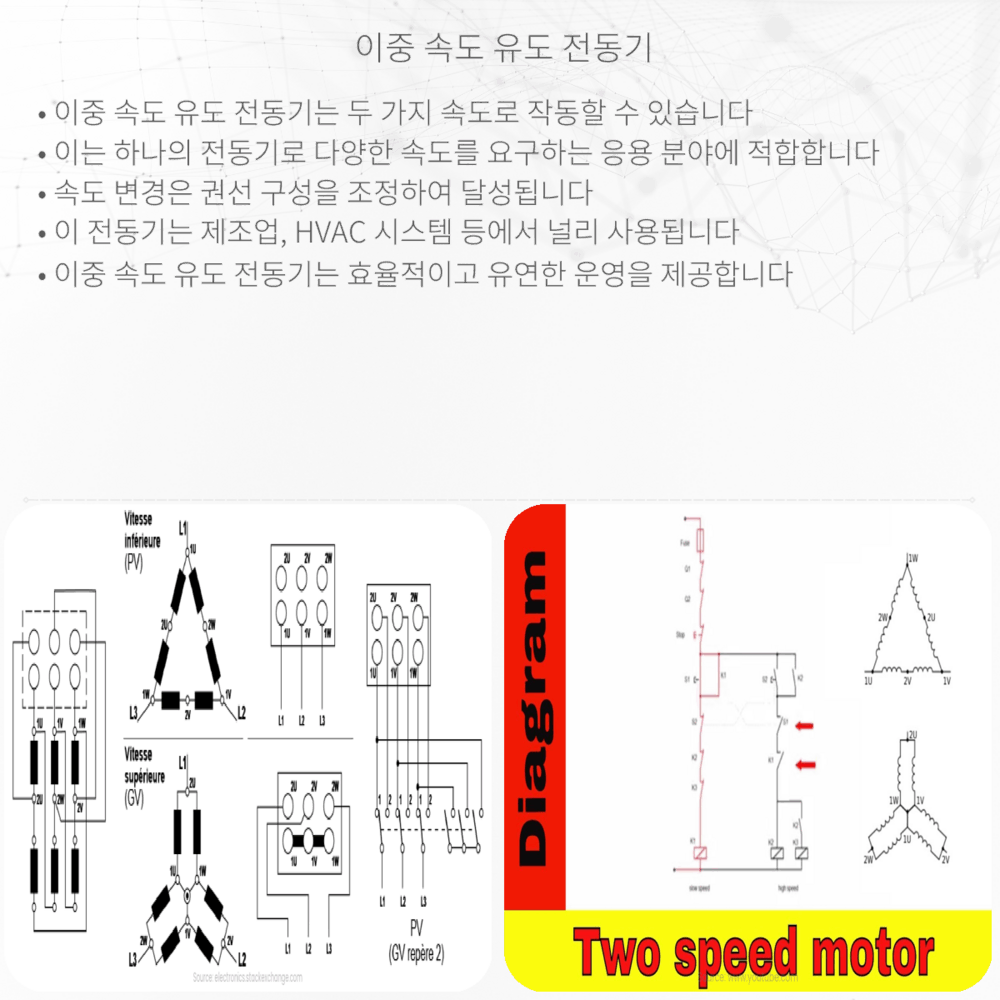
이중 속도 유도 전동기의 기본 원리
이중 속도 유도 전동기(dual-speed induction motor)는 한층 더 유연한 제어와 높은 효율성을 요구하는 다양한 산업 응용분야에서 중요한 역할을 한다. 이 아티클에서는 이중 속도 유도 전동기의 기본 원리와 그것이 어떻게 작동하는지에 대해 알아볼 것이다.
이중 속도 유도 전동기는 하나의 전동기로 두 가지 서로 다른 속도로 운전이 가능하도록 설계된 전동기이다. 이러한 유도 전동기는 두 개의 다른 권선이나 권선 전환 방식을 사용하여 속도를 전환한다. 이 전동기의 주요 성분은 회전자(rotor)와 고정자(stator)이다. 고정자에 교류 전류가 공급되면, 교번하는 자기장이 생성되고 이는 회전자에 유도 전류를 발생시킨다. 유도 전류로 인해 생성된 자기장이 고정자의 자기장과 상호 작용하여 회전력, 즉 토크가 발생하며, 이로 인해 회전자가 회전하게 된다.
이중 속도 유도 전동기의 두 가지 속도는 고정자 권선의 권수 변화 또는 연결 방식을 바꾸어서 달성된다. 고정자 권선을 달리 연결하여 권선수를 변경하면 자기장의 극수(pole number)가 변하고 이에 따라 회전자의 속도가 변한다. 일반적으로 전동기의 속도(N)는 주파수(f)와 극수(p)에 반비례하는 관계를 가지며, 이는 다음과 같은 공식으로 표현된다:
- N = (120 * f) / p
여기서 N은 전동기의 속도(분당 회전수, rpm), f는 전원 주파수(Hz), p는 고정자의 극수이다. 이러한 원리를 사용하여 이중 속도 유도 전동기는 기계적으로 복잡한 변속 기구 없이도 간단한 전기적 조작으로 속도를 전환할 수 있다.
이중 속도 유도 전동기는 특히 속도 조절이 중요한 응용분야에서 우수한 성능을 발휘한다. 예를 들어, 환기 시스템, 컨베이어 벨트, 그리고 가변 부하를 다루는 기계장치 등이 그것이다. 이처럼 다양한 용도와 높은 유연성 때문에 이중 속도 유도 전동기는 고도의 자동화가 요구되는 현대 산업에서 빼놓을 수 없는 구성 요소이다.
The Advantages and Applications of Dual-Speed Induction Motors
The adaptability of dual-speed induction motors to operate efficiently at two distinct speeds confers a multitude of advantages. By selecting the appropriate speed for a given task, energy consumption can be optimized, leading to cost savings and a reduction in environmental impact. Additionally, these motors offer enhanced control over processes that require speed variation, improving the quality of the final product in manufacturing applications.
- Energy Efficiency: Operating at lower speeds when full power is not required saves energy.
- Control Precision: Dual-speed motors provide precise control for processes that require changing speeds.
- Versatility: They can be used in various settings without the need for mechanical speed changes.
- Durability: By avoiding the mechanical strain of gearboxes, dual-speed motors may have extended lifespans.
These motors are particularly relevant in industries where processes are not constant and require different speeds. For example, in the textile industry, spinning machines need to run at high speeds for some fabrics and slower for others. Similarly, in the food processing industry, mixers may need to run at different speeds to adequately process various ingredients.
Conclusion
Understanding the principles of dual-speed induction motors unlocks the potential for optimizing industrial processes. The ability of these motors to switch speeds electronically without mechanical complexities lends itself to sophisticated automation in modern industries. From manufacturing to ventilation systems, the dual-speed induction motors enhance performance and energy efficiency. By embracing these technologies, industries can progress towards smarter manufacturing and operational methodologies that are not only cost-effective but also environmentally conscious. These motors are a testament to the ingenuity of engineering and a vital tool in the landscape of industry 4.0.


