
이해하기 쉬운 언어로 와이파이 모듈의 원리를 설명하며, 전기장과 자기장 상호작용을 통해 데이터 전송이 어떻게 이루어지는지 살펴봅니다.
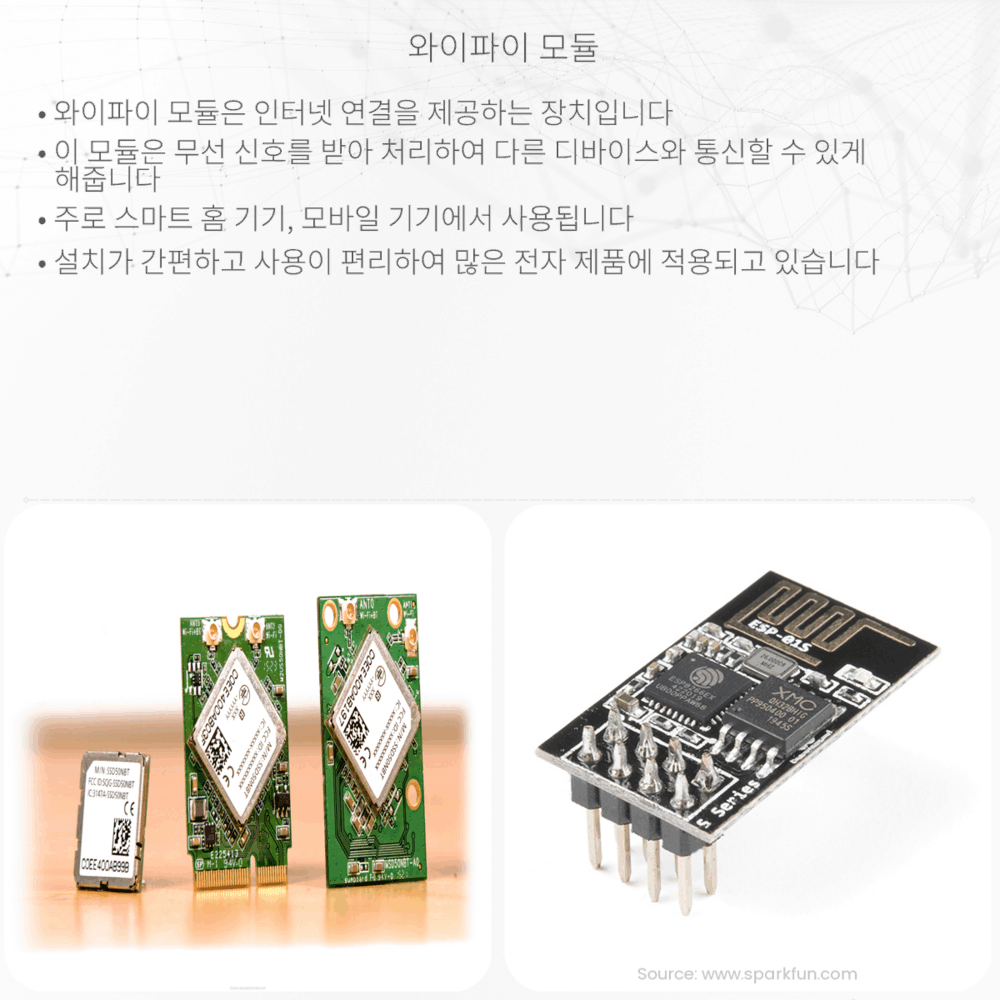
와이파이 모듈의 이해: 전기와 자기의 결합
현대 사회에서 무선 통신은 일상생활의 필수적인 부분으로 자리 잡았으며, 그 중심에는 와이파이 모듈이 있습니다. 와이파이 모듈은 데이터를 전기 신호로 변환하고, 이를 전자기파 형태로 송수신하는 데 사용되는 기술입니다. 이 과정은 전기와 자기의 기본 원리에 깊이 뿌리를 두고 있으며, 가정과 사무실은 물론 상업 지역에서도 두루 사용되고 있습니다.
와이파이 모듈의 작동 원리를 이해하기 위해서는 먼저 전기와 자기의 상호작용에 대한 기본 개념을 알 필요가 있습니다. 전기와 자기는 맥스웰 방정식에 의해 설명되며, 이 방정식은 전기장과 자기장이 어떻게 서로 영향을 미치고, 궁극적으로 전자기파를 생성하는지를 설명합니다.
- 전기장(Electric Field): 전하가 주변에 생성하는 힘의 장으로, 다른 전하를 끌어당기거나 밀어내는 능력을 가집니다.
- 자기장(Magnetic Field): 전류가 흐르는 도체 주변에 생성되며, 이는 전자기유도의 원리에 의해 다른 전류를 생성할 수 있는 능력이 있습니다.
와이파이 모듈은 이러한 전기장과 자기장의 개념을 무선 신호를 보내고 받는 데 활용합니다. 모듈 내의 전자기 회로는 전류를 사용하여 자기장을 형성하고, 이 자기장이 변화하면 주변의 전기장에도 변화를 유발합니다. 이 변화하는 전기장과 자기장은 서로 상승작용을 하여 전자기파를 생성하고, 이 전자기파는 공간을 통해 이동하며 데이터를 전달합니다.
전자기파의 주요 특성 중 하나는 주파수(Frequency)입니다. 주파수는 단위 시간 동안 전자기파가 반복되는 회수를 의미하며, 헤르츠(Hz) 단위로 측정됩니다. 와이파이 신호의 주파수는 보통 2.4GHz 또는 5GHz 대역에서 작동하며, 각각의 주파수는 다른 속성과 전파 특성을 가지고 있습니다.
와이파이 모듈의 신호를 조절하고 최적화하는 과정에는 여러 가지 전기적 요소들이 관여합니다. 예를 들어, 안테나의 설계, 전력 증폭기의 효율성, 신호의 조절과 필터링 능력 등이 중요한 역할을 합니다. 이러한 요소들이 적절히 맞물려 작동할 때, 와이파이 모듈은 안정적이고 효율적인 데이터 전송을 보장할 수 있습니다.
Antenna Design and Signal Propagation
The efficiency of a Wi-Fi module also heavily depends on the design of its antennas. Antennas are responsible for transmitting and receiving electromagnetic waves. The shape, size, and type of antenna determine how effectively it can send and pick up signals. Directive antennas, for example, focus energy in a specific direction, enhancing the signal range but limiting the spread, while omni-directional antennas radiate energy more uniformly, providing wide coverage but at a shorter range.
The environment through which the Wi-Fi signal propagates also influences its effectiveness. Signals can be absorbed, reflected, or scattered by obstacles such as walls, metals, or even water vapor in the air. Understanding the principles of wave propagation and the impact of different materials on signal strength is critical for designing robust Wi-Fi networks, especially in complex indoor spaces or crowded urban areas.
Wi-Fi Security and Protocol Layers
An important aspect that complements the physical transmission of Wi-Fi signals is network security. Wi-Fi modules must be equipped with encryption and authentication protocols to ensure data privacy and protect against unauthorized access. Protocols such as WEP, WPA, and WPA2 are employed to secure wireless networks, with each subsequent standard offering improved security measures.
Furthermore, Wi-Fi operates according to specific protocols that define how devices communicate over the network. These protocols are encapsulated in the IEEE 802.11 standards, which specify various aspects from the physical layer that deals with the electrical and physical specification of the data transmission to the higher layers that manage data exchange between devices.
Conclusion
In summary, Wi-Fi modules are complex pieces of technology that rely on fundamental principles of electricity and magnetism. By converting data into electromagnetic waves and making use of electric and magnetic fields, they enable the wireless transmission of information over the airwaves. The design considerations such as antenna type, environmental factors, and security protocols all contribute to the efficacy of Wi-Fi communication. With continued advancements in Wi-Fi standards and technology, we see increasing speeds, better reliability, and wider coverage, which will support the growing demand for wireless connectivity in our rapidly advancing digital world. Understanding these principles not only allows us to appreciate how Wi-Fi works but also how to optimize its use in our daily lives.


