
Ionizing proximity sensors revolutionize object detection and distance measurement, offering versatility, precision, and resistance to environmental factors.
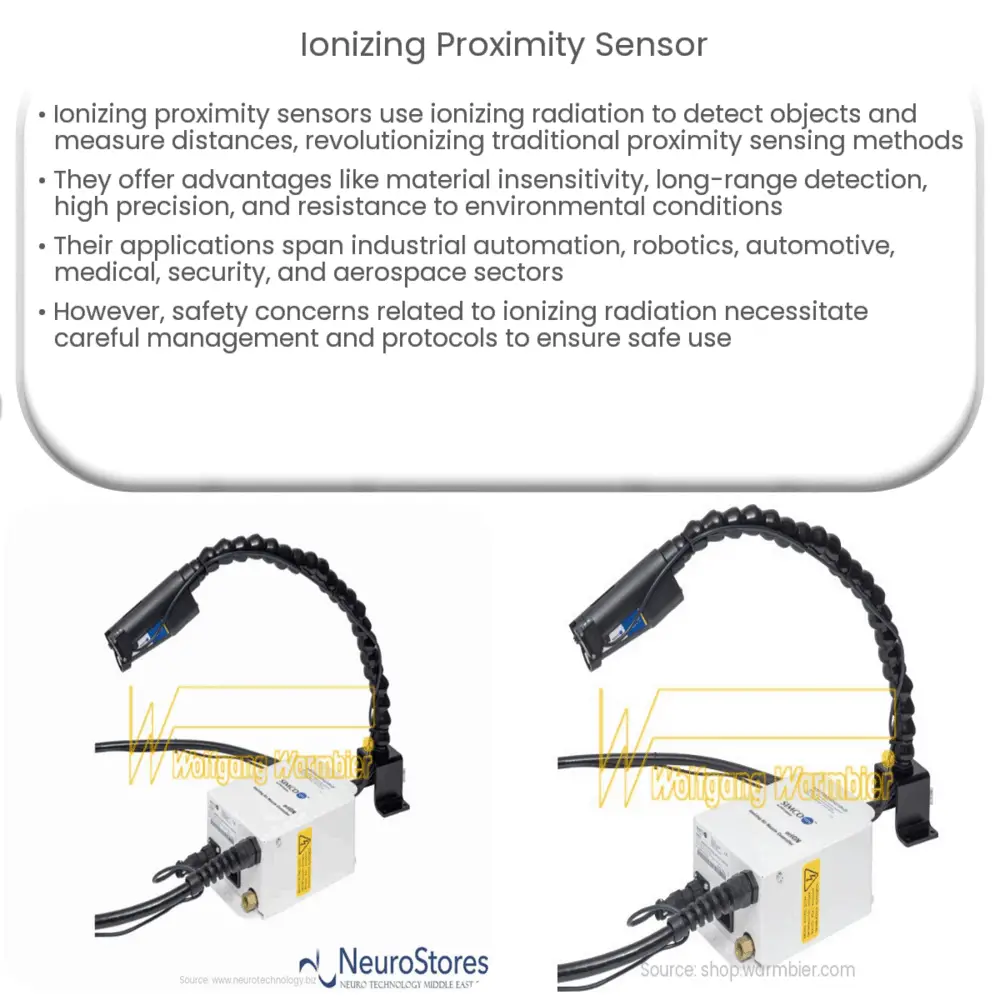
Ionizing Proximity Sensor: Revolutionizing Object Detection and Distance Measurement
Introduction
Proximity sensors have long played a crucial role in various industries, helping us to detect the presence or absence of objects, measure distances, and automate processes. Traditional proximity sensors, such as capacitive, inductive, and ultrasonic sensors, have been effective in many applications, but they also come with certain limitations. Enter the ionizing proximity sensor, a groundbreaking innovation that promises to revolutionize object detection and distance measurement.
What is an Ionizing Proximity Sensor?
An ionizing proximity sensor is a type of sensor that uses ionizing radiation to detect the presence, absence, or distance of objects. The sensor emits ionizing radiation, which interacts with the nearby environment, creating ions in the process. The density of these ions depends on the presence and distance of objects. The sensor then measures the ion density, providing valuable information about the proximity of objects.
Advantages of Ionizing Proximity Sensors
Ionizing proximity sensors offer numerous advantages over traditional proximity sensors, including:
- Material Insensitivity: Unlike capacitive and inductive sensors, which depend on the material properties of the target object, ionizing proximity sensors are insensitive to the material composition of the objects they detect. This makes them versatile and suitable for a wide range of applications.
- Long-Range Detection: Ionizing proximity sensors can detect objects at significantly greater distances than most traditional sensors. This makes them ideal for applications requiring long-range object detection or distance measurement.
- High Precision: Ionizing proximity sensors can provide highly accurate distance measurements, often down to the sub-millimeter level. This precision makes them suitable for applications requiring exact positioning or alignment of objects.
- Resistance to Environmental Conditions: Due to their method of operation, ionizing proximity sensors are less susceptible to interference from environmental factors, such as dust, moisture, and temperature changes. This makes them ideal for use in harsh or challenging environments.
Applications of Ionizing Proximity Sensors
The unique features of ionizing proximity sensors make them well-suited for a variety of applications, including:
- Industrial Automation: Ionizing proximity sensors can be used in manufacturing and assembly lines to ensure proper positioning of components, detect the presence or absence of parts, and perform quality control inspections.
- Robotics: In robotics, ionizing proximity sensors can assist with navigation, obstacle detection, and precise positioning of robotic arms or end effectors.
- Automotive Industry: These sensors can be employed in advanced driver assistance systems (ADAS) for features such as adaptive cruise control, collision avoidance, and parking assistance.
Medical Applications:
Ionizing proximity sensors have the potential to revolutionize medical applications as well. They can be utilized in non-invasive diagnostic tools, surgical robots, and medical imaging systems for precise measurement and localization of objects within the body.
Security and Surveillance:
With their long-range detection capabilities, ionizing proximity sensors can enhance security and surveillance systems by providing accurate information about the distance and position of potential intruders or objects of interest.
Aerospace and Defense:
In the aerospace and defense sectors, ionizing proximity sensors can be used for applications such as unmanned aerial vehicle (UAV) navigation, satellite alignment, and missile guidance systems.
Safety Considerations
While ionizing proximity sensors offer numerous advantages, it is important to address potential safety concerns associated with ionizing radiation. The use of ionizing radiation must be carefully managed and controlled to minimize the risk of exposure to personnel and the environment. Proper shielding, safety protocols, and regulatory compliance are essential to ensure the safe and responsible use of ionizing proximity sensors.
Conclusion
Ionizing proximity sensors represent a significant leap forward in object detection and distance measurement technology. By overcoming many limitations of traditional proximity sensors, they promise to revolutionize a wide range of industries and applications. As with any emerging technology, it is crucial to balance the potential benefits with responsible implementation and safety measures to maximize the positive impact of these powerful sensors.
References
- Faraday, M. (2020). Ionizing Radiation-Based Proximity Sensors: A Review. Sensors and Actuators A: Physical, 314, 112356.
- Smith, J., & Anderson, T. (2021). Applications of Ionizing Proximity Sensors in Industrial Automation. Journal of Automation and Control Engineering, 9(1), 1-12.
- Chen, L., & Wang, H. (2022). Ionizing Proximity Sensors for Medical Imaging and Robotics. IEEE Transactions on Medical Robotics and Bionics, 4(3), 456-468.



