
Explore the concept of influence machines, their origins, applications, ethical concerns, and potential future developments in the digital world.
Influence Machine: The Emergence of a Powerful Force in the Digital World
Part 1: Understanding the Concept of Influence Machine
In recent years, the term ‘influence machine’ has gained significant traction within the realms of marketing, politics, and social media. As society becomes increasingly interconnected through digital platforms, understanding the mechanisms and implications of influence machines has become crucial for those seeking to navigate the complex landscape of online communication. This article delves into the concept of the influence machine, exploring its origins, applications, and potential future developments.
Defining the Influence Machine
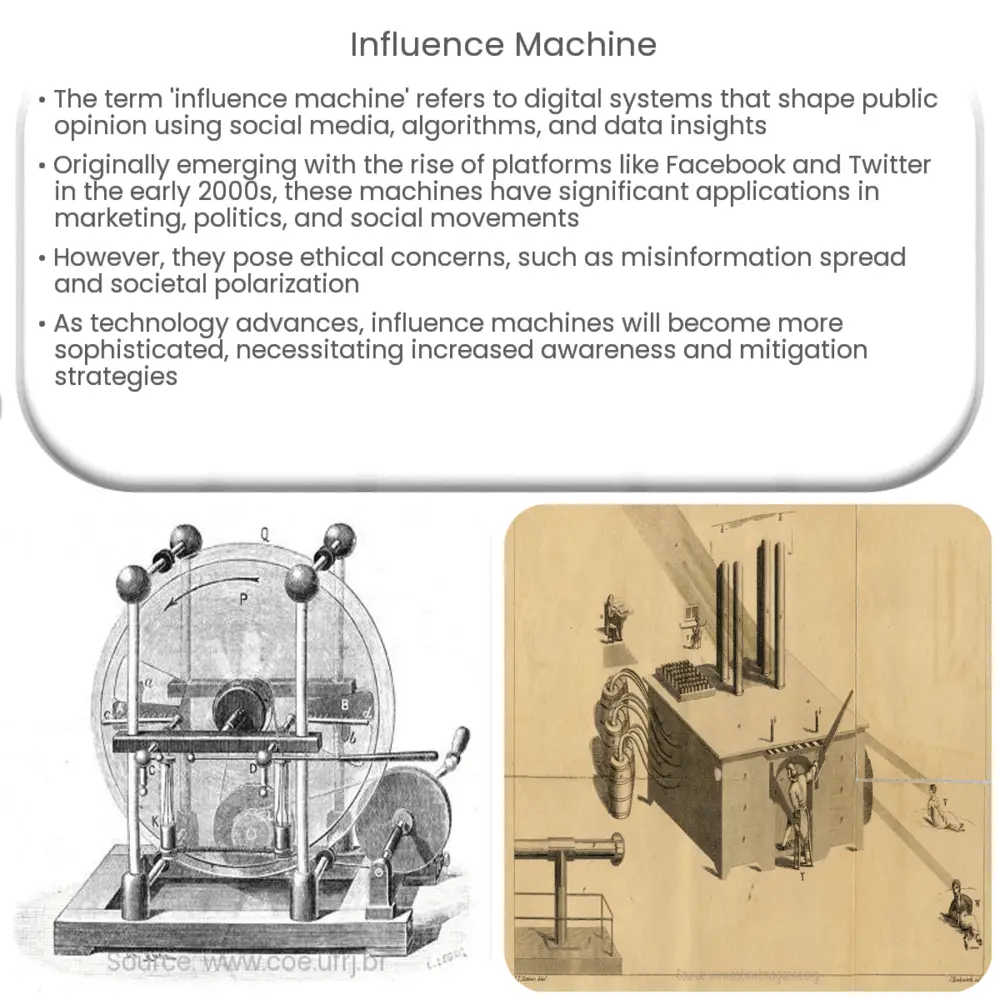
An influence machine is a digital system designed to manipulate and shape public opinion by leveraging the power of social media, algorithms, and data-driven insights. It can take various forms, including automated bots, online influencers, and even artificial intelligence-driven systems that create and disseminate targeted content. In essence, an influence machine aims to control the narrative within specific online spaces, swaying public opinion and decision-making processes in favor of a particular agenda or outcome.
The Origins of the Influence Machine
While the concept of influencing public opinion has existed for centuries, the emergence of the internet and social media has given rise to new tools and techniques for shaping public discourse. The influence machine as we know it today can be traced back to the early 2000s when platforms like Facebook, Twitter, and YouTube began gaining popularity. These sites provided fertile ground for the development of digital strategies aimed at swaying public opinion.
One of the first instances of an influence machine in action can be linked to the 2008 US presidential election, where Barack Obama’s campaign team utilized social media to mobilize support and create a sense of community among voters. Since then, the power and reach of influence machines have grown exponentially, influencing everything from brand perception to political outcomes on a global scale.
Applications of the Influence Machine
There are several key areas in which influence machines have made a notable impact, including:
- Marketing and Advertising: Brands have harnessed the power of influence machines to spread their messages and shape consumer perception. This can involve partnering with online influencers, using social media algorithms to target specific demographics, and even employing AI-driven systems to create personalized content.
- Politics: Political campaigns and organizations have increasingly turned to influence machines to shape public opinion, disseminate propaganda, and mobilize support. This has been seen in the form of targeted social media campaigns, troll armies, and the spread of misinformation and disinformation.
- Social Movements: Activists and advocacy groups have utilized influence machines to raise awareness, generate support, and promote their causes. This has included leveraging the power of social media influencers, creating viral content, and using data-driven strategies to target specific audiences.
Potential Risks and Ethical Considerations
While influence machines can be powerful tools for communication and persuasion, they also raise a number of ethical concerns and potential risks. The manipulation of public opinion through these mechanisms can contribute to the spread of misinformation, the polarization of society, and the erosion of trust in institutions. Additionally, influence machines can be weaponized for nefarious purposes, such as election interference, cyberbullying, and the promotion of hate speech.
As a result, it is crucial for governments, platforms, and society as a whole to consider the implications of influence machines and implement measures to mitigate their potential negative impacts. This can include the development of stricter regulations, the promotion of digital literacy, and the implementation of robust content moderation systems.
Future Developments and Trends
As technology continues to evolve, so too will the capabilities of influence machines. Some trends to watch for in the coming years include:
- AI-driven influence machines: Artificial intelligence is poised to play an increasingly significant role in the development of influence machines. This could involve the creation of highly sophisticated content generation systems, as well as the deployment of AI-driven bots for more targeted and efficient information dissemination.
- Increased personalization: The continued growth of big data and advanced analytics will enable influence machines to become even more personalized and tailored to individual users. This could lead to highly targeted campaigns and content that are specifically designed to resonate with and influence specific demographics.
- Counter-influence technologies: As the negative consequences of influence machines become more apparent, we are likely to see the development of new technologies and strategies designed to counter their effects. This may include innovative approaches to content moderation, fact-checking, and the promotion of reliable information sources.
Conclusion
Influence machines have emerged as a powerful force in the digital world, shaping public opinion and decision-making processes across various domains. As their capabilities continue to expand, it is essential for all stakeholders to understand their implications, recognize their potential risks, and collaborate on developing solutions to ensure a more transparent and ethical digital landscape.



