
Discover the benefits, applications, and key considerations of industrial infrared thermometers in this comprehensive guide.
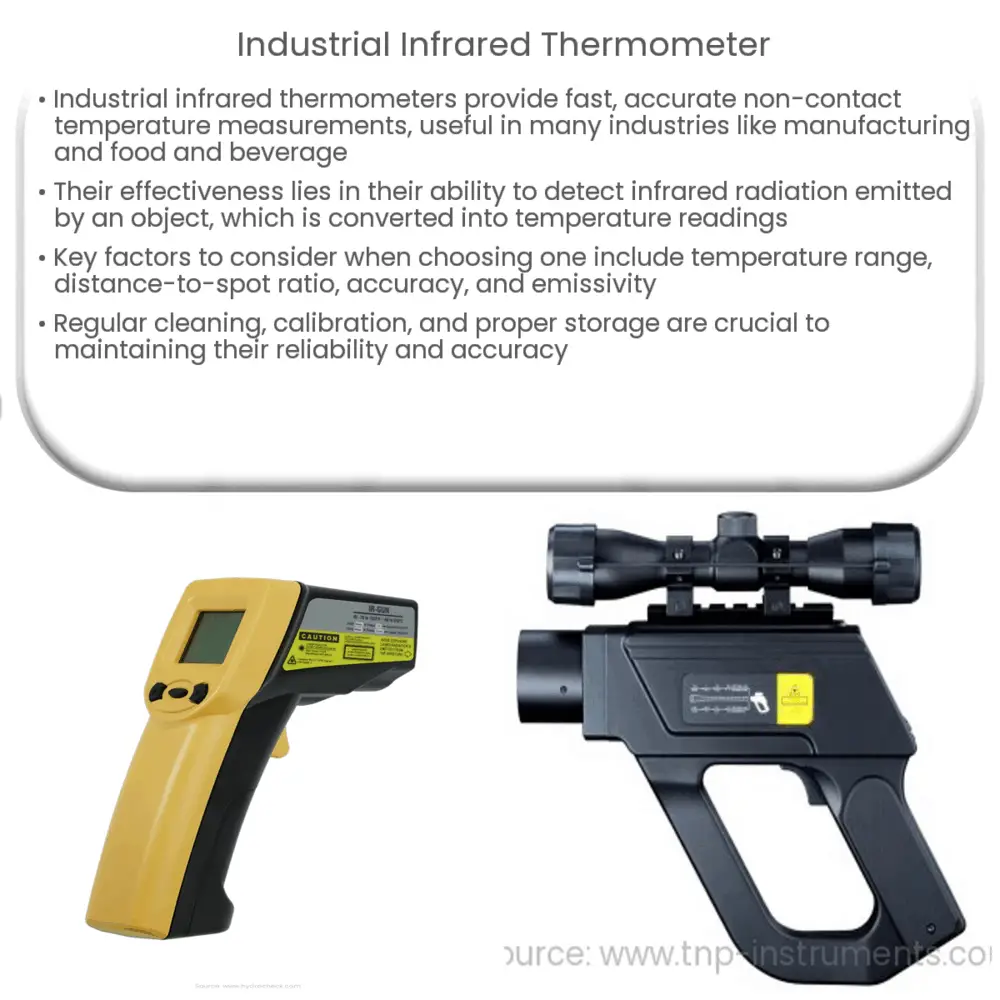
Industrial Infrared Thermometers: A Comprehensive Guide
In recent years, industrial infrared thermometers have become an essential tool in various industries. These non-contact devices provide accurate temperature measurements of objects from a safe distance, making them indispensable in applications where precise temperature control is crucial. In this article, we will explore the working principle, benefits, applications, and key considerations for selecting the right industrial infrared thermometer.
How Do Industrial Infrared Thermometers Work?
Industrial infrared thermometers, also known as IR thermometers or pyrometers, measure temperature by detecting the infrared radiation emitted by an object. This radiation is a byproduct of the object’s temperature and is directly proportional to its thermal energy. The thermometer’s infrared sensor collects this energy and converts it into an electrical signal. This signal is then processed by the device’s electronics and displayed as a temperature reading.
Because they do not require physical contact with the object being measured, infrared thermometers offer several advantages over traditional contact-based thermometers, including faster measurements, reduced risk of contamination, and the ability to measure objects in motion or at extremely high temperatures.
Benefits of Industrial Infrared Thermometers
There are numerous advantages to using industrial infrared thermometers in various applications, including:
- Non-contact measurement: IR thermometers can measure the temperature of an object without making direct contact, which is especially useful for fragile, hazardous, or hard-to-reach objects.
- Speed: Infrared thermometers provide near-instantaneous temperature readings, making them ideal for monitoring dynamic processes and rapidly changing temperatures.
- Accuracy: Many industrial infrared thermometers are highly accurate, often within 1% of the actual temperature, making them suitable for applications requiring precise temperature control.
- Safety: The non-contact nature of IR thermometers allows users to take measurements from a safe distance, reducing the risk of injury when measuring high-temperature, hazardous, or volatile materials.
Common Applications of Industrial Infrared Thermometers
Industrial infrared thermometers are used across a wide range of industries and applications, such as:
- Manufacturing: IR thermometers play a crucial role in quality control and process optimization in industries like metal forging, glass production, and plastic extrusion.
- Food and Beverage: Infrared thermometers are used to monitor the temperature of cooking, cooling, and storage processes to ensure food safety and quality.
- Electronics: They are used to inspect printed circuit boards and other electronic components for hotspots, which can indicate potential faults or failures.
- HVAC: Infrared thermometers are used to diagnose and optimize heating, ventilation, and air conditioning systems by measuring temperature gradients and identifying areas of heat loss or gain.
Selecting the Right Industrial Infrared Thermometer
When choosing an industrial infrared thermometer, it’s essential to consider several factors that can impact the device’s accuracy, reliability, and ease of use:
- Temperature Range: Select a thermometer with a temperature range suitable for your specific application. Some thermometers can measure temperatures as low as -50°C, while others can handle temperatures up to 2000°C or higher.
- Distance-to-Spot Ratio (D:S): This ratio determines the size of the area the thermometer measures at a given distance. A higher D:S ratio allows for accurate temperature readings from a greater distance, which is particularly important when measuring hazardous or high-temperature objects.
- Accuracy and Resolution: Choose a thermometer with an accuracy and resolution that meet your application’s requirements. Higher accuracy and resolution are essential for applications that demand precise temperature control.
- Emissivity: Emissivity is a measure of how efficiently an object emits infrared energy. Different materials have varying emissivities, which can impact the accuracy of temperature measurements. Some infrared thermometers have adjustable emissivity settings, while others have a fixed value. Select a thermometer with the appropriate emissivity setting for the materials you will be measuring.
- Additional Features: Consider thermometers with features such as data logging, alarms, and connectivity options (e.g., USB, Bluetooth, or Wi-Fi) if they can enhance the efficiency and utility of the device in your application.
Maintaining and Calibrating Industrial Infrared Thermometers
To ensure the continued accuracy and reliability of your industrial infrared thermometer, it’s important to follow proper maintenance and calibration procedures:
- Cleaning: Keep the infrared sensor and lens clean by gently wiping them with a soft, lint-free cloth. Avoid using harsh chemicals or abrasive materials that can damage the sensor or lens.
- Calibration: Regular calibration is crucial for maintaining the accuracy of your thermometer. Calibration should be performed according to the manufacturer’s recommendations, typically once a year or after significant temperature fluctuations. Some infrared thermometers have built-in calibration functions, while others require professional calibration services.
- Storage: Store your infrared thermometer in a clean, dry environment, away from extreme temperatures and humidity. Proper storage helps protect the device’s sensitive components and prolong its lifespan.
Conclusion
Industrial infrared thermometers are valuable tools in a wide range of applications, offering non-contact, fast, and accurate temperature measurements. By considering factors such as temperature range, distance-to-spot ratio, accuracy, emissivity, and additional features, you can select the right device for your specific needs. Regular maintenance and calibration ensure the continued reliability and accuracy of your infrared thermometer, making it an essential asset in your industrial toolbox.



