
Explore the function, benefits, and applications of Inductive Load Cells, critical tools for precise force measurement in industries.
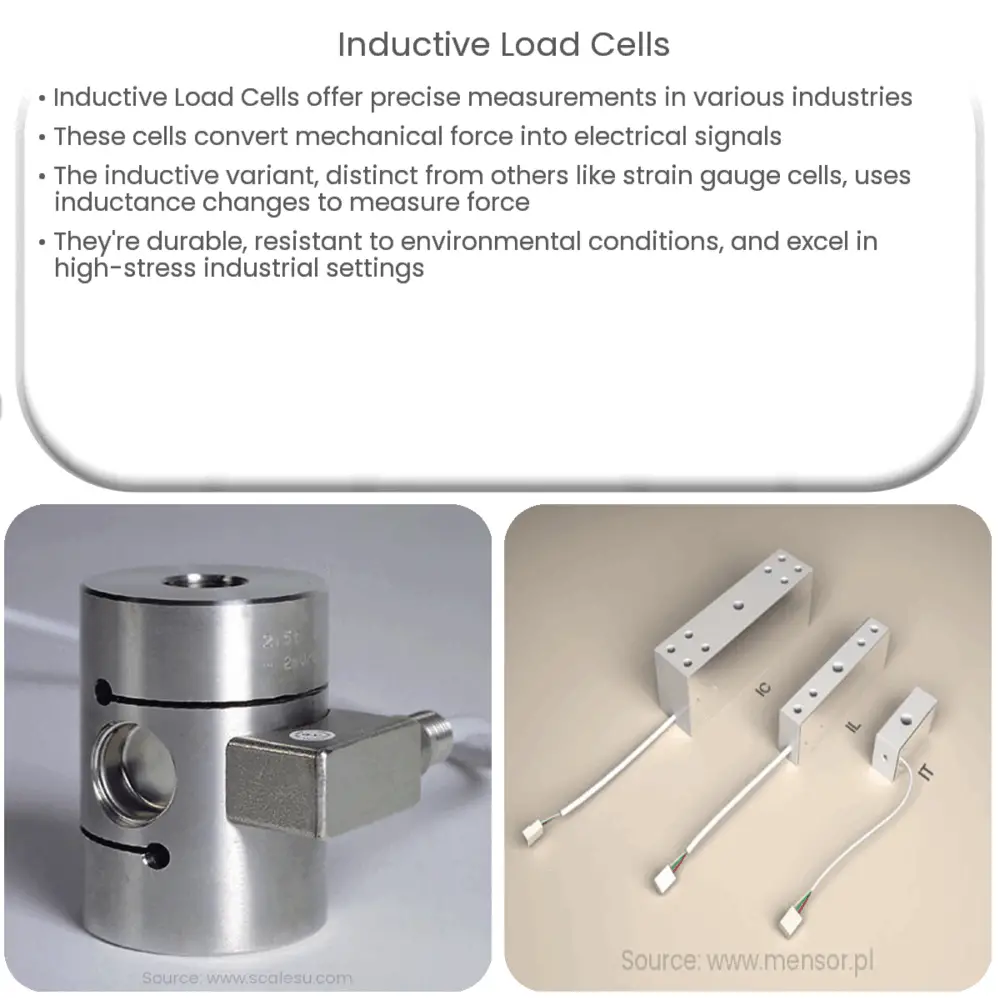
Understanding Inductive Load Cells
Inductive Load Cells are paramount in many industries, offering precise measurements and reliable operation. This article provides an in-depth understanding of these critical components and their functionalities.
The Concept of Load Cells
At its core, a load cell is a transducer that converts mechanical force into an electrical signal. This conversion is proportional, meaning the output signal varies in direct relation to the force applied. Load cells come in various types, including strain gauge, hydraulic, pneumatic, and inductive, each with unique benefits and applications.
What are Inductive Load Cells?
The inductive load cell is a special type of load cell, employing the principle of inductance to measure load or force. Unlike other load cells, which depend on strain gauges, inductive load cells use the change in an inductor’s properties as a measure of applied force. They offer several distinct advantages, including resistance to environmental conditions and high durability, making them suitable for harsh industrial environments.
How Inductive Load Cells Work
- Inductance Principle: An inductive load cell consists of an inductor, often a coil, which exhibits the property of inductance. When a force is applied, it alters the coil’s shape and changes the magnetic field within the coil. This results in a change in inductance, which can be accurately measured.
- Data Interpretation: The change in inductance corresponds directly to the applied force. By employing a suitably designed electronic circuit, these changes can be converted into electrical signals, usually in the form of voltage changes. The voltage can then be measured and interpreted to determine the exact force applied.
- Enhanced Durability: Unlike strain gauge load cells, inductive load cells are not susceptible to fatigue due to their non-contact nature. This results in longer lifespan and improved reliability, making them the preferred choice for many high-stress applications.
Inductive load cells continue to gain popularity due to their high precision, durability, and resistance to environmental factors. Their adaptability to diverse applications in industrial settings further bolsters their reputation as a reliable choice for force measurement.
In the next part of the article, we will delve deeper into the applications, benefits, and drawbacks of inductive load cells, as well as explore some of their common industrial applications.
Applications of Inductive Load Cells
Inductive load cells are commonly used in industrial applications where precision, durability, and resistance to environmental conditions are critical. They are found in manufacturing facilities, automotive industries, construction sites, and more. Specifically, they are utilized in:
- Crane Load Monitoring: Inductive load cells provide precise measurements to ensure safe operations in crane load monitoring.
- Vehicle Weighing: For commercial and industrial vehicles, inductive load cells offer the durability needed for accurate weighing applications.
- Force Measurement: In industrial settings where understanding force application is crucial, inductive load cells shine.
Advantages and Disadvantages of Inductive Load Cells
Like any technology, inductive load cells have both benefits and drawbacks. Their advantages include high accuracy, resistance to environmental conditions, and longevity. However, they are typically more expensive than other types of load cells and may require more complex circuitry to interpret the signal. Regardless, in applications where durability and precision are paramount, the cost can be justified.
Conclusion
In conclusion, inductive load cells are highly durable and accurate devices for measuring force or load. Their reliance on the principle of inductance allows them to operate effectively even in challenging environmental conditions, making them ideal for a range of industrial applications. Although they come at a higher cost than some other types of load cells, the benefits they provide, particularly in terms of longevity and reliability, make them an invaluable asset in numerous sectors.
As technology continues to advance, we can expect further improvements and enhancements in inductive load cells, which will expand their application range and improve their performance. Their role in industries such as manufacturing, automotive, and construction is likely to grow, reinforcing their status as a vital tool in these sectors.
Understanding the working principle, advantages, and limitations of inductive load cells is crucial for professionals in these fields, helping them to make informed decisions about the most appropriate force-measuring solutions for their specific applications.