
Hydraulic force sensors measure force and pressure in hydraulic systems, enabling efficient operation and control in various industries.
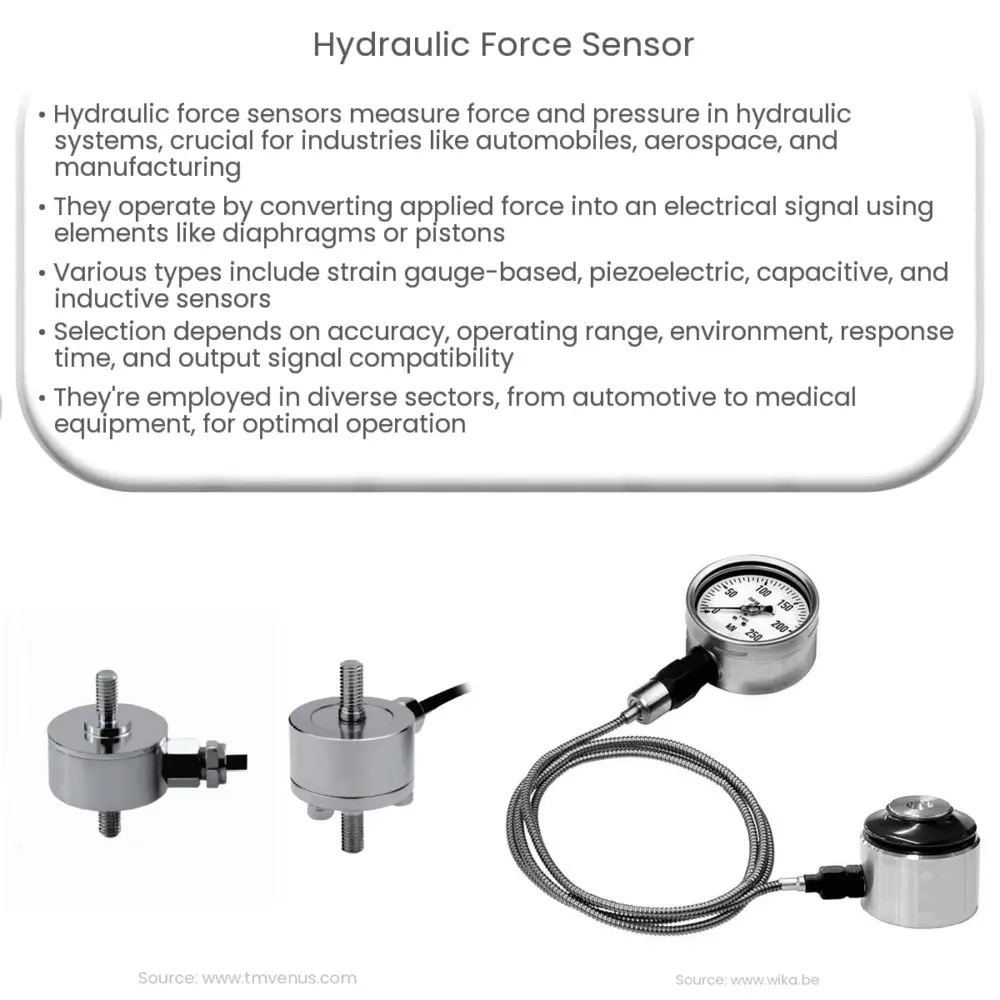
Understanding Hydraulic Force Sensors
Introduction to Hydraulic Force Sensors
Hydraulic force sensors are widely used in various industries to measure force and pressure in hydraulic systems. These sensors play a crucial role in ensuring the efficient operation and control of machinery and equipment, including automobiles, manufacturing machinery, and aerospace systems. In this article, we will explore the working principles, types, and applications of hydraulic force sensors.
Working Principle of Hydraulic Force Sensors
Hydraulic force sensors work on the principle of converting the applied force or pressure into an electrical signal. This is achieved by using a sensing element, which typically consists of a diaphragm, piston, or a bourdon tube. The sensing element is connected to a hydraulic system and is designed to deform under the influence of the applied force or pressure. The deformation of the sensing element is then converted into an electrical signal by a transducer, which can be a strain gauge, capacitive, piezoelectric, or inductive device.
These sensors are calibrated to provide accurate and repeatable measurements, ensuring that the output signal accurately represents the applied force or pressure. The electrical signal generated by the hydraulic force sensor is then processed and analyzed by a control system, which may use the data to adjust the operation of the hydraulic system, provide feedback to the operator, or perform other functions depending on the specific application.
Types of Hydraulic Force Sensors
There are several types of hydraulic force sensors available in the market, each with its unique characteristics and advantages. Some of the most common types include:
- Strain Gauge-Based Sensors: These sensors use strain gauges to convert the deformation of the sensing element into an electrical signal. They are widely used due to their high accuracy and reliability, as well as their ability to withstand harsh environments.
- Piezoelectric Sensors: These sensors use piezoelectric materials to generate an electrical signal in response to the applied force or pressure. Piezoelectric sensors are known for their high sensitivity, fast response time, and wide measuring range.
- Capacitive Sensors: Capacitive sensors use a capacitive transducer to measure the change in capacitance caused by the deformation of the sensing element. These sensors offer excellent sensitivity and can be used in various applications, including monitoring of fluid levels and detecting leaks in hydraulic systems.
- Inductive Sensors: Inductive sensors use an inductive coil to measure the change in inductance caused by the deformation of the sensing element. These sensors are known for their robustness and can be used in harsh environments where other types of sensors may fail.
Selection Criteria for Hydraulic Force Sensors
When choosing a hydraulic force sensor, it is essential to consider several factors to ensure optimal performance and suitability for the specific application. Some of these factors include:
- Accuracy: The accuracy of the sensor is a crucial factor to ensure reliable measurements. It is essential to choose a sensor with an accuracy level that meets the requirements of the application.
- Operating Range: The operating range of the sensor should cover the expected force or pressure levels in the hydraulic system. It is important to choose a sensor with a suitable measuring range to avoid overloading or underutilizing the sensor.
- Environmental Conditions: The sensor should be able to withstand the environmental conditions of the application, including temperature, humidity, and potential exposure to corrosive substances. Select a sensor with the appropriate ingress protection (IP) rating and material composition to ensure reliable operation in the given environment.
- Response Time: The response time of the sensor is critical for applications that require real-time monitoring and control. Choose a sensor with a fast response time to ensure timely and accurate feedback to the control system.
- Output Signal: The output signal of the sensor should be compatible with the control system being used. Common output signals include analog (e.g., 4-20mA, 0-10V) and digital (e.g., RS-232, RS-485, CAN) formats. Ensure that the chosen sensor can easily integrate with your existing infrastructure.
Applications of Hydraulic Force Sensors
Hydraulic force sensors are used in a wide range of industries and applications due to their versatility and reliability. Some common applications include:
- Automotive Industry: Hydraulic force sensors are used to measure brake pressure, clutch pressure, and suspension force in automobiles, ensuring safe and efficient operation of the vehicle.
- Manufacturing: In manufacturing processes, hydraulic force sensors are used to monitor and control the force exerted by machines and equipment, such as presses, injection molding machines, and robotic arms, ensuring consistent product quality and preventing damage to machinery.
- Aerospace: Hydraulic force sensors are employed in aircraft landing gear systems, control surfaces, and hydraulic actuators, ensuring accurate control and monitoring of critical components.
- Oil and Gas Industry: These sensors are used to monitor and control the pressure in pipelines, valves, and other components of oil and gas infrastructure, ensuring safe and efficient operation.
- Medical Equipment: Hydraulic force sensors are used in various medical devices, such as infusion pumps and surgical instruments, to ensure precise control and operation.
In conclusion, hydraulic force sensors play a crucial role in various industries by providing accurate and reliable force and pressure measurements. Understanding the working principles, types, and applications of these sensors can help users make informed decisions when selecting the appropriate sensor for their specific needs.



