
Discover the benefits of HVAC infrared thermometers, their applications, and tips for choosing, using, and maintaining these essential tools for accurate temperature measurements.
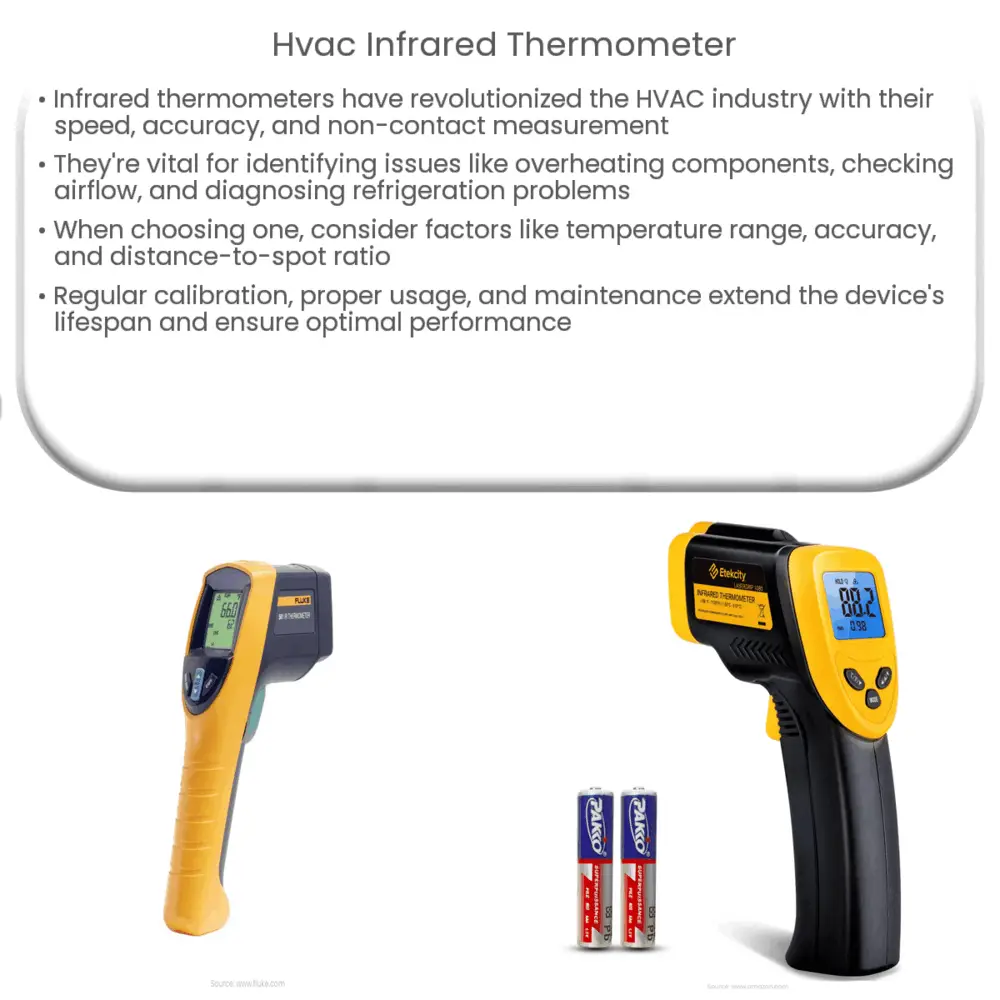
HVAC Infrared Thermometer: Revolutionizing Temperature Measurement in HVAC Systems
An essential tool for HVAC professionals, the infrared thermometer has become a game-changer for the industry in recent years. Offering unparalleled accuracy and speed, this device has made temperature measurement and diagnosis in HVAC systems more efficient than ever. In this article, we’ll explore the numerous benefits and applications of HVAC infrared thermometers, as well as provide guidance on how to select the right one for your needs.
What is an Infrared Thermometer?
An infrared thermometer, also known as a non-contact thermometer or IR thermometer, is a device that measures temperature by capturing the infrared energy emitted by an object. This cutting-edge technology allows for quick and accurate temperature readings without making any physical contact with the surface being measured. As a result, IR thermometers have become a vital tool in a variety of industries, including HVAC.
Benefits of Using an Infrared Thermometer in HVAC
There are numerous advantages to using an infrared thermometer in the HVAC field, including the following:
- Speed: Infrared thermometers provide near-instantaneous readings, enabling technicians to quickly assess and diagnose issues within an HVAC system.
- Accuracy: IR thermometers are known for their exceptional accuracy, ensuring precise temperature measurements for optimal system performance.
- Non-contact: The non-contact nature of infrared thermometers allows technicians to measure temperatures from a safe distance, minimizing the risk of injury and damage to the system.
- Versatility: Infrared thermometers can be used to measure a wide range of temperatures and on various surfaces, making them suitable for many different HVAC applications.
Common Applications of HVAC Infrared Thermometers
IR thermometers are widely used in the HVAC industry for a variety of applications, such as:
- Checking for hot spots: Technicians can use IR thermometers to identify areas of excessive heat within an HVAC system, which could indicate issues such as faulty wiring, overheating components, or poor insulation.
- Measuring air temperature: Infrared thermometers can be used to quickly and accurately measure air temperature coming from supply and return vents, helping to ensure proper airflow and temperature balance throughout a building.
- Inspecting ductwork: By measuring the temperature of duct surfaces, technicians can identify areas where heat loss is occurring, pinpointing areas in need of repair or additional insulation.
- Diagnosing refrigeration issues: IR thermometers can help technicians identify temperature fluctuations within refrigeration systems, which may indicate problems such as low refrigerant levels, leaks, or malfunctioning components.
In the second part of this article, we will discuss how to choose the right infrared thermometer for your specific HVAC needs, as well as provide tips on how to properly use and maintain your device for optimal performance.
Choosing the Right Infrared Thermometer for Your HVAC Needs
With various infrared thermometer models available on the market, it’s essential to select the right one for your specific HVAC needs. Consider the following factors when making your decision:
- Temperature Range: Choose a thermometer with a temperature range that covers the typical measurements required in your HVAC work. Some models have a wider range, making them more versatile for different applications.
- Accuracy: Look for a device with a high accuracy rating to ensure precise temperature measurements. Accuracy is usually expressed as a percentage, with lower percentages indicating greater precision.
- Distance-to-Spot Ratio: The distance-to-spot ratio (D:S) indicates the size of the area the thermometer measures at a specific distance. A higher D:S ratio allows for more accurate temperature readings from greater distances, which can be beneficial in HVAC applications.
- Additional Features: Some infrared thermometers come with extra features such as adjustable emissivity, built-in laser pointers, or data logging capabilities. While these features can be helpful, they may also increase the price of the device, so consider your specific needs and budget when selecting a model.
Tips for Properly Using and Maintaining Your Infrared Thermometer
To ensure optimal performance and extend the life of your infrared thermometer, follow these best practices:
- Proper Usage: Always follow the manufacturer’s instructions for using and maintaining your infrared thermometer. This includes adhering to recommended measurement distances and adjusting emissivity settings as needed for different surfaces.
- Regular Calibration: Over time, infrared thermometers can lose accuracy. Regular calibration ensures your device remains accurate and reliable. Consult the manufacturer’s guidelines for calibration intervals and procedures.
- Clean the Lens: A dirty lens can affect the accuracy of your thermometer’s readings. Gently clean the lens using a soft cloth and an approved lens cleaning solution.
- Proper Storage: Store your infrared thermometer in a cool, dry place, and avoid exposure to extreme temperatures or humidity. Always keep the device in its protective case when not in use to prevent damage.
- Battery Maintenance: Regularly check the battery level of your thermometer and replace batteries as needed. Remove batteries if the device will not be used for an extended period to prevent battery leakage and damage.
Conclusion
HVAC infrared thermometers have become an indispensable tool for professionals in the field, providing rapid and accurate temperature measurements for a variety of applications. By selecting the right device for your specific needs and following proper usage and maintenance guidelines, you can ensure optimal performance and extend the life of your infrared thermometer. With this invaluable tool in your arsenal, you’ll be better equipped to diagnose and address HVAC system issues, ensuring the comfort and safety of your clients.



