Magnetic induction is used in medical imaging (MRI, MEG) and therapies (TMS, magnetic hyperthermia, magnetic drug targeting) to improve patient care.
Magnetic Induction in Medical Imaging and Therapy
Magnetic induction is a versatile technology that has found numerous applications in the field of medical imaging and therapy. This article will explore how magnetic induction is utilized in medical devices and procedures, contributing to advancements in healthcare and patient outcomes.
Magnetic Induction in Medical Imaging
Medical imaging techniques that employ magnetic induction include:
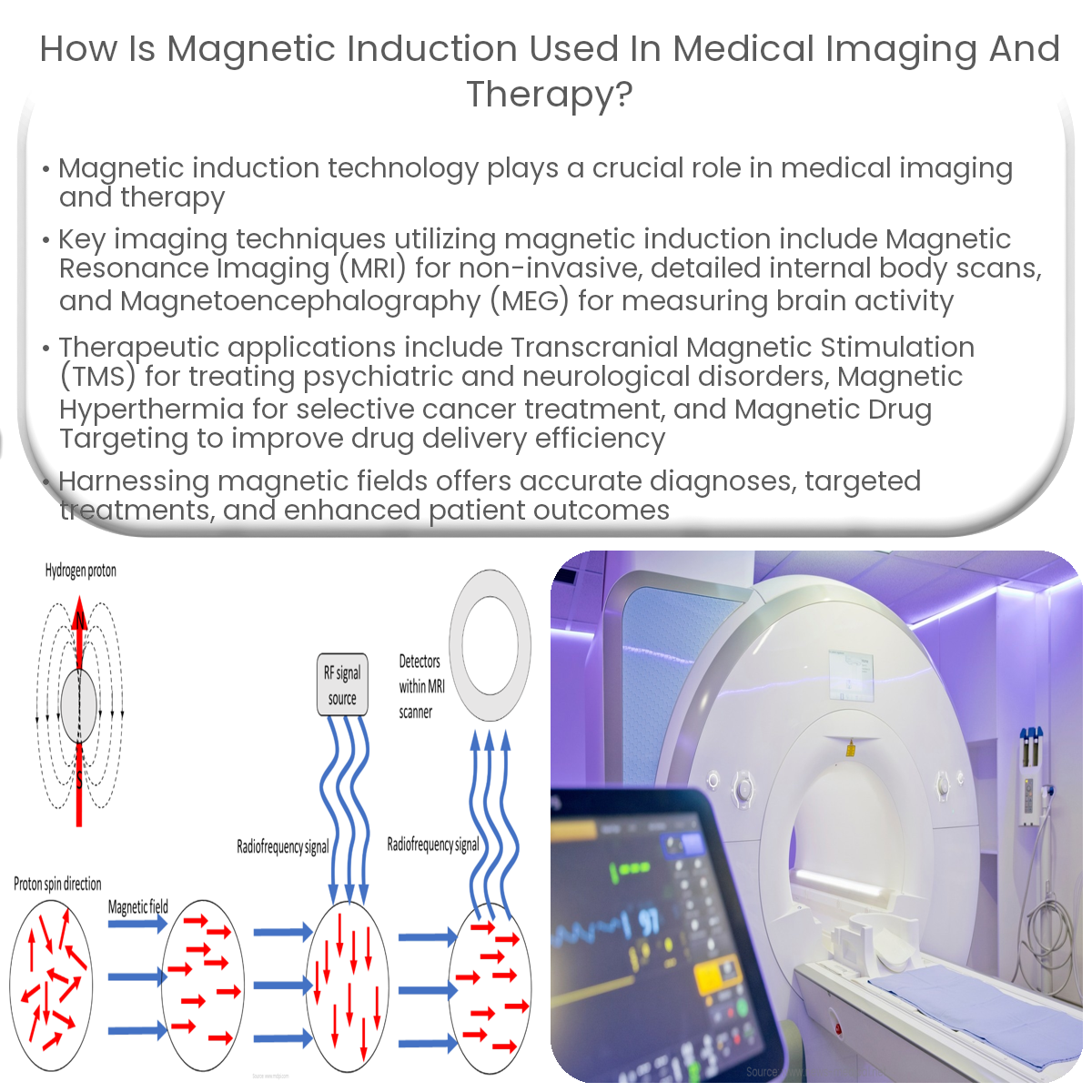
- Magnetic Resonance Imaging (MRI): MRI is a non-invasive imaging technique that uses a strong magnetic field and radiofrequency pulses to generate detailed images of the body’s internal structures. The magnetic field induces the alignment of hydrogen nuclei in the body, and the radiofrequency pulses excite these nuclei, causing them to emit signals. These signals are detected, processed, and reconstructed into high-resolution images, allowing for the diagnosis and monitoring of various medical conditions.
- Magnetoencephalography (MEG): MEG is a functional neuroimaging technique that measures the magnetic fields produced by electrical activity in the brain. Using an array of highly sensitive magnetic sensors, MEG can localize and track brain activity with high temporal and spatial resolution, aiding in the diagnosis and treatment of neurological disorders.
Magnetic Induction in Medical Therapy
Therapeutic applications of magnetic induction include:
- Transcranial Magnetic Stimulation (TMS): TMS is a non-invasive treatment that uses magnetic induction to stimulate specific areas of the brain. A magnetic coil is placed on the scalp, generating a rapidly changing magnetic field that induces an electric current in the underlying brain tissue. TMS can be used to treat various psychiatric and neurological disorders, such as depression, migraines, and Parkinson’s disease.
- Magnetic Hyperthermia: Magnetic hyperthermia is a cancer treatment that uses magnetic induction to heat cancerous tissues selectively. Magnetic nanoparticles are injected into the tumor, and an alternating magnetic field is applied, causing the nanoparticles to generate heat. This heat damages or destroys cancer cells while sparing healthy tissues.
- Magnetic Drug Targeting: This therapeutic approach uses magnetic induction to guide drug-loaded magnetic nanoparticles to specific target sites within the body. An external magnetic field is applied to direct the nanoparticles to the desired location, enhancing drug delivery and reducing side effects.
Conclusion
Magnetic induction has proven to be a valuable tool in medical imaging and therapy, offering innovative solutions for the diagnosis and treatment of various diseases and conditions. By harnessing the power of magnetic fields, healthcare professionals can provide more accurate diagnoses, develop targeted treatments, and improve patient outcomes.