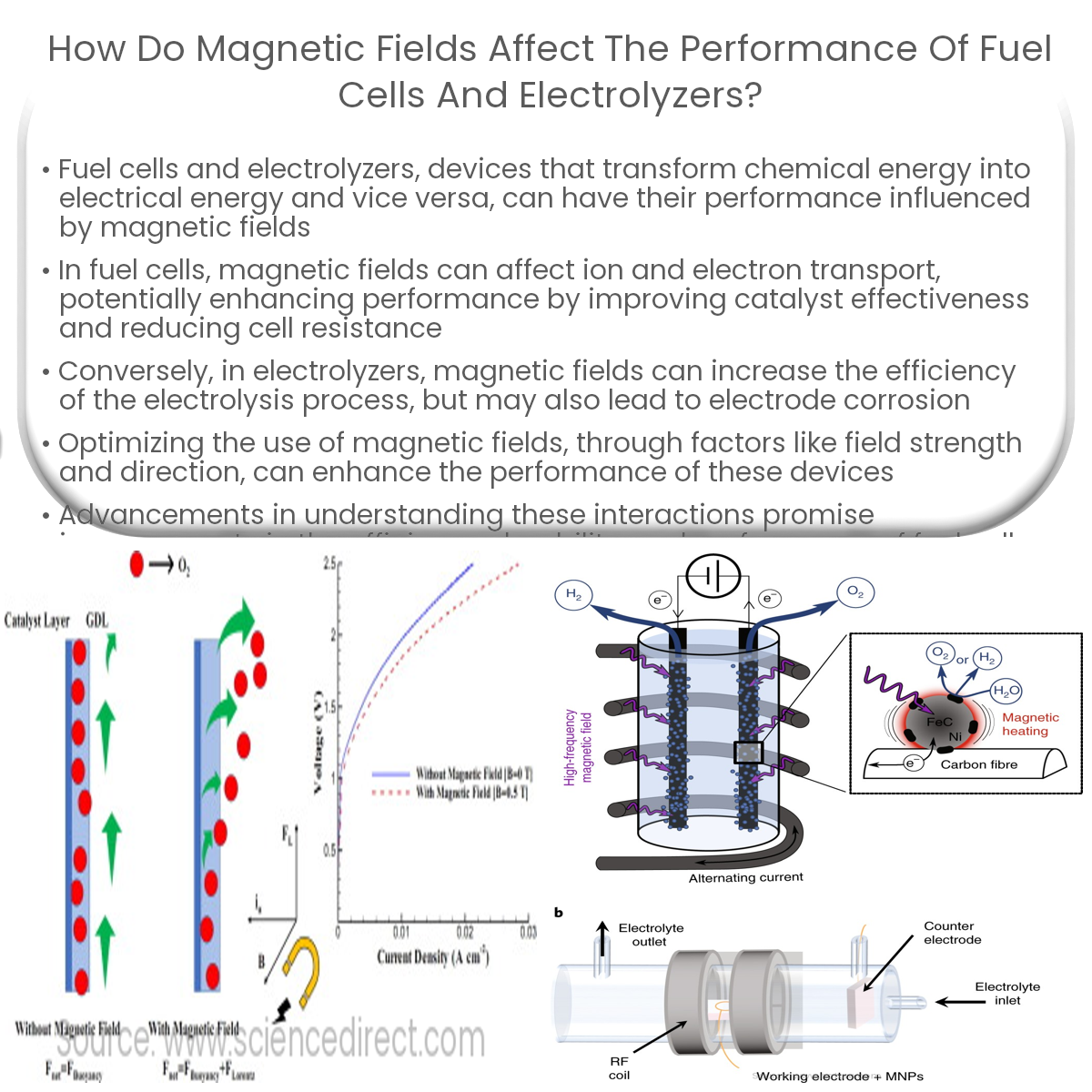
Magnetic fields can both enhance and hinder fuel cells and electrolyzers’ performance by affecting ion transport, reaction rates, and electrode efficiency.
Magnetic Fields in Fuel Cells and Electrolyzers
Fuel cells and electrolyzers are devices that convert chemical energy into electrical energy and vice versa. While fuel cells generate electricity from hydrogen and oxygen, electrolyzers produce hydrogen from water. Magnetic fields can impact the performance of these devices, both positively and negatively.
Fuel Cells
Fuel cells rely on the electrochemical reaction between hydrogen and oxygen to produce electrical power. In the presence of a catalyst, hydrogen molecules separate into protons and electrons. The electrons travel through an external circuit, generating electricity, while the protons pass through an electrolyte membrane. Finally, the protons and electrons recombine with oxygen molecules to form water.
External magnetic fields can influence the transport of ions and electrons within the fuel cell. This impact can be both beneficial and detrimental, depending on the strength and orientation of the magnetic field. In some cases, the magnetic field can enhance the performance of the fuel cell by improving the catalyst’s effectiveness, promoting better mass transport, and reducing the overall cell resistance.
Electrolyzers
Electrolyzers, on the other hand, use electricity to split water into hydrogen and oxygen. A magnetic field can affect the performance of electrolyzers by influencing the rate of electrochemical reactions at the electrodes, as well as the transport of ions in the electrolyte.
Studies have shown that magnetic fields can enhance the efficiency of the electrolysis process by promoting the formation of gas bubbles and improving mass transport in the electrolyte. This can lead to higher hydrogen production rates and reduced energy consumption. However, strong magnetic fields may also cause unwanted side effects, such as increased electrode corrosion and reduced electrode life.
Optimizing Performance with Magnetic Fields
To maximize the benefits of magnetic fields in fuel cells and electrolyzers, researchers are exploring various strategies, such as optimizing the strength and direction of the magnetic field, designing new materials with tailored magnetic properties, and developing novel cell architectures that exploit the unique features of magnetic fields.
As our understanding of the interactions between magnetic fields and electrochemical devices continues to grow, we can expect to see new developments and improvements in the efficiency, durability, and performance of fuel cells and electrolyzers in various applications, from transportation to renewable energy storage.