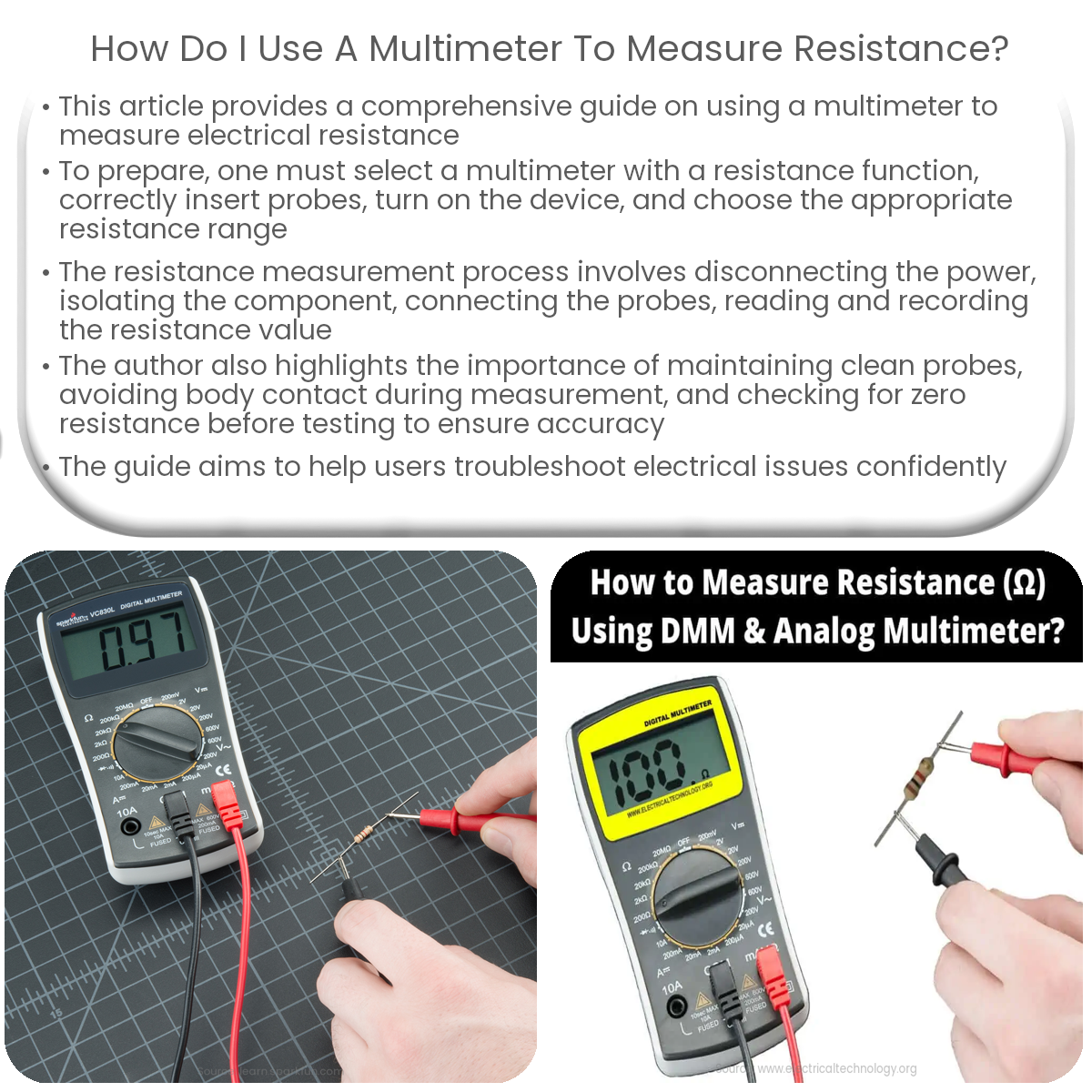
To measure resistance with a multimeter, set it to resistance mode, disconnect power, isolate the component, connect probes, and read the value.
Using a Multimeter to Measure Resistance
A multimeter is a versatile instrument used to measure various electrical properties, such as voltage, current, and resistance. This article will provide a step-by-step guide on how to use a multimeter to measure resistance accurately and safely.
Preparing the Multimeter
Before you begin measuring resistance, ensure your multimeter is ready for use:
- Select the right multimeter: Choose a digital or analog multimeter with a resistance measurement function, typically denoted by the ohm (Ω) symbol.
- Insert the probes: Connect the black (common) probe to the COM port and the red (positive) probe to the VΩmA port on the multimeter.
- Turn on the multimeter: Switch on the multimeter and set the dial or mode selector to the resistance (Ω) measurement function.
- Choose the appropriate range: If your multimeter has a manual ranging function, select a suitable resistance range based on the expected resistance value.
Measuring Resistance
Follow these steps to measure the resistance of an electrical component or circuit:
- Disconnect the power: Always ensure the component or circuit is disconnected from any power source before measuring resistance to avoid damage to the multimeter.
- Isolate the component: If measuring the resistance of a component within a circuit, disconnect it from the circuit to prevent interference from other components.
- Connect the probes: Touch the black (common) probe to one end of the component or circuit, and the red (positive) probe to the other end.
- Read the resistance value: The multimeter will display the resistance value in ohms (Ω). If using an auto-ranging multimeter, it will automatically adjust to the correct range.
- Record the value: Note down the measured resistance value for further analysis or troubleshooting.
Tips for Accurate Resistance Measurements
Keep the following tips in mind to ensure accurate resistance measurements:
- Keep probes clean: Dirty or corroded probe tips can cause inaccurate readings. Clean the probes with a soft cloth or fine sandpaper if necessary.
- Avoid body contact: Touching the probes or component while measuring resistance can introduce error. Hold the probe handles to minimize interference.
- Check for zero resistance: Touch the probe tips together and confirm that the multimeter reads zero or near-zero resistance before testing.
In conclusion, using a multimeter to measure resistance is a simple and effective method for testing electrical components and circuits. By following the steps and tips outlined above, you can accurately measure resistance and troubleshoot electrical issues with confidence.