
Explore the intriguing world of high-permeability cobalt-iron (CoFe) alloys, their unique properties, applications, and future outlook.
Introduction to High-Permeability Cobalt-Iron (CoFe) Alloys
The world of materials science and engineering is vast and intriguing, with high-permeability cobalt-iron (CoFe) alloys being one of the notable innovations. These alloys are known for their superior magnetic properties, making them crucial in various technological advancements.
Composition and Key Properties
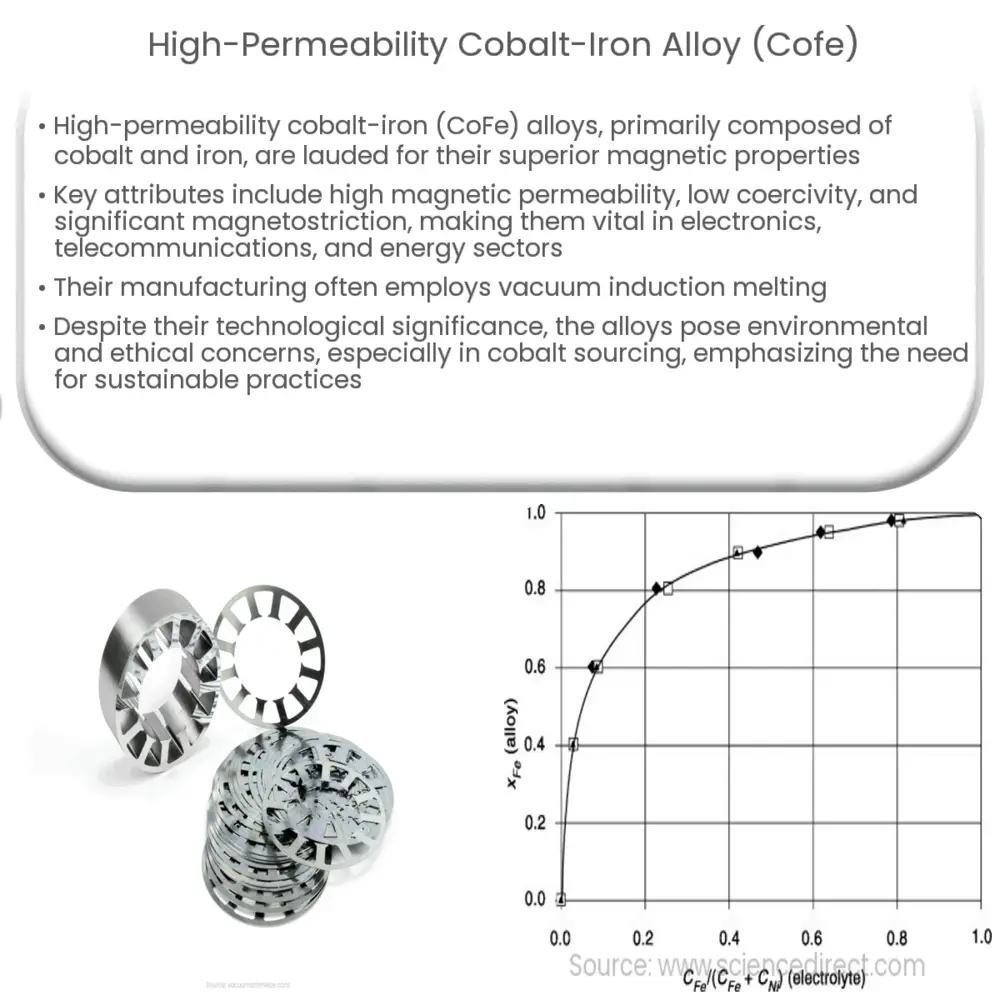
High-permeability CoFe alloys are composed primarily of cobalt and iron. The ratio of these two metals can vary, but the most common form is the 2:1 ratio, known as permalloy. This alloy is characterized by its high magnetic permeability, low coercivity, and significant magnetostriction. These properties make it an optimal material for many applications in industries such as electronics, telecommunications, and energy.
- High Magnetic Permeability: This property refers to the ease with which a material can be magnetized. High-permeability CoFe alloys can be magnetized much more readily than many other materials, which makes them ideal for applications where strong magnetic fields are required.
- Low Coercivity: Coercivity is a measure of the resistance of a magnetic material to changes in magnetization. Low coercivity means that it’s easy to change the magnetic field in the material, which is beneficial for applications such as magnetic recording.
- Significant Magnetostriction: Magnetostriction is the change in a material’s dimensions in response to a magnetic field. The high magnetostriction of CoFe alloys makes them useful in devices such as sensors and transducers.
Manufacturing Processes
The manufacturing processes of high-permeability CoFe alloys can vary, but one common method is the process of vacuum induction melting. This process involves melting the raw materials in a vacuum to prevent contamination from the atmosphere. Once melted, the liquid metal is cooled and solidified into the desired shape.
Applications
Given their unique properties, high-permeability CoFe alloys are used in a wide range of applications. From transformers and inductors in power electronics to read heads in hard disk drives, these alloys are integral to many of the technologies that we rely on every day.
Environmental Impact and Sustainability
Like any material, the production and use of high-permeability CoFe alloys have an environmental impact. The extraction of raw materials such as cobalt and iron can lead to habitat destruction and pollution. However, efforts are being made to mitigate these impacts through responsible mining practices and recycling initiatives.
Advancements and Future Outlook
As technology continues to evolve, so does the demand for materials with advanced properties. Research and development in the field of high-permeability CoFe alloys are ongoing, with scientists and engineers continually exploring new applications and methods of production. For instance, the development of thin film CoFe alloys has opened up possibilities in areas like nanotechnology and microelectronics. Furthermore, as the push towards renewable energy sources intensifies, CoFe alloys could play a key role in efficient power conversion and energy storage systems.
Challenges and Limitations
Despite their numerous advantages, high-permeability CoFe alloys are not without their challenges. The alloys’ high magnetostriction can lead to mechanical stress and deformation when used in certain applications, which requires careful design and material selection. Moreover, the sourcing and processing of cobalt, a key component of these alloys, present ethical and environmental concerns due to associated labor conditions and ecological impact. Therefore, continued research into more sustainable practices and potential alternative materials is critical.
Conclusion
In conclusion, high-permeability cobalt-iron (CoFe) alloys represent an exciting frontier in materials science and engineering. Their unique magnetic properties, combined with ongoing advancements in technology and processing methods, make them a material of great interest for a wide range of applications. However, their use also presents challenges, particularly from an environmental and ethical standpoint. As we move into the future, it will be crucial to balance the demand for these advanced materials with the need for sustainable and responsible practices. Nonetheless, the potential of high-permeability CoFe alloys to revolutionize industries and contribute to technological progress is undeniable.