
Explore the importance of fuse holders in electrical systems, their various types, and maintenance tips for optimal functioning.
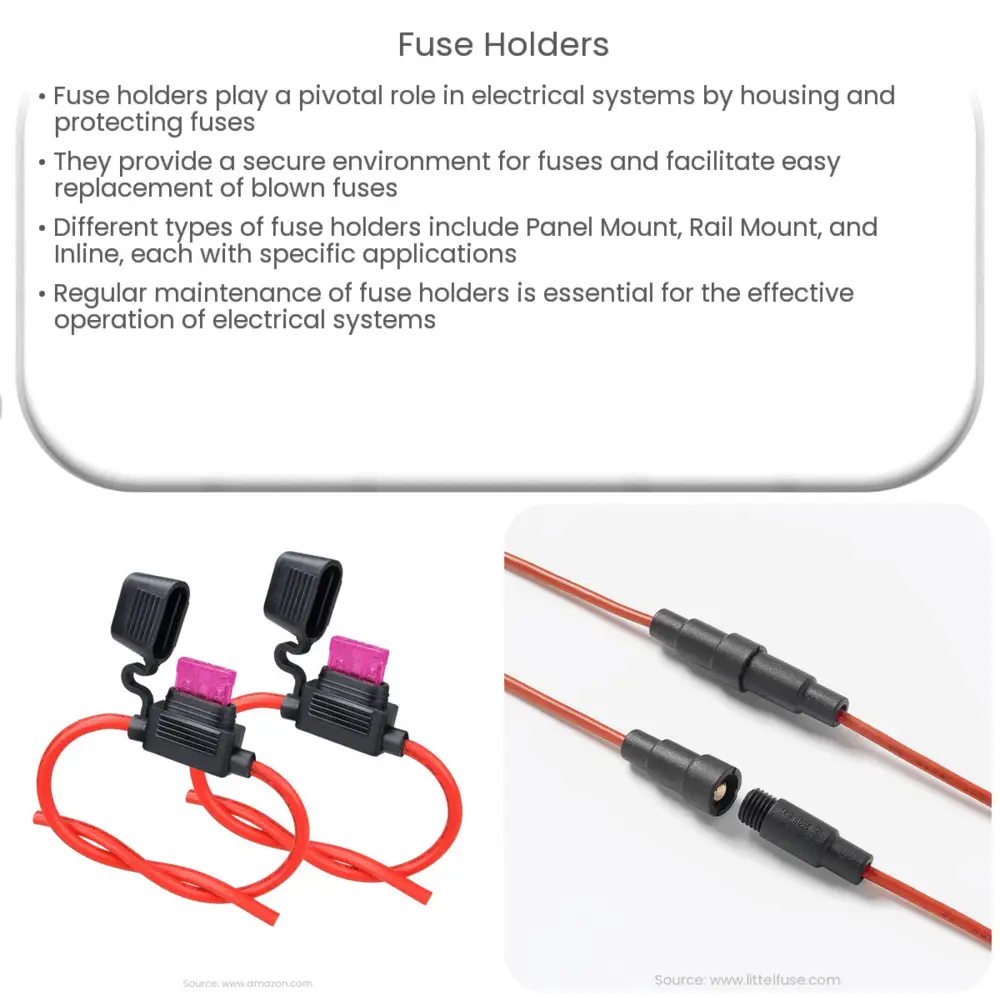
Fuse Holders: The Unseen Guardians of Electrical Systems
Fuse holders, despite their small size and unassuming design, play a pivotal role in electrical systems. They are responsible for housing and protecting fuses, which are the components that safeguard electrical systems from the damaging effects of overcurrent situations. Without a well-functioning fuse holder, a fuse cannot perform its duty efficiently. This article delves into the world of fuse holders, understanding their functionality, types, and importance in electrical systems.
The Functionality of Fuse Holders
The primary purpose of a fuse holder is to offer a secure and safe environment for a fuse. It not only provides the necessary physical structure to install the fuse, but also aids in the insulation of the fuse from surrounding elements. This insulation reduces the chances of accidental electrical shocks and potential short circuits that could be harmful to both the system and the individuals handling it.
Moreover, fuse holders allow for the easy replacement of blown fuses. Fuses are designed to ‘blow’ or break the circuit when an overcurrent situation arises, thereby protecting the rest of the system from damage. After such an event, the fuse becomes useless and must be replaced. Here, the fuse holder provides a simple and secure way to remove and replace the fuse without needing to disrupt the entire system.
Types of Fuse Holders
- Panel Mount Fuse Holders: These fuse holders are designed to be mounted directly onto a panel. They are often used in applications where space is at a premium or where a clean, integrated look is desired.
- Rail Mount Fuse Holders: Rail mount fuse holders are intended for use in situations where multiple fuses are required. They are mounted onto a standard rail, making it easier to add, remove, or replace fuses as needed.
- Inline Fuse Holders: These fuse holders are designed to be installed directly into the circuit wiring. They are ideal for situations where a fuse needs to be added to an existing circuit without the need for additional hardware or substantial rewiring.
Each type of fuse holder comes with its unique set of advantages and applications, depending on the specific requirements of the electrical system in question.
Choosing the Right Fuse Holder
Selecting an appropriate fuse holder is equally crucial as choosing the right fuse. Factors such as the operating voltage and current, the type of fuse to be used, environmental conditions, safety standards, and the mounting style all come into play. For instance, if the electrical system is likely to be exposed to high temperatures or moisture, a fuse holder with suitable heat and water resistance should be chosen.
Furthermore, the physical dimensions of the fuse to be used, as well as the space available for the holder installation, should also be taken into account. Compatibility with the fuse size is of utmost importance, as a mismatch can lead to poor electrical contact or inappropriate insulation, thereby compromising the safety and efficiency of the system.
Maintenance of Fuse Holders
Regular maintenance of fuse holders is essential to ensure the effective operation of the electrical system. Maintenance activities might include regular inspection for any signs of wear, tear, or damage, cleaning to remove dust or debris, and checking the holder’s contacts for proper tension. In addition, it’s advisable to replace the fuse holder periodically, or as per the manufacturer’s instructions, as a degraded fuse holder might not provide optimal protection to the fuse.
Conclusion
In conclusion, fuse holders are integral components of any electrical system, protecting the fuses and ensuring smooth functioning. Their diverse types cater to various applications, and choosing the right one is paramount to maintain system safety and efficiency. Furthermore, regular maintenance of fuse holders is essential to prolong their lifespan and keep the electrical system running smoothly. By understanding and appreciating the role of fuse holders, we can better comprehend the intricate workings of electrical systems that power our daily lives.



