
A folded fin heatsink is a compact, accordion-like structure that enhances heat dissipation in electronic devices, providing efficient cooling.
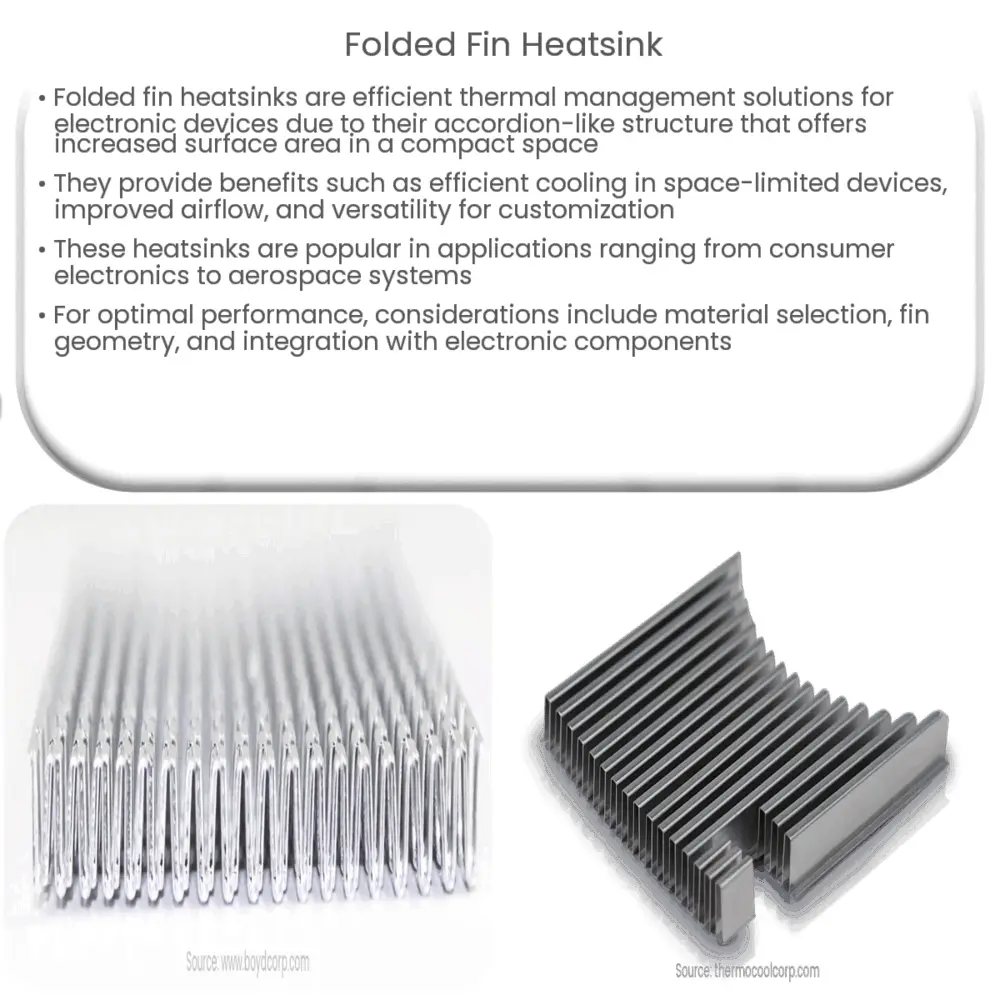
Folded Fin Heatsink: Enhancing Thermal Management in Electronic Devices
Introduction
As the demand for higher performance and more compact electronic devices continues to rise, efficient thermal management solutions have become increasingly important. One such solution that has gained significant attention is the folded fin heatsink. This article will provide an overview of the folded fin heatsink, its benefits, and applications in various industries.
What is a Folded Fin Heatsink?
A folded fin heatsink is a type of heatsink design that features a series of thin, closely spaced metal fins folded into a compact, accordion-like structure. The unique design allows for greater surface area in a small space, thereby increasing heat dissipation and improving cooling efficiency. Typically, the folded fin heatsink is made from materials with high thermal conductivity, such as aluminum or copper, to maximize its heat transfer capabilities.
Benefits of Folded Fin Heatsinks
Folded fin heatsinks offer several advantages over traditional heatsink designs. Some of the key benefits include:
1. Increased Surface Area
The folded fin design increases the surface area available for heat transfer, allowing for more efficient cooling. This is particularly important in compact electronic devices, where space is limited, and conventional heatsinks may not provide adequate cooling performance.
2. Lightweight and Compact
Folded fin heatsinks are generally lighter and more compact than traditional heatsinks, making them ideal for use in portable electronic devices and other space-constrained applications. The reduced weight and size also help lower the overall weight of the device, contributing to improved user experience and portability.
3. Improved Airflow
The unique structure of folded fin heatsinks promotes better airflow through the heatsink, which aids in cooling efficiency. This can be particularly beneficial in forced convection cooling systems, where a fan or blower is used to circulate air across the heatsink.
4. Versatility
Folded fin heatsinks can be customized to meet specific thermal management requirements, making them suitable for a wide range of applications. The ability to adjust the fin pitch, thickness, and material allows designers to optimize the heatsink for the particular device and cooling needs.
Applications of Folded Fin Heatsinks
Due to their high thermal performance and compact design, folded fin heatsinks have been adopted in numerous industries and applications. Some of these include:
- Consumer electronics, such as smartphones, tablets, and laptops
- Telecommunication equipment, including routers and switches
- LED lighting systems, where efficient thermal management is critical for maintaining optimal performance and longevity
- Automotive electronics, for cooling high-power components such as electric vehicle (EV) battery management systems and power inverters
- Aerospace and defense applications, where lightweight and high-performance thermal management solutions are essential
Design Considerations for Folded Fin Heatsinks
When designing a folded fin heatsink, there are several key factors to consider in order to achieve optimal thermal performance. These include:
1. Material Selection
The choice of material is crucial for maximizing heat transfer efficiency. Aluminum and copper are the most common materials used for folded fin heatsinks due to their high thermal conductivity. However, other materials like graphite or advanced metal alloys can also be considered, depending on the specific application requirements and budget constraints.
2. Fin Geometry
The geometry of the fins, including their thickness, height, and spacing, plays a significant role in determining the overall performance of the heatsink. Designers must carefully balance these factors to optimize heat transfer, while also considering factors such as weight, size, and manufacturing complexity.
3. Manufacturing Process
The manufacturing process used to create folded fin heatsinks can impact their performance and cost. Common methods include stamping, skiving, and extrusion. Each technique has its own advantages and limitations, so designers must carefully evaluate the most suitable approach for their specific application.
4. Integration with Electronic Components
Effective thermal management requires proper integration of the heatsink with the electronic components it is designed to cool. This may involve the use of thermal interface materials (TIMs), such as thermal pads or thermal grease, to improve the contact between the heatsink and the heat-generating component. Additionally, designers should consider the physical layout of the electronic device to ensure adequate airflow and heat dissipation.
Maintaining and Improving Folded Fin Heatsink Performance
Over time, dust and debris can accumulate on the fins of a heatsink, reducing its cooling efficiency. To maintain optimal performance, it is essential to periodically clean the heatsink using compressed air or a soft brush. For devices that operate in harsh environments, such as industrial or outdoor settings, additional protection measures may be necessary, such as using filters or designing enclosures to minimize dust ingress.
Designers can also explore advanced techniques to further improve the performance of folded fin heatsinks. These may include integrating phase change materials (PCMs) for passive cooling, utilizing thermoelectric coolers for active cooling, or employing advanced manufacturing techniques like additive manufacturing (3D printing) to create more complex and efficient fin geometries.
Conclusion
Folded fin heatsinks are an innovative and effective solution for thermal management in electronic devices. Their unique design offers increased surface area, improved airflow, and a compact form factor, making them ideal for a wide range of applications, from consumer electronics to aerospace systems. By carefully considering factors such as material selection, fin geometry, and manufacturing processes, designers can optimize folded fin heatsinks to meet the specific thermal management requirements of their devices and ensure long-lasting, reliable performance.



