
Explore the world of flexible touchscreens: their functionality, benefits, applications, and future impact on various industries.
Understanding Flexible Touchscreens
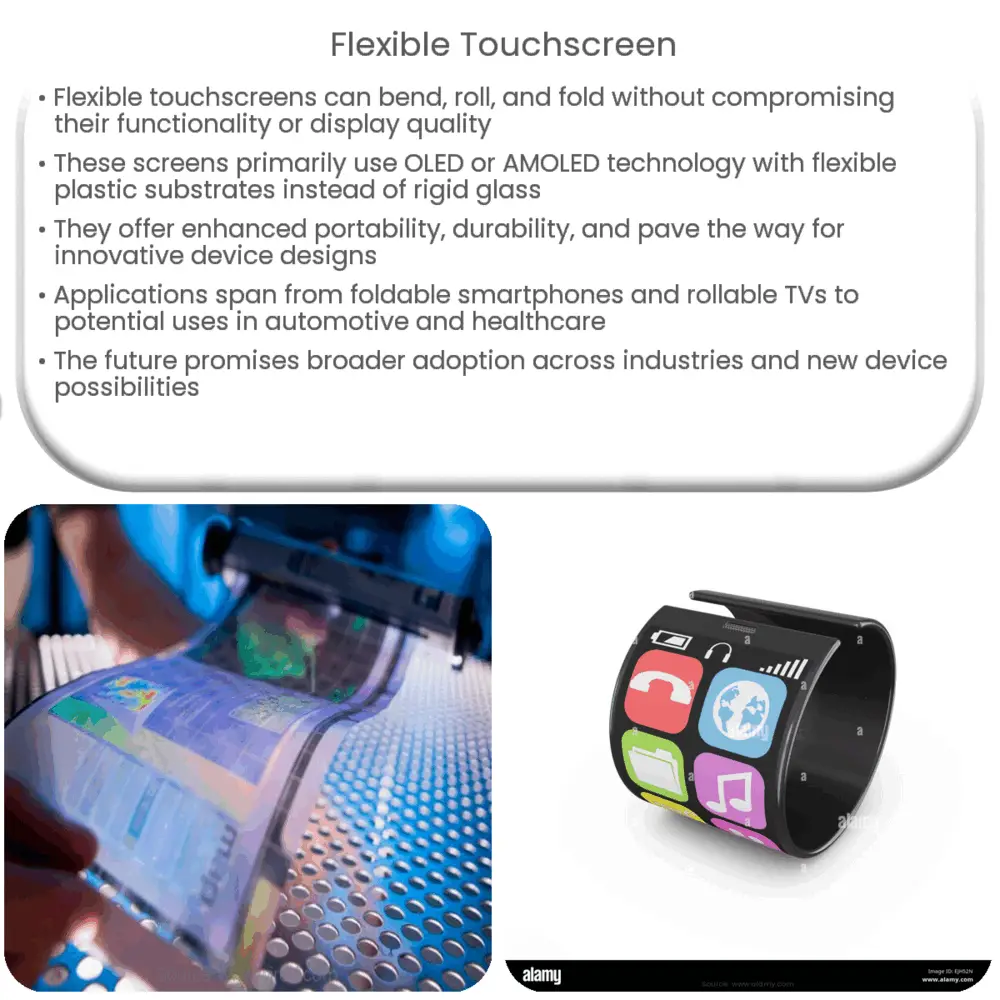
As technology advances, innovative solutions are emerging that are steadily transforming our lives. One such revolution in the technology space is the development of flexible touchscreens. These touchscreens, unlike their rigid counterparts, can bend, roll, and fold without impacting their functionality or display quality.
How Do Flexible Touchscreens Work?
Flexible touchscreens are a marvel of technology combining both hardware and software innovations. At the core of these devices is a flexible display technology often based on OLED (Organic Light Emitting Diodes) or AMOLED (Active-Matrix Organic Light-Emitting Diodes). Unlike traditional displays that use rigid glass substrates, flexible displays employ pliable plastic substrates. This allows the screen to bend without breaking, paving the way for new form factors in consumer electronics.
- OLED and AMOLED: OLED technology uses organic compounds that emit light when electricity is applied. AMOLED, on the other hand, adds an active matrix system which allows for higher refresh rates and better power efficiency. Both technologies can be implemented on flexible plastic substrates, enabling the creation of bendable displays.
Benefits of Flexible Touchscreens
Flexible touchscreens are not merely a novelty; they offer a range of benefits that can enhance user experience and expand the potential for device design.
- Portability: Devices with flexible screens can be folded or rolled up, significantly reducing their size and making them more portable without sacrificing screen real estate.
- Durability: The flexible plastic substrate is less likely to break compared to traditional glass screens, thereby increasing the device’s durability.
- Innovative Design: Flexible screens open up possibilities for new and innovative device designs, from rollable TVs to foldable smartphones and wearable technology.
With these advantages, it’s clear that flexible touchscreens have the potential to revolutionize the technology industry, creating a myriad of possibilities for device form factors, usability, and functionality. The next section will further explore the potential applications and future implications of flexible touchscreen technology.
Potential Applications of Flexible Touchscreens
The potential applications of flexible touchscreens are vast and span across multiple industries. In the consumer electronics sector, flexible screens are already being used in smartphones and televisions, and their use is expected to expand to other devices.
- Smartphones: Companies like Samsung and Huawei have introduced smartphones with foldable screens, transforming a standard smartphone into a tablet-like device when unfolded.
- Televisions: LG has introduced a rollable TV that can be fully retracted into its base when not in use, freeing up space and adding a futuristic element to home design.
Beyond consumer electronics, flexible touchscreens could also make waves in sectors such as automotive and healthcare. Curved displays could replace traditional instrument clusters in cars, and wearable health monitoring devices could benefit from screens that conform to the body.
Future of Flexible Touchscreens
The future of flexible touchscreens holds exciting prospects. As the technology matures and manufacturing costs decrease, we can anticipate a broad adoption of flexible screens across industries. This technology also opens up the possibility for entirely new types of devices that we have not yet imagined, pushing the boundaries of innovation.
- Wearables and IoT: Wearable devices and IoT (Internet of Things) gadgets could leverage flexible screens to create more ergonomic and user-friendly designs.
- Augmented Reality: Flexible screens could play a significant role in AR (Augmented Reality) technology, providing more immersive experiences.
Conclusion
In conclusion, flexible touchscreens represent a significant leap forward in display technology. Their potential to transform device designs, enhance user experience, and create new opportunities in various industries is immense. While we are already witnessing the initial stages of this revolution with foldable smartphones and rollable TVs, the full extent of the impact of flexible touchscreens is yet to be unveiled. As we move forward, this groundbreaking technology will undoubtedly continue to evolve, shape trends, and redefine our interaction with electronic devices.