
Explore the vital role of electrostatic surface resistance meters in industries, their key features, and their importance in ensuring safety.
Introduction to Electrostatic Surface Resistance Meters
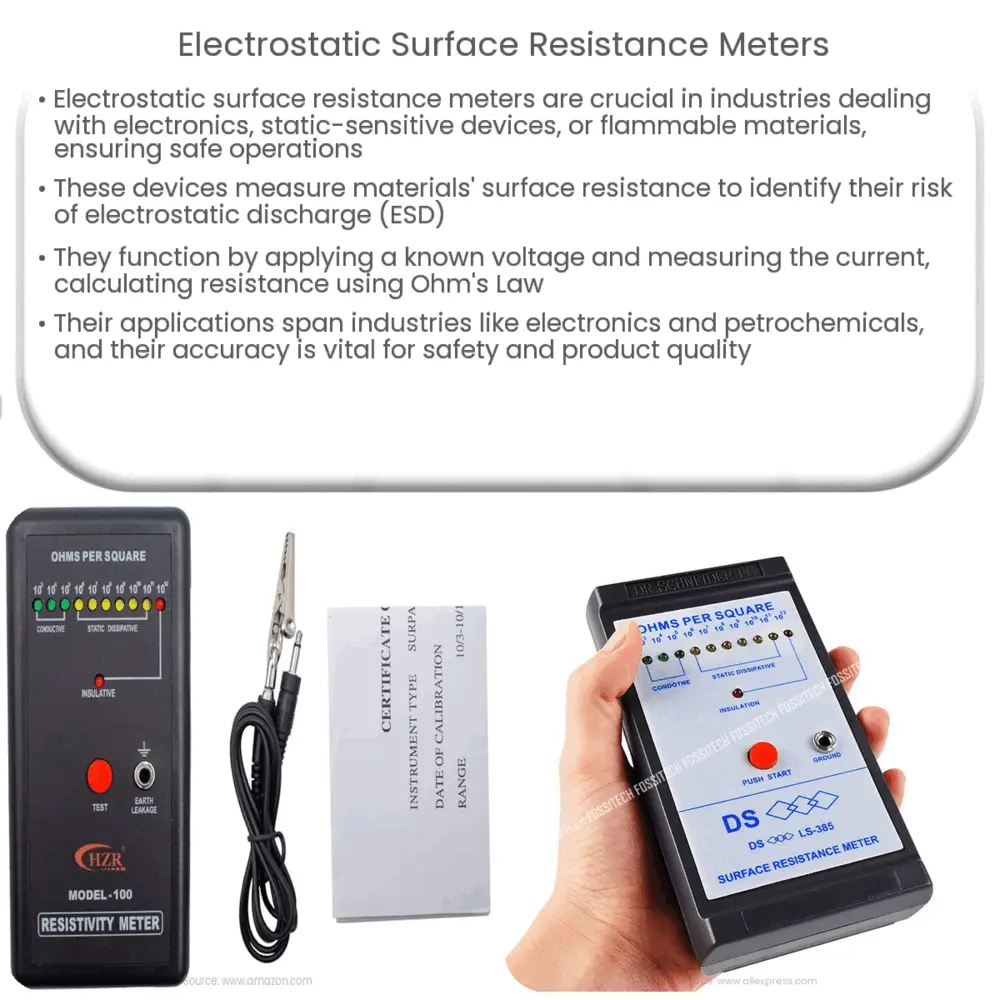
Surface resistance, a crucial metric in various industries, can often determine the performance and safety of a product or process. Particularly in industries dealing with electronics, static-sensitive devices, or flammable materials, electrostatic surface resistance meters play a significant role in ensuring the safety and efficacy of operations. These devices measure the surface resistance of materials to identify their electrostatic properties, giving insight into whether the materials pose a risk of electrostatic discharge (ESD).
Understanding Electrostatic Surface Resistance
Electrostatic surface resistance is the resistance to an electric current flowing along the surface of a material. Materials vary in their degree of conductivity, with some allowing electricity to flow freely (conductors), others offering high resistance (insulators), and yet others falling in-between (static dissipative materials).
These distinctions are paramount in several industries. For instance, in the electronics industry, handling sensitive electronic components without proper precautions can lead to ESD, damaging or even destroying the components. A similar risk exists in environments dealing with flammable substances, where an ESD could lead to a fire or explosion.
Role of Electrostatic Surface Resistance Meters
Electrostatic surface resistance meters come into play here, offering a way to measure the surface resistance of materials and surfaces to prevent such accidents. These handheld devices work by applying a known voltage to two points on the material’s surface and then measuring the resulting current. The meter can then use Ohm’s Law (Resistance = Voltage/Current) to calculate the surface resistance.
- Measurement Range: These meters typically offer a wide measurement range, allowing them to measure materials from high-resistance insulators to low-resistance conductors.
- Portability: Most surface resistance meters are compact and lightweight, making them easily portable for use in various environments.
Applications of Electrostatic Surface Resistance Meters
The applications of electrostatic surface resistance meters are far-reaching. They are integral to industries such as electronics, petrochemicals, paint manufacturing, printing, and many more, where electrostatic surface resistance can significantly impact product quality, performance, and safety.
For instance, in an electronics assembly line, these meters can be used to regularly check the surface resistance of ESD-safe work surfaces, ESD floor mats, antistatic bags, and other materials to ensure they are within safe limits.
The use of these meters isn’t confined to industrial settings. They are also used in research and development labs, where understanding the surface resistance of various materials can provide valuable insights into material properties and guide the development of new products.
The Importance of Accurate Measurements
Having accurate readings of electrostatic surface resistance is not just a regulatory requirement in many industries; it is a significant component of maintaining a safe working environment. Errors or inaccuracies in these readings could lead to a damaging electrostatic discharge, which could potentially harm individuals, damage equipment, or even lead to explosions in some cases.
Moreover, in industries such as electronics or telecommunications, the quality and reliability of the final products heavily rely on proper ESD control throughout the production process. Hence, ensuring that all involved materials and surfaces are within the safe limits of surface resistance is crucial.
Key Features of Electrostatic Surface Resistance Meters
Given the importance of accurate measurements, electrostatic surface resistance meters come equipped with a variety of features to facilitate ease of use, improve accuracy, and enhance reliability.
- Digital Display: Modern meters often include a digital display that allows for easy reading of the measured resistance.
- Data Logging: Some advanced models offer data logging capabilities, enabling the tracking of readings over time and identifying any trends or issues.
- Audible Alerts: Meters may also provide audible alerts when readings exceed a predefined range, ensuring immediate response to potential problems.
Conclusion
In conclusion, electrostatic surface resistance meters play a vital role in numerous industries, ensuring the safe handling of materials and surfaces that may be at risk of electrostatic discharge. These tools offer a simple, effective method for measuring surface resistance, with a range of features designed to enhance ease of use, accuracy, and reliability.
As we continue to develop and rely on electronic devices and as safety regulations become increasingly stringent, the role of these meters is set to become even more significant. For any industry dealing with static-sensitive materials, investing in high-quality electrostatic surface resistance meters is not just a safety measure, but a strategic decision that can prevent damage, increase efficiency, and maintain high-quality outputs.



