
Explore the intriguing world of electrostatic brakes, their principles, components, applications, advantages, limitations, and future perspectives.
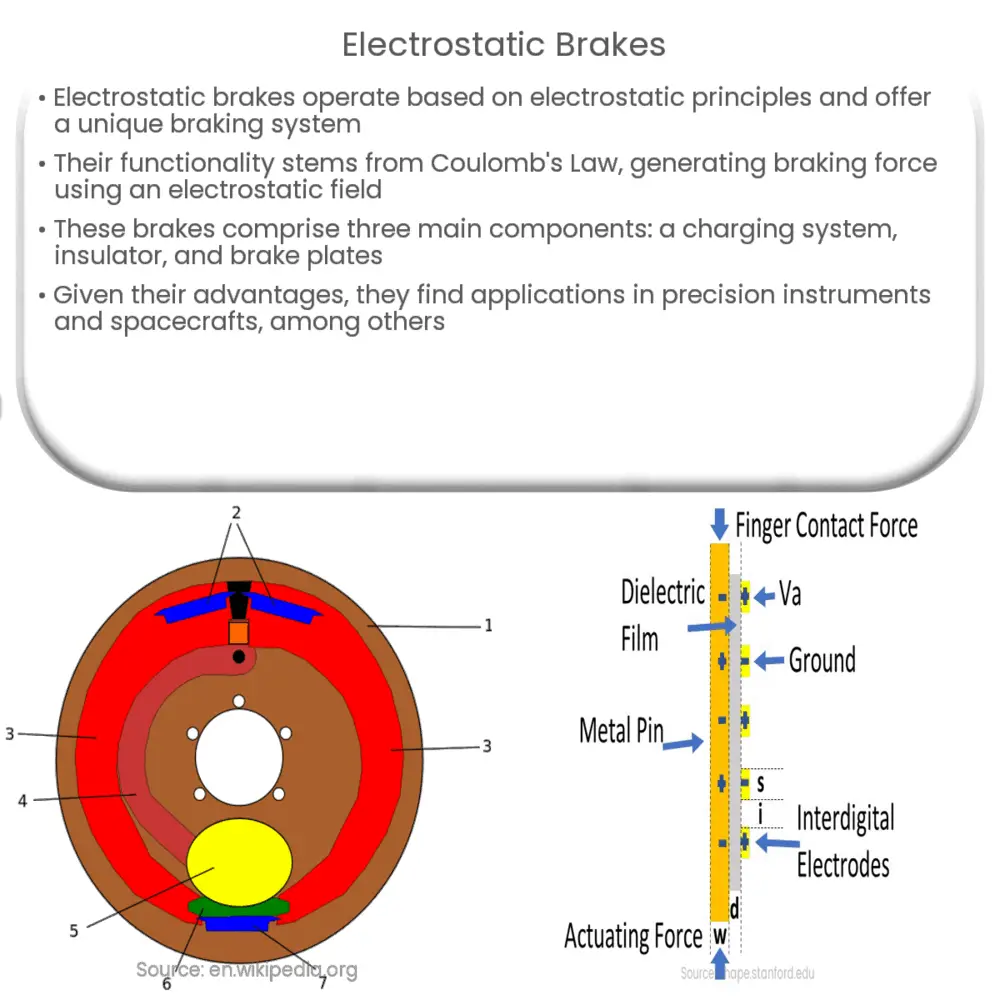
Understanding Electrostatic Brakes
The world of technology is ever-evolving, constantly presenting us with new and innovative solutions. Among such advances, one that holds a significant potential for transforming various industries is the concept of Electrostatic Brakes. These are a type of braking system that operates based on the principles of electrostatics.
Working Principle of Electrostatic Brakes
The fundamental principle behind electrostatic brakes lies in the realm of physics. According to Coulomb’s Law, there’s a force between two charges, which is directly proportional to the product of their charges and inversely proportional to the square of the distance between them. This principle is the basis for the working of electrostatic brakes.
In the context of an electrostatic brake, it uses an electrostatic field to generate a braking force. It does so by creating an attractive force between two charged bodies, typically plates. When the plates are brought close together, a strong force pulls them together, causing friction and leading to the slowing or stopping of motion.
Components of Electrostatic Brakes
An electrostatic brake generally consists of three main components:
- Charging System: This generates the necessary electrostatic charge. It can take the form of a power source, like a battery or an alternator, to build up the required voltage.
- Insulator: Placed between the brake plates, it ensures the charges don’t leak away, thereby maintaining the electrostatic field. It’s made from materials that do not conduct electricity, such as rubber or certain plastics.
- Brake Plates: These are the parts where the charge is applied, and which come into contact to produce the braking effect. They are usually made of metal due to its high electrical conductivity.
Applications of Electrostatic Brakes
Given the unique properties and advantages of electrostatic brakes, they find a wide range of applications in various fields. From precision tools and appliances to space technology, these brakes can be quite effective. Here are a few potential applications:
- Spacecrafts and Satellites: The vacuum of space presents a unique environment where traditional friction brakes are ineffective. Electrostatic brakes, however, can function perfectly in such conditions.
- Precision Instruments: Devices that require precise control over speed, such as certain medical instruments, can benefit greatly from the use of electrostatic brakes.
Advantages and Limitations of Electrostatic Brakes
There are several notable advantages associated with the use of electrostatic brakes:
- No Mechanical Wear and Tear: Unlike traditional brakes, electrostatic ones do not suffer from mechanical wear, extending their lifespan significantly.
- High Precision: They offer highly precise control over the braking effect, allowing for fine-tuning of the speed and stopping time.
- Functionality in Vacuum: They can work effectively in a vacuum, making them ideal for use in spacecraft and satellites.
However, there are some limitations as well:
- Power Requirement: They require a continuous power supply to maintain the electrostatic field, potentially leading to energy inefficiencies.
- Heat Generation: When used continuously over extended periods, they can generate heat, requiring additional cooling measures.
Future Perspectives
Despite their limitations, electrostatic brakes hold immense potential for future development. With ongoing research and advancements, we can expect improvements in energy efficiency and heat management, paving the way for broader applications of these systems. Particularly in fields such as robotics, automation, and space technology, electrostatic brakes may soon become a key component.
Conclusion
In conclusion, electrostatic brakes represent an exciting frontier in technology, one that is ripe with potential and opportunities. Their unique operating principle and resulting advantages position them as an attractive alternative to traditional braking systems. Despite the current limitations, with the pace of technological advancement, these are likely to be overcome in the future. The horizon seems bright for electrostatic brakes, promising a myriad of applications from precision instrumentation to space exploration. As we step further into the era of advanced technology, embracing such innovative solutions will undoubtedly pave the way for a more efficient, precise, and sustainable future.



