
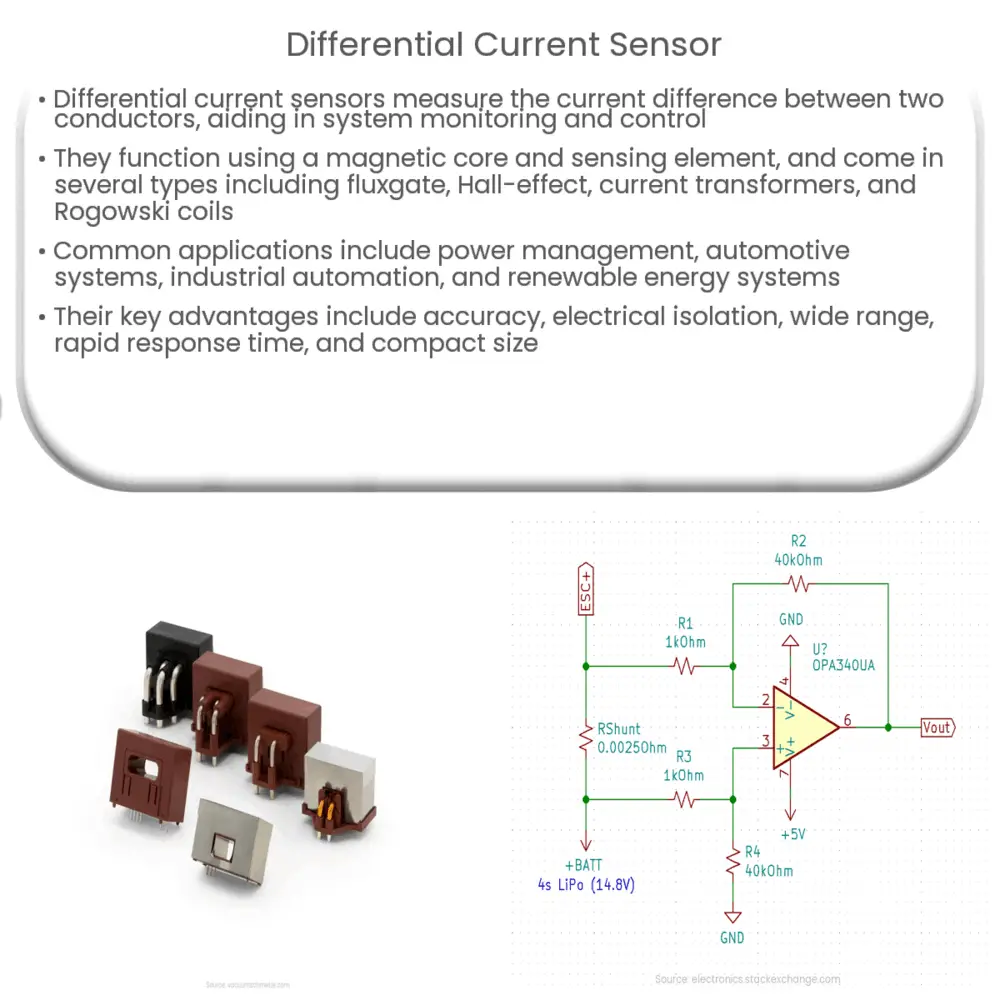
A differential current sensor accurately measures the current difference between two conductors for optimal monitoring and control in various systems.
Differential Current Sensor: An In-Depth Look
Introduction
A differential current sensor is a vital component in a variety of electrical and electronic systems. It is designed to measure the difference in current between two conductors, providing accurate and reliable data for monitoring and control purposes. This article aims to provide a comprehensive understanding of differential current sensors, including their operating principles, applications, and advantages.
Operating Principles
At the core of a differential current sensor is a magnetic core, typically a toroidal (doughnut-shaped) ferrite or an air-core, which encircles the two conductors whose current difference is to be measured. This magnetic core, along with a sensing element such as a Hall-effect sensor, enables the measurement of the magnetic field generated by the current flowing through the conductors.
The Hall-effect sensor detects the difference in magnetic fields created by the two conductors, which is proportional to the difference in the current flowing through them. By amplifying and conditioning this signal, a differential current sensor can provide an output voltage or current that is directly proportional to the difference in current between the two conductors.
Types of Differential Current Sensors
There are several types of differential current sensors, each with its own set of features and advantages. The most common types are:
- Fluxgate Sensors: These sensors utilize a unique magnetic material to detect changes in the magnetic field. They offer high sensitivity and accuracy, making them ideal for low-current applications.
- Hall-effect Sensors: As mentioned earlier, these sensors rely on the Hall-effect principle to measure magnetic fields. They provide a linear output voltage proportional to the differential current, making them popular in various applications.
- Current Transformers: These sensors utilize transformer principles to measure current differences. They offer high accuracy and are suitable for high-current applications.
- Rogowski Coils: These air-core coils are designed to measure alternating currents (AC) and are known for their wide frequency response and linearity. They are typically used in high-frequency applications.
Applications of Differential Current Sensors
Differential current sensors find applications in various industries and systems, including:
- Power Management: They are used in power distribution units, uninterruptible power supplies (UPS), and inverters to monitor and control current flow for optimal performance and safety.
- Automotive Systems: In electric and hybrid vehicles, differential current sensors are employed for battery management, powertrain control, and charging systems.
- Industrial Automation: They are utilized in motor drives, robotics, and process control systems to ensure the safe and efficient operation of machinery.
- Renewable Energy Systems: Differential current sensors play a crucial role in solar and wind power installations, helping to optimize energy conversion and management.
Advantages of Differential Current Sensors
There are several benefits associated with using differential current sensors in various applications, including:
- Accuracy: These sensors provide precise and reliable measurements of the difference in current between two conductors, enabling better control and monitoring of electrical systems.
- Isolation: Since the sensing element is typically isolated from the conductors, differential current sensors offer electrical isolation, preventing interference and ensuring safety.
- Wide Range: They can measure a wide range of current values, from low to high currents, making them suitable for various applications.
- Fast Response Time: Differential current sensors offer a rapid response time, allowing for real-time current monitoring and control in dynamic systems.
- Compact Size: Many differential current sensors feature a compact and lightweight design, enabling easy integration into existing systems without adding significant bulk.
Selecting the Right Differential Current Sensor
When choosing a differential current sensor for your application, consider the following factors:
- Current Range: Ensure the sensor can measure the required current difference for your specific application.
- Accuracy: Select a sensor with suitable accuracy to ensure precise measurements and reliable performance.
- Frequency Response: If your application involves rapidly changing currents, choose a sensor with a high-frequency response to ensure accurate and real-time measurements.
- Isolation: Depending on your application’s requirements, consider a sensor with the appropriate level of electrical isolation to prevent interference and ensure safety.
- Size and Form Factor: Consider the physical constraints of your system when selecting a sensor, ensuring it will fit seamlessly within your design.
Conclusion
Differential current sensors are essential components in a wide range of applications, providing accurate and reliable current difference measurements for monitoring and control purposes. By understanding their operating principles, types, applications, and advantages, you can select the appropriate sensor for your specific needs, ensuring optimal performance and safety in your electrical and electronic systems.



