
A copper heatsink is an efficient cooling solution for electronic devices, known for its high thermal conductivity, compact design, and durability.
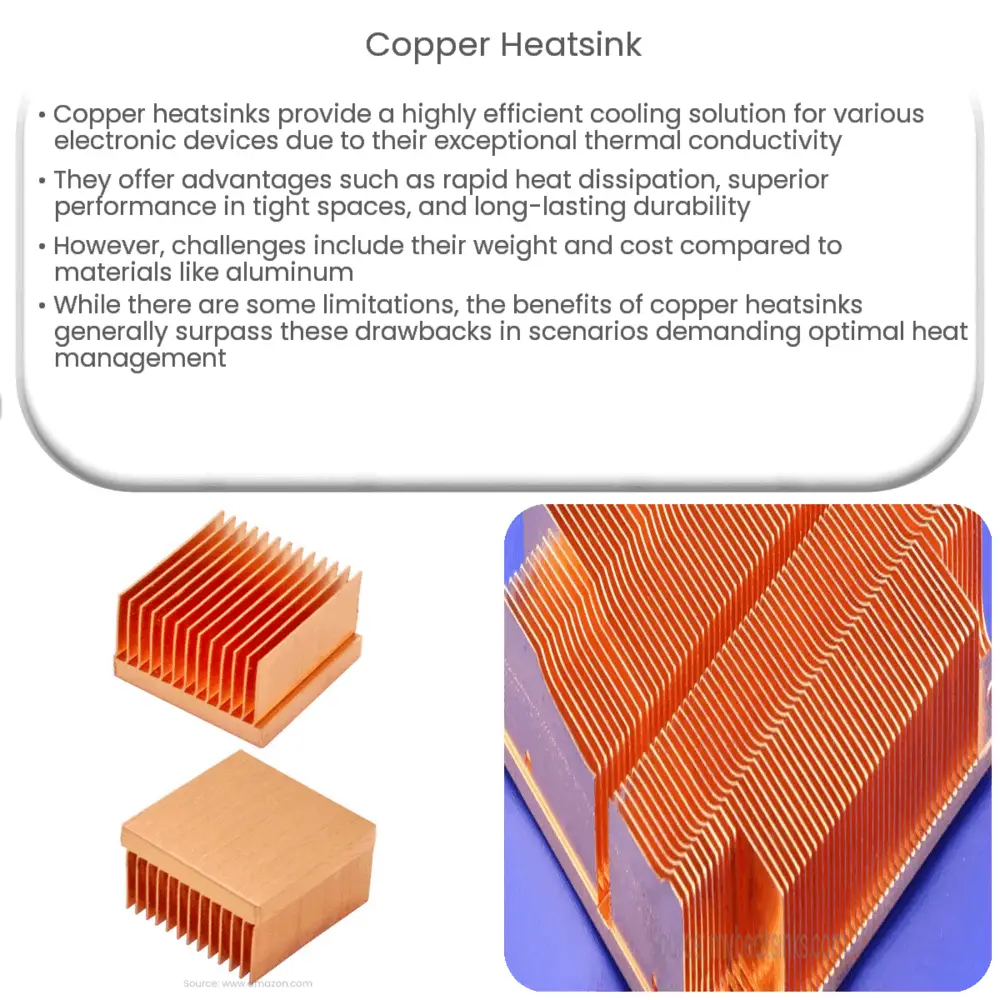
Copper Heatsink: A Highly Efficient Cooling Solution
Introduction
As technology advances, our electronic devices continue to shrink while packing more processing power than ever before. This high-performance capability often generates significant amounts of heat, which can be detrimental to the lifespan and stability of the components. To prevent overheating, an effective cooling solution is essential. One such solution is the copper heatsink, a popular and efficient option for managing thermal dissipation in various electronic devices. In this article, we will explore the benefits of using copper heatsinks and how they outperform other materials in certain applications.
What is a Copper Heatsink?
A heatsink is a component specifically designed to dissipate heat generated by electronic devices, such as computer processors and power amplifiers. It does this by increasing the surface area that is in contact with the air or a liquid coolant, which in turn, allows the heat to be carried away more effectively. Copper heatsinks are made primarily from copper, a metal that is known for its excellent thermal conductivity and capacity to dissipate heat rapidly.
Benefits of Copper Heatsinks
There are several advantages to using copper heatsinks in electronic devices. Some of the key benefits include:
1. High Thermal Conductivity
Copper has a thermal conductivity of approximately 400 W/mK, making it one of the best materials for transferring heat. This high conductivity allows copper heatsinks to rapidly dissipate heat, ensuring that the temperature of electronic components is kept within safe limits.
2. Superior Performance in Compact Spaces
Due to its high thermal conductivity, copper heatsinks can be designed to be smaller and more compact than those made from other materials, such as aluminum. This allows for greater flexibility in the design of electronic devices, especially where space constraints are a concern.
3. Longevity and Durability
Copper heatsinks are highly resistant to corrosion and can withstand high temperatures without degrading over time. This makes them a durable and long-lasting solution for thermal management in electronic devices.
Comparison with Other Materials
While copper heatsinks offer several benefits, it is important to compare them with other materials to understand their true value. The most common alternative to copper is aluminum, which is often used due to its lower cost and lighter weight. However, aluminum has a lower thermal conductivity (approximately 200 W/mK), making it less efficient at dissipating heat compared to copper. In situations where high-performance cooling is required, copper heatsinks are a superior choice.
Design Considerations and Limitations
Despite the many advantages of copper heatsinks, there are also some limitations and design considerations to take into account:
1. Weight
Copper is a heavier material compared to aluminum, which can be a drawback in certain applications where weight is a critical factor, such as in portable devices or aerospace components. Designers must balance the benefits of efficient cooling with the added weight of the copper heatsink.
2. Cost
Another factor to consider is the cost of copper, which is generally more expensive than aluminum. For budget-conscious projects or applications where the thermal performance requirements are not as demanding, an aluminum heatsink may be a more cost-effective option.
3. Manufacturing Complexity
Manufacturing copper heatsinks can be more complex compared to those made from aluminum, due to the higher melting point and lower malleability of copper. This may result in increased production costs and the need for specialized equipment or techniques to fabricate the heatsinks.
Common Applications of Copper Heatsinks
Copper heatsinks are widely used across various industries and applications where efficient cooling is critical. Some common examples include:
- Computer Processors: High-performance CPUs and GPUs generate significant amounts of heat and require efficient cooling solutions to maintain optimal performance and prevent thermal throttling. Copper heatsinks are often used in high-end computers and gaming systems to ensure stable operation.
- Power Electronics: Devices such as power amplifiers, inverters, and converters generate heat during operation and can benefit from the enhanced thermal performance of copper heatsinks to maintain their efficiency and extend their lifespan.
- LED Lighting: High-power LED lighting systems can produce substantial amounts of heat, which can negatively impact the LED’s performance and longevity. Copper heatsinks are employed in these systems to manage heat effectively and ensure consistent light output.
- Automotive and Aerospace: In applications where high-performance cooling is required and weight is not a primary concern, copper heatsinks can be used in automotive and aerospace electronics to manage heat and ensure reliable operation.
Conclusion
Copper heatsinks offer a highly efficient and effective cooling solution for a wide range of electronic devices and applications. Their superior thermal conductivity, compact design, and durability make them a popular choice for high-performance systems where optimal heat dissipation is essential. While there are some limitations, such as cost and weight, the benefits of copper heatsinks often outweigh these drawbacks in applications where thermal management is critical to the performance and longevity of electronic components.