
Explore the essential role of cable staples in managing and securing cables, learn about different types, and get tips for proper installation.
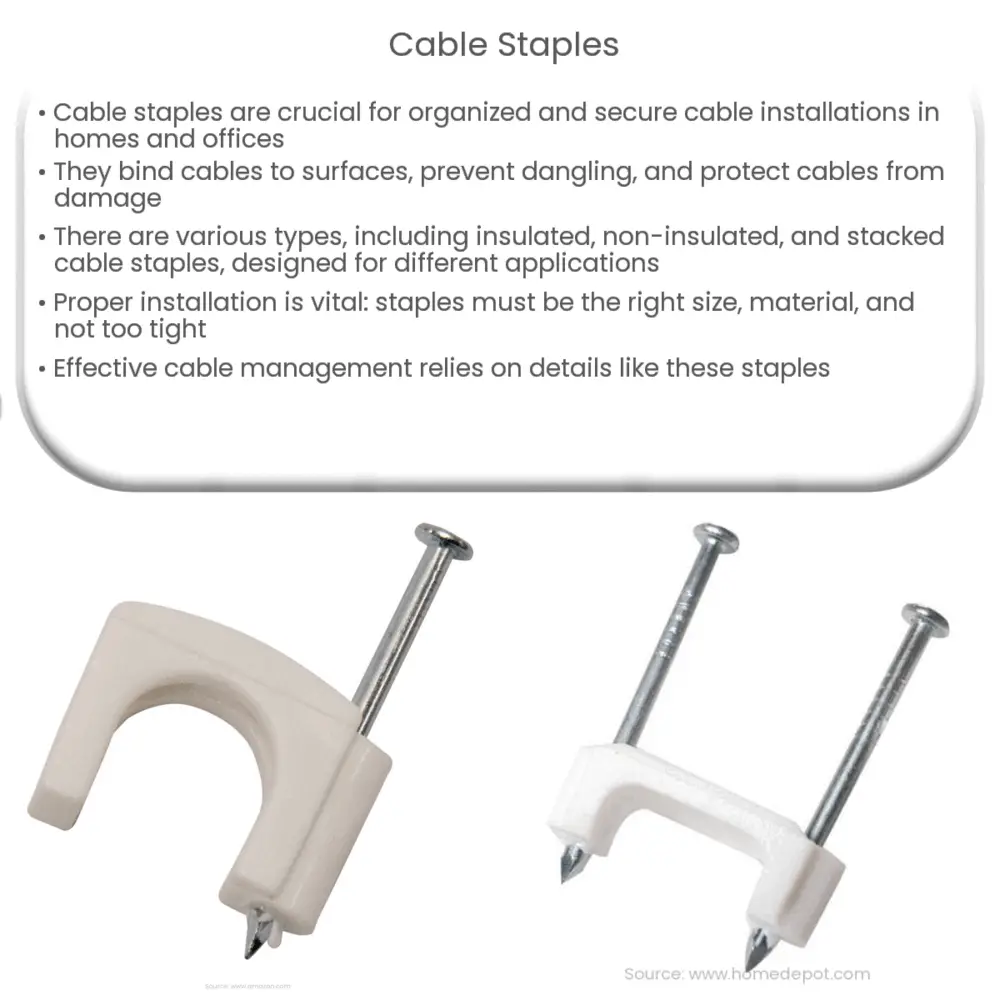
Cable Staples: An Essential for Secure and Neat Cable Installations
Cable staples, often overlooked, are indeed an essential component when it comes to managing cables and wires in our homes and offices. These small yet crucial tools play a significant role in maintaining a clean, secure, and organized cable setup.
The principle of cable staples is rather straightforward. Just like regular staples are used to bind sheets of paper together, cable staples bind cables to surfaces. However, they are usually larger, made of durable materials, and specifically designed to handle the size and weight of various cables.
The Role of Cable Staples
Cable staples have two main functions. First, they help secure cables to walls, floors, or other surfaces, providing a neat and tidy appearance. They prevent cables from dangling loosely, thereby reducing potential hazards and improving aesthetic appeal. Second, cable staples help safeguard the cables from damage. They prevent the cables from being excessively bent or pinched, which can potentially impair the cable’s functionality or even cause a safety risk.
Types of Cable Staples
Cable staples are available in a variety of types, each designed for specific applications and to accommodate different cable sizes and shapes. Understanding the type of cable staples you need for your installation can significantly enhance the setup’s efficiency and longevity.
- Insulated Cable Staples: These staples come with a layer of insulation that provides added protection for the cables against any potential damage that could occur during the stapling process.
- Non-insulated Cable Staples: These are regular staples without any insulation. They are commonly used for situations where insulation is not critical.
- Stacked Cable Staples: These staples are specifically designed to hold several cables simultaneously, making them ideal for environments where multiple cables need to be managed.
Before choosing a type of cable staple, it’s essential to understand the specifics of your installation, such as the cable type, size, and the surface to which it’s being secured. Also, consider the environment in which the cables will be installed. Certain factors such as humidity, temperature, and exposure to sunlight can affect the performance and durability of the staples.
Selecting the Right Size and Material
Once the type of cable staple is determined, it’s vital to select the right size. Cable staples that are too large can lead to inefficient installation and might even damage the cable. Conversely, staples that are too small may not hold the cable securely. Thus, it’s crucial to measure the diameter of your cables and choose the staples accordingly.
The material of the cable staple also matters significantly. Most cable staples are made of metal, such as steel or copper. However, plastic staples are also available, which are ideal for environments that demand corrosion resistance. The choice of material should be based on the location and environmental conditions where the cable installation will take place.
Proper Installation
Proper installation of cable staples is crucial for effective cable management. When installing, ensure the staple is not driven too deeply into the surface as it could pinch the cable, potentially damaging it. The cable should be secure, but there should be some wiggle room for it to move slightly within the staple. Using a specialized cable staple gun can make the installation process easier and more efficient.
- Position the Cable: Begin by positioning the cable where you want it to be secured.
- Place the Staple: Next, place the cable staple over the cable and align it with the surface.
- Secure the Staple: Using a staple gun or hammer, secure the staple into the surface. Ensure it’s secure but not overly tight.
Conclusion
In conclusion, cable staples are an indispensable tool for managing and organizing cables in both residential and commercial settings. They not only help maintain a neat and tidy appearance but also protect cables from potential damage. From understanding the different types of cable staples to knowing the proper installation techniques, it’s essential to be aware of these aspects to ensure a successful cable installation. Remember, it’s the small details like cable staples that often make the biggest difference in the longevity and efficiency of your cable management system.



