
A benchtop ohmmeter is a high-precision instrument designed to measure electrical resistance, offering advanced features for use in professional settings.
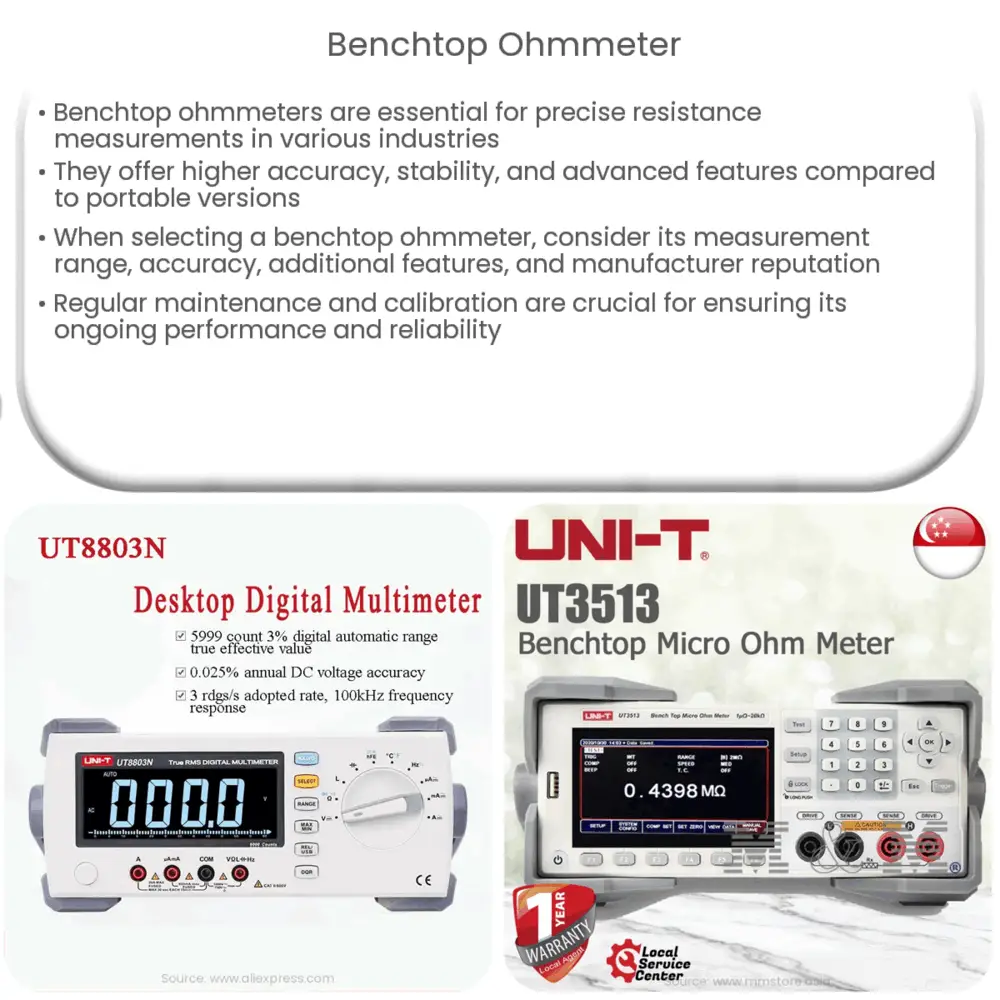
Benchtop Ohmmeter: A Comprehensive Guide
An ohmmeter is an essential tool for measuring resistance in electrical circuits. This versatile and accurate device has found its way into various industries, from electronics to automotive repair. One popular type of ohmmeter is the benchtop ohmmeter, known for its reliability, precision, and ease of use. This article will provide an in-depth look at benchtop ohmmeters, discussing their features, benefits, and how to choose the right one for your needs.
What is a Benchtop Ohmmeter?
A benchtop ohmmeter is an electronic instrument designed to measure resistance with high accuracy and precision. Unlike portable, handheld ohmmeters, benchtop models are larger and more stable, making them ideal for use in laboratories, research facilities, and other professional settings. These devices usually come with a variety of advanced features and settings, allowing for more detailed and accurate measurements.
Key Features of Benchtop Ohmmeters
Although benchtop ohmmeters can vary in terms of their specifications, most models share certain common features:
- High Precision and Accuracy: Benchtop ohmmeters typically have higher precision and accuracy than their portable counterparts. This makes them well-suited for applications requiring detailed and reliable measurements, such as research or quality control.
- Wide Resistance Range: These devices can measure resistance values spanning several orders of magnitude, from a few milliohms to several gigaohms. This wide range allows users to work with a variety of electrical components and circuits.
- Digital Display: Most benchtop ohmmeters come with a digital display, providing a clear and easy-to-read measurement. Some advanced models may also include graphical displays, allowing for more detailed analysis of the measured resistance.
- Data Logging and Connectivity: Many benchtop ohmmeters have built-in data logging capabilities, allowing users to store and analyze measurement data over time. They may also include connectivity options such as USB, RS-232, or Ethernet for easy data transfer and remote control.
- Advanced Measurement Modes: In addition to standard resistance measurements, some benchtop ohmmeters offer advanced modes such as temperature compensation, 4-wire Kelvin measurements, and AC resistance measurements. These additional features can be particularly useful in specialized applications.
Benefits of Using a Benchtop Ohmmeter
There are several advantages to using a benchtop ohmmeter, including:
- Improved Measurement Accuracy: As mentioned earlier, benchtop ohmmeters typically provide higher precision and accuracy compared to handheld devices. This allows for more reliable and consistent measurements, particularly in professional settings.
- Enhanced Stability: Due to their larger size and design, benchtop ohmmeters offer greater stability during measurements. This can help minimize the impact of external factors such as vibrations, which can affect the accuracy of the measurement.
- Advanced Features: Benchtop ohmmeters often include a range of advanced features and settings, allowing users to tailor their measurements to specific requirements and perform more detailed analysis.
How to Choose the Right Benchtop Ohmmeter
Selecting the right benchtop ohmmeter for your needs will depend on several factors, including your specific requirements, budget, and the level of accuracy and precision you require. Here are some key considerations when choosing a benchtop ohmmeter:
- Measurement Range: Ensure the ohmmeter can measure the resistance values you expect to encounter in your application. Some models may have limitations in either the high or low end of the resistance range.
- Accuracy and Resolution: Determine the level of accuracy and resolution you need for your measurements. Higher accuracy and resolution usually come at a higher cost, so balance your requirements with your budget.
- Additional Features: Consider any advanced features or measurement modes you may need for your specific application. These may include temperature compensation, 4-wire Kelvin measurements, or AC resistance measurements.
- Data Logging and Connectivity: If you require data logging capabilities or need to transfer data to a computer for analysis, ensure the benchtop ohmmeter has the necessary connectivity options.
- Manufacturer Reputation: Choose a reputable manufacturer known for producing high-quality, reliable instruments. Research reviews and testimonials from other users to ensure the model you select has a proven track record of performance.
Maintenance and Calibration of Benchtop Ohmmeters
To ensure the continued accuracy and reliability of your benchtop ohmmeter, regular maintenance and calibration are essential. Follow these best practices to keep your device in top condition:
- Regular Calibration: Calibrate your benchtop ohmmeter according to the manufacturer’s recommended schedule or when the device’s performance deviates from the specified accuracy. Calibration ensures that your measurements remain accurate and reliable.
- Proper Storage: Store your benchtop ohmmeter in a clean, dry environment when not in use. Protect the device from dust, moisture, and extreme temperatures, which can negatively impact its performance and lifespan.
- Cleaning: Keep the exterior of the benchtop ohmmeter clean by wiping it down with a soft cloth as needed. Avoid using harsh chemicals or abrasive materials, which can damage the device.
- Visual Inspections: Periodically inspect your benchtop ohmmeter for signs of wear or damage, such as frayed cables or loose connections. Address any issues promptly to ensure the device continues to function correctly.
Conclusion
A benchtop ohmmeter is a valuable tool for professionals in various industries requiring precise and accurate resistance measurements. By understanding the key features, benefits, and considerations when choosing a benchtop ohmmeter, you can select the right device to meet your specific needs. Proper maintenance and calibration are essential to ensure the continued reliability and accuracy of your benchtop ohmmeter, providing you with consistent and trustworthy measurements for years to come.



