
What are n-type and p-type semiconductors?
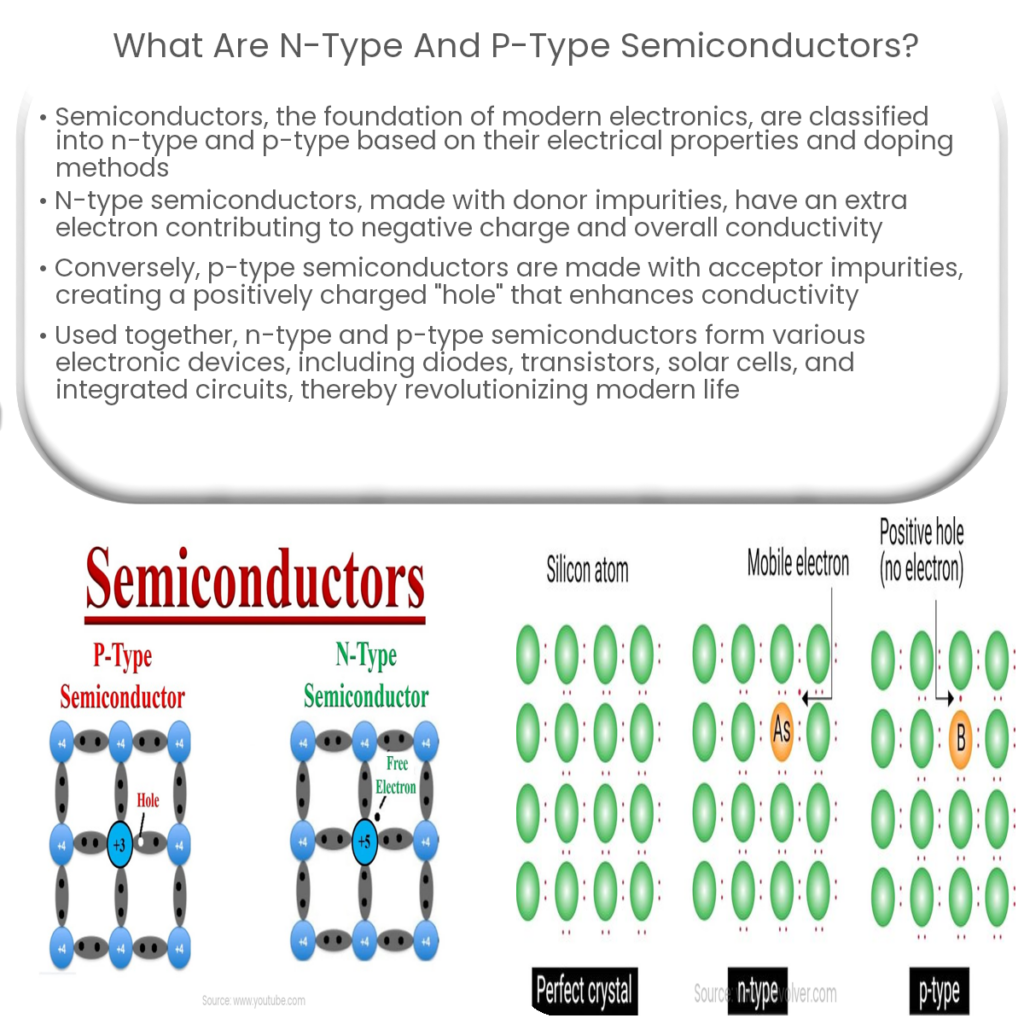
N-type semiconductors have excess electrons, while p-type semiconductors have excess holes. Both types are used together to form electronic devices.
N-type semiconductors have excess electrons, while p-type semiconductors have excess holes. Both types are used together to form electronic devices.
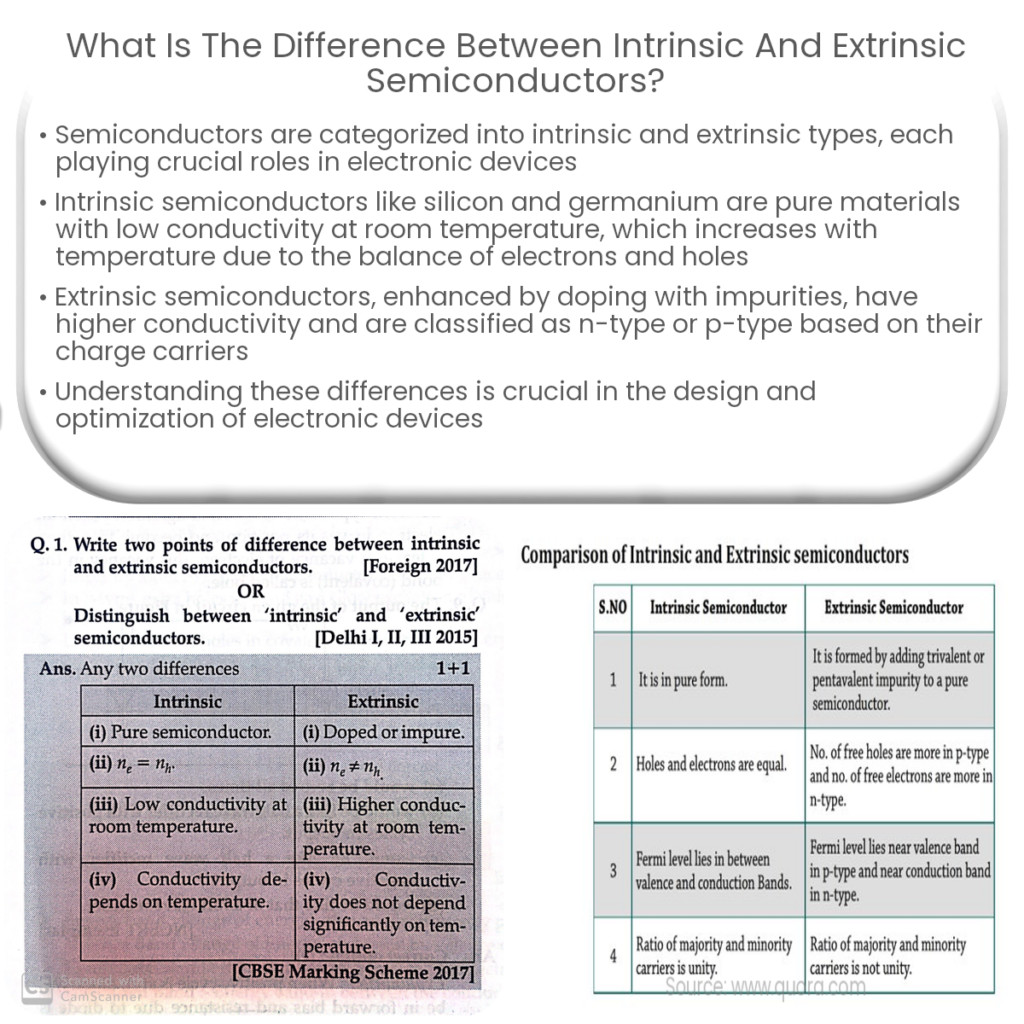
Intrinsic semiconductors are pure materials with low conductivity, while extrinsic semiconductors are doped with impurities for higher conductivity.
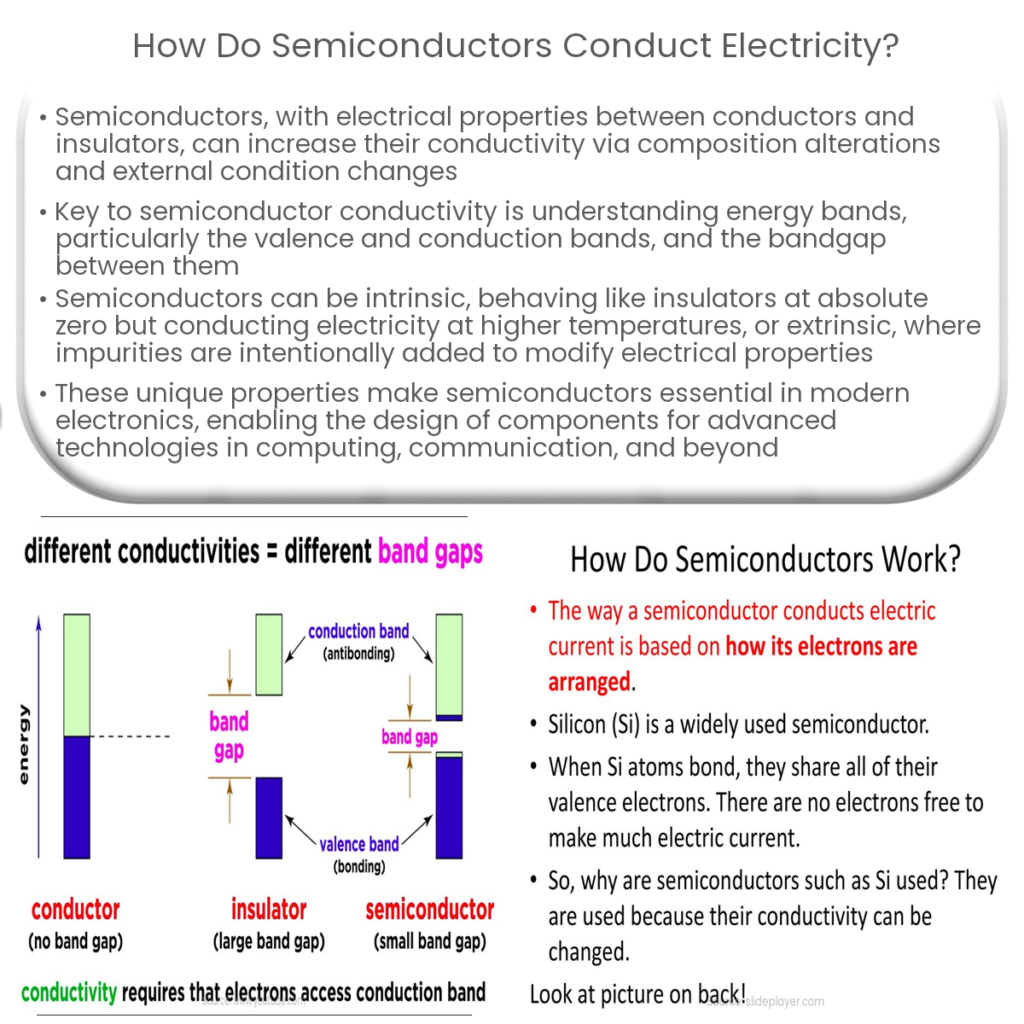
Semiconductors conduct electricity due to a small bandgap, allowing electrons to move between the valence and conduction bands under certain conditions.
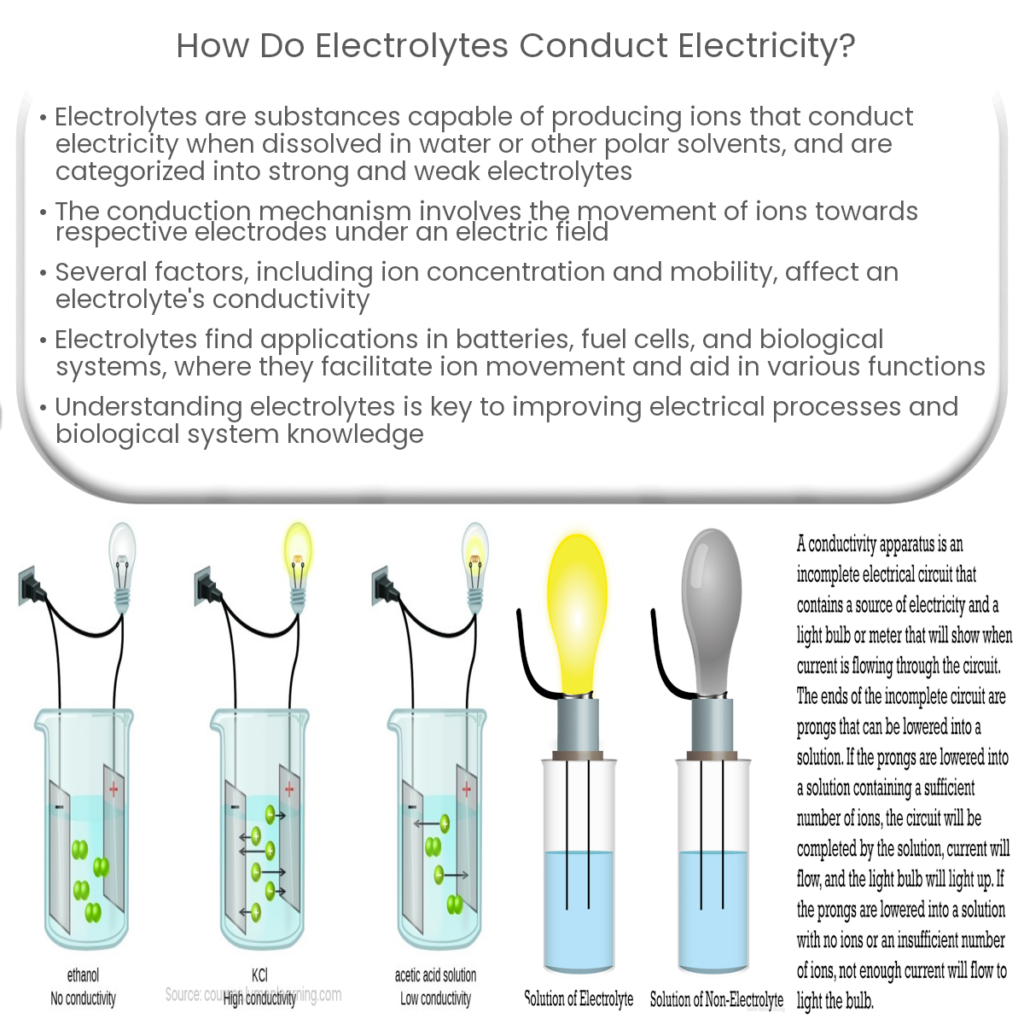
Electrolytes conduct electricity by dissociating into ions in a solution, which then move under an electric field, allowing current to flow.
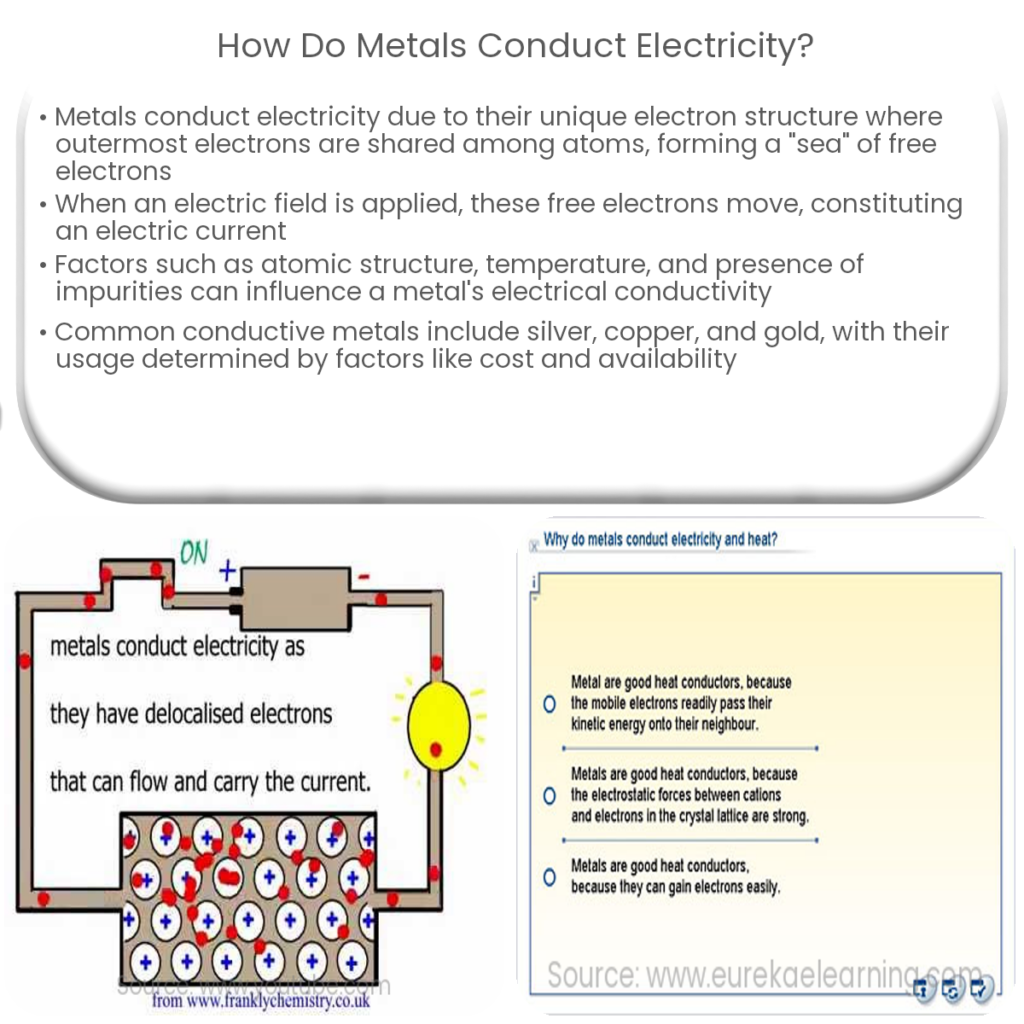
Metals conduct electricity due to their lattice structure and the presence of free, delocalized electrons that move when an electric field is applied.
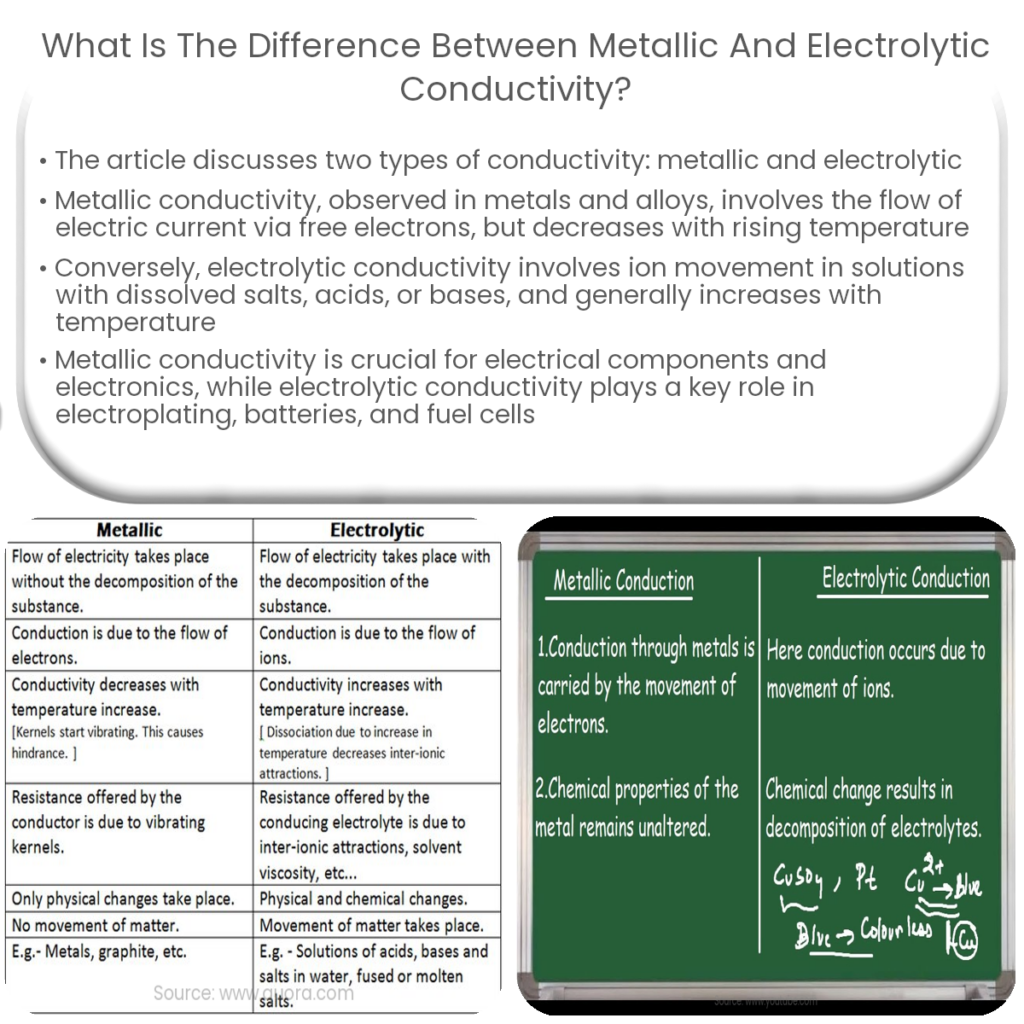
Metallic conductivity involves free electrons in metals, while electrolytic conductivity relies on ion movement in solutions containing dissolved ions.
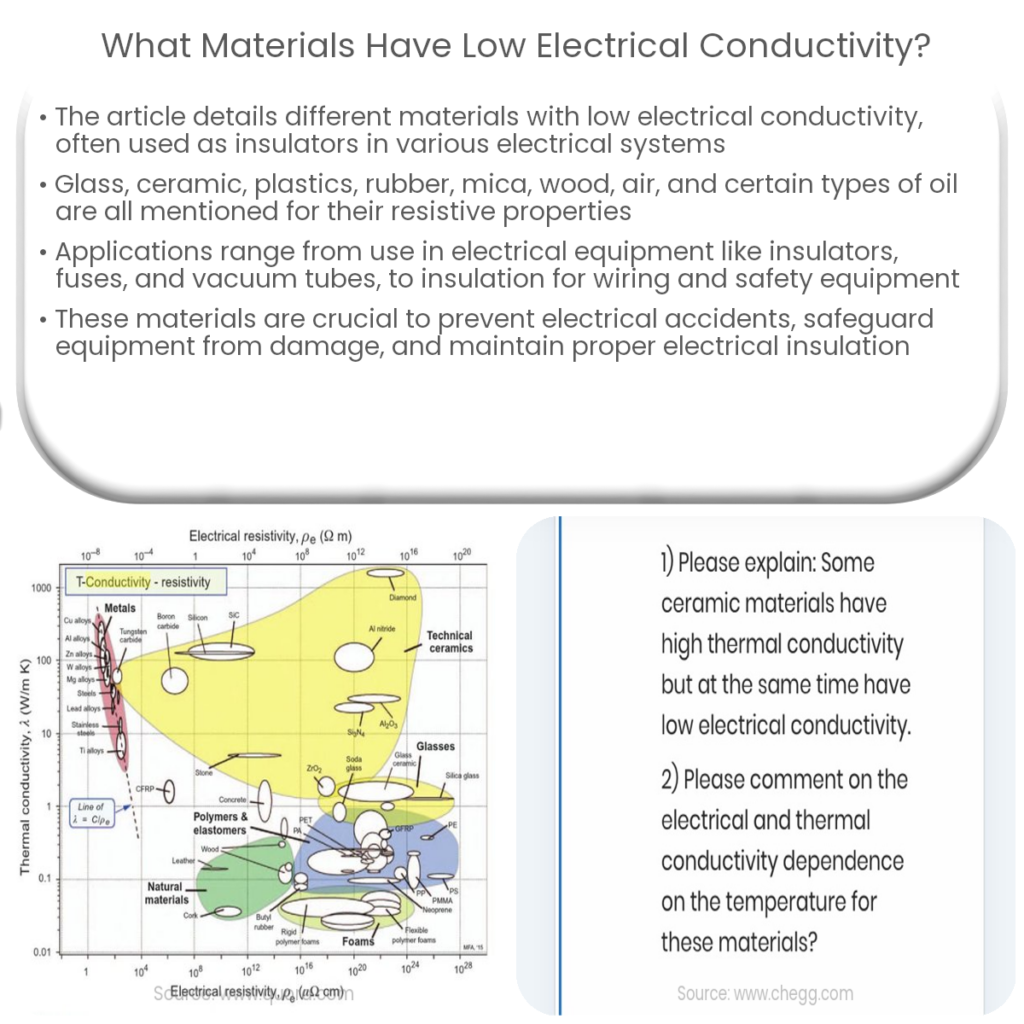
Low conductivity materials include glass, ceramics, plastics, rubber, mica, wood, air, and certain oils, used as insulators in various applications.
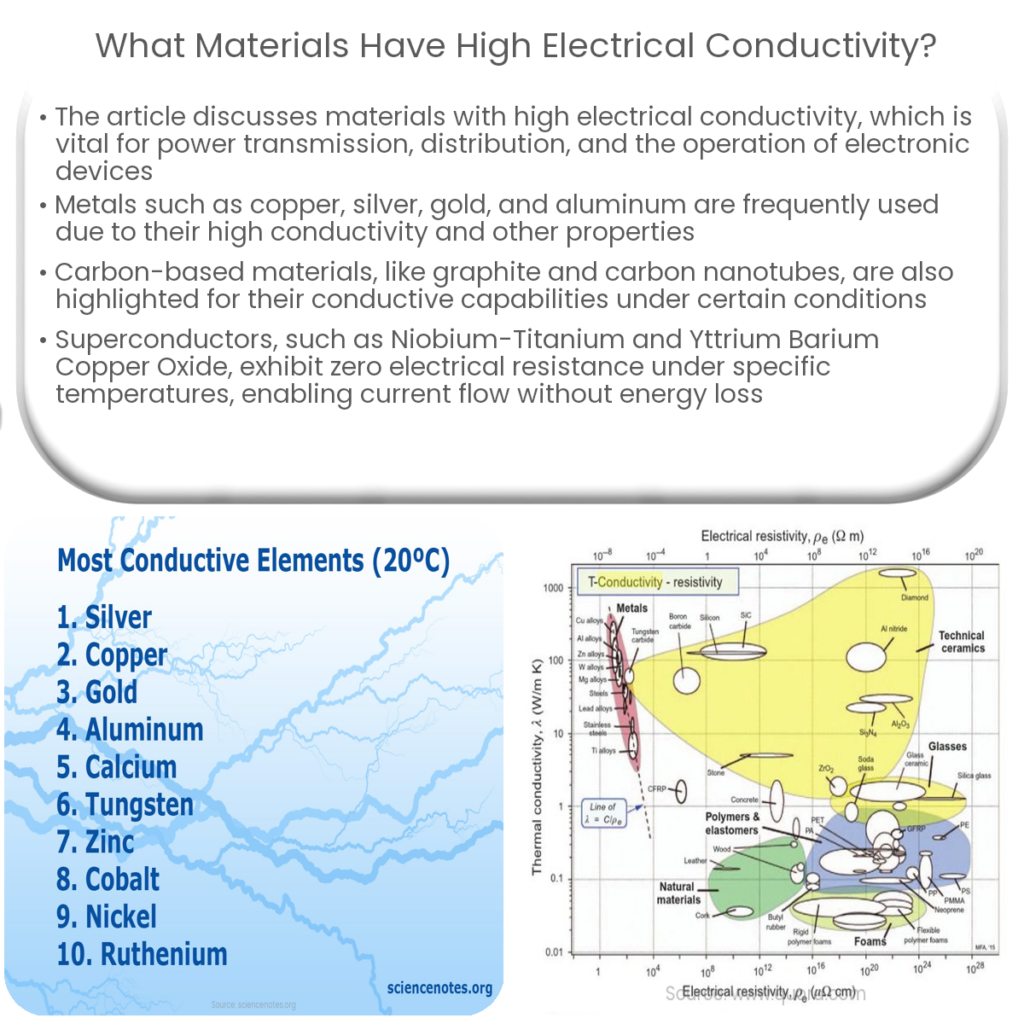
Highly conductive materials include metals like copper, silver, gold, and aluminum, carbon-based materials like graphite, and superconductors.
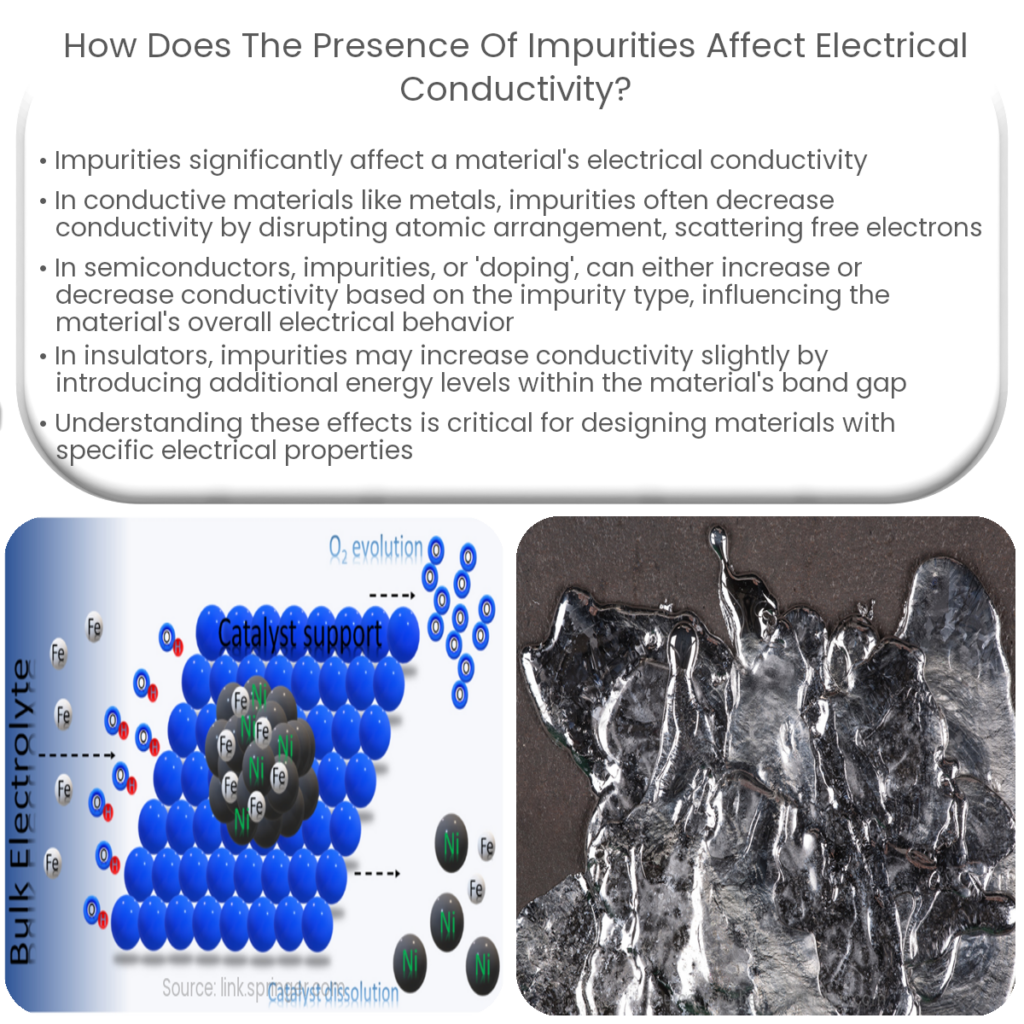
Impurities can increase or decrease electrical conductivity in materials, depending on their nature and the material type – conductors, semiconductors, or insulators.
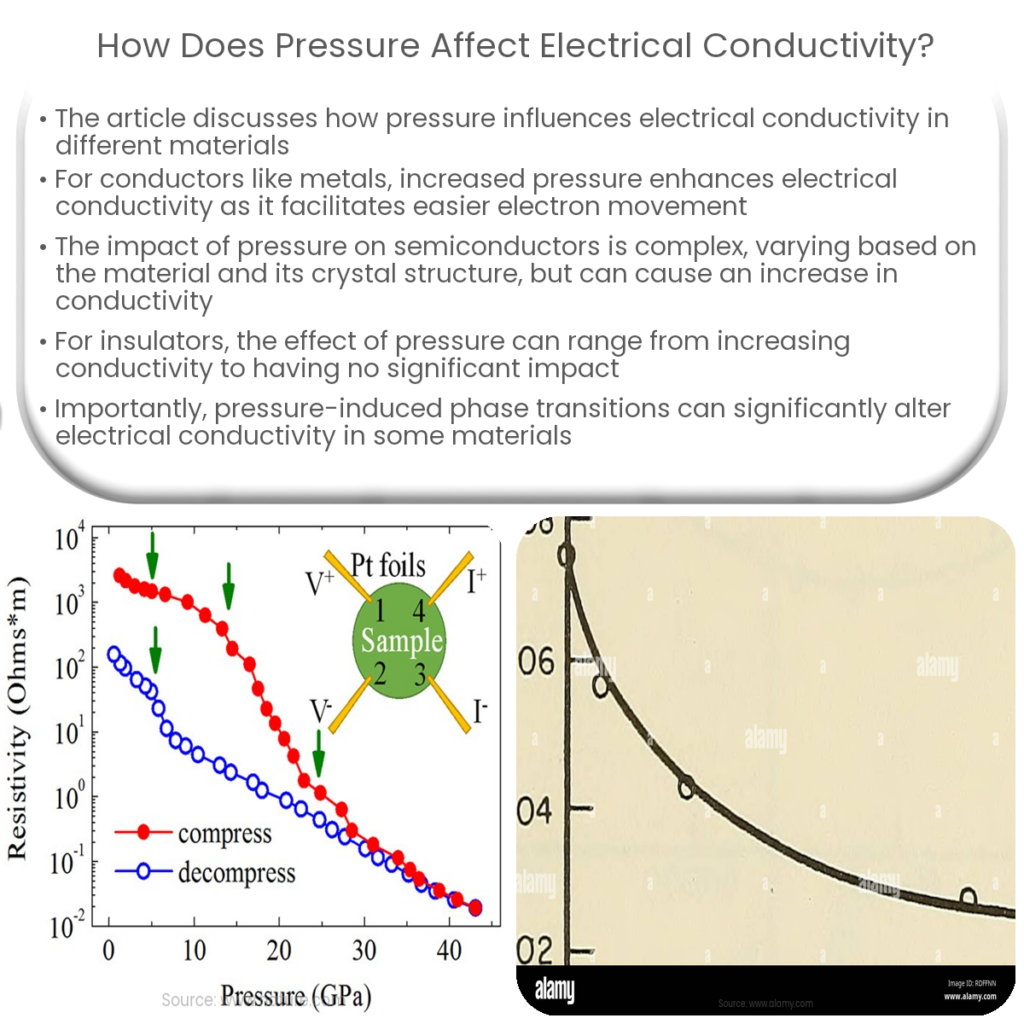
Pressure affects conductivity differently in conductors, semiconductors, and insulators, altering atomic distances, band structures, and energy gaps.

The primary purpose of this project is to help the public to learn some exciting and important information about electricity and magnetism.
Our Website follows all legal requirements to protect your privacy. Visit our Privacy Policy page.
The Cookies Statement is part of our Privacy Policy.
The information contained on this website is for general information purposes only. This website does not use any proprietary data. Visit our Editorial note.
It’s simple:
1) You may use almost everything for non-commercial and educational use.
2) You may not distribute or commercially exploit the content, especially on another website.


