What is the role of inductors in electric circuits?
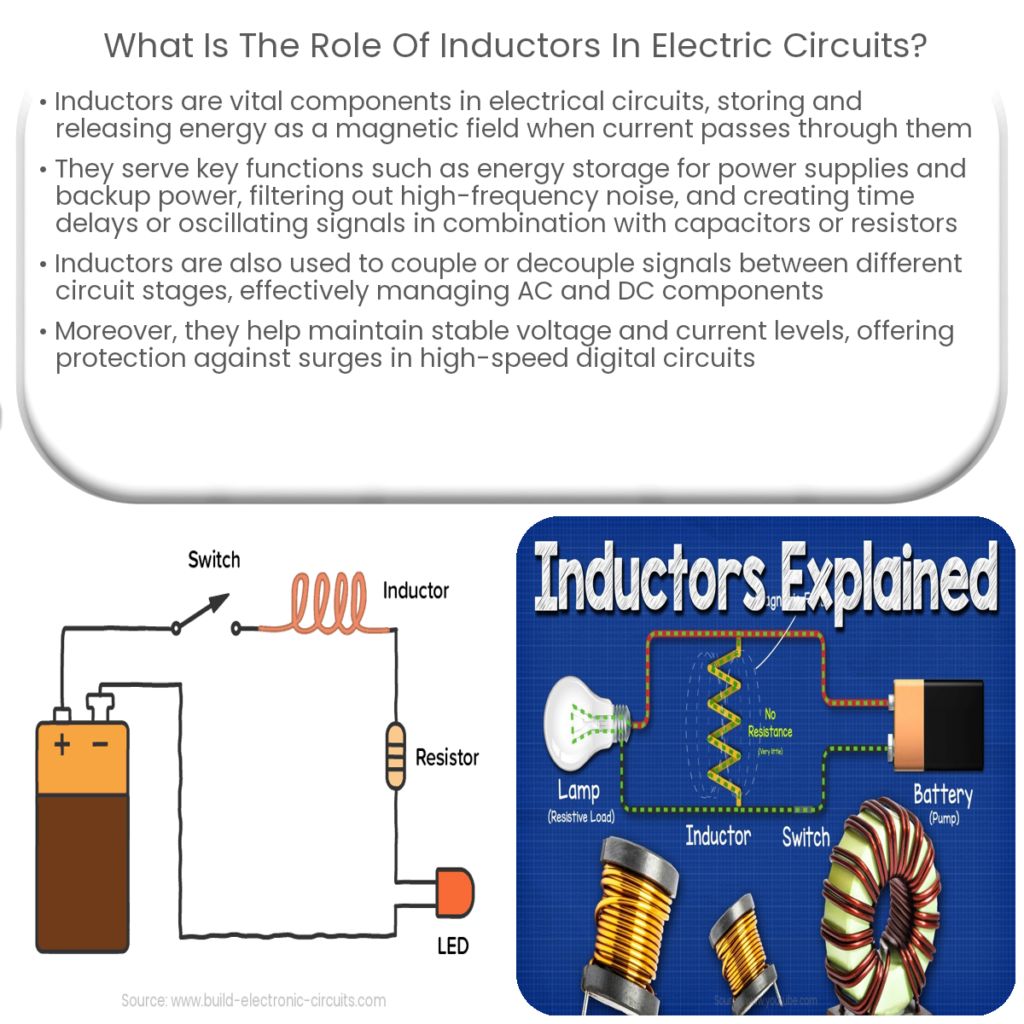
Inductors play a key role in electric circuits by storing energy, filtering signals, creating timing functions, coupling/decoupling signals, and stabilizing voltage and current levels.
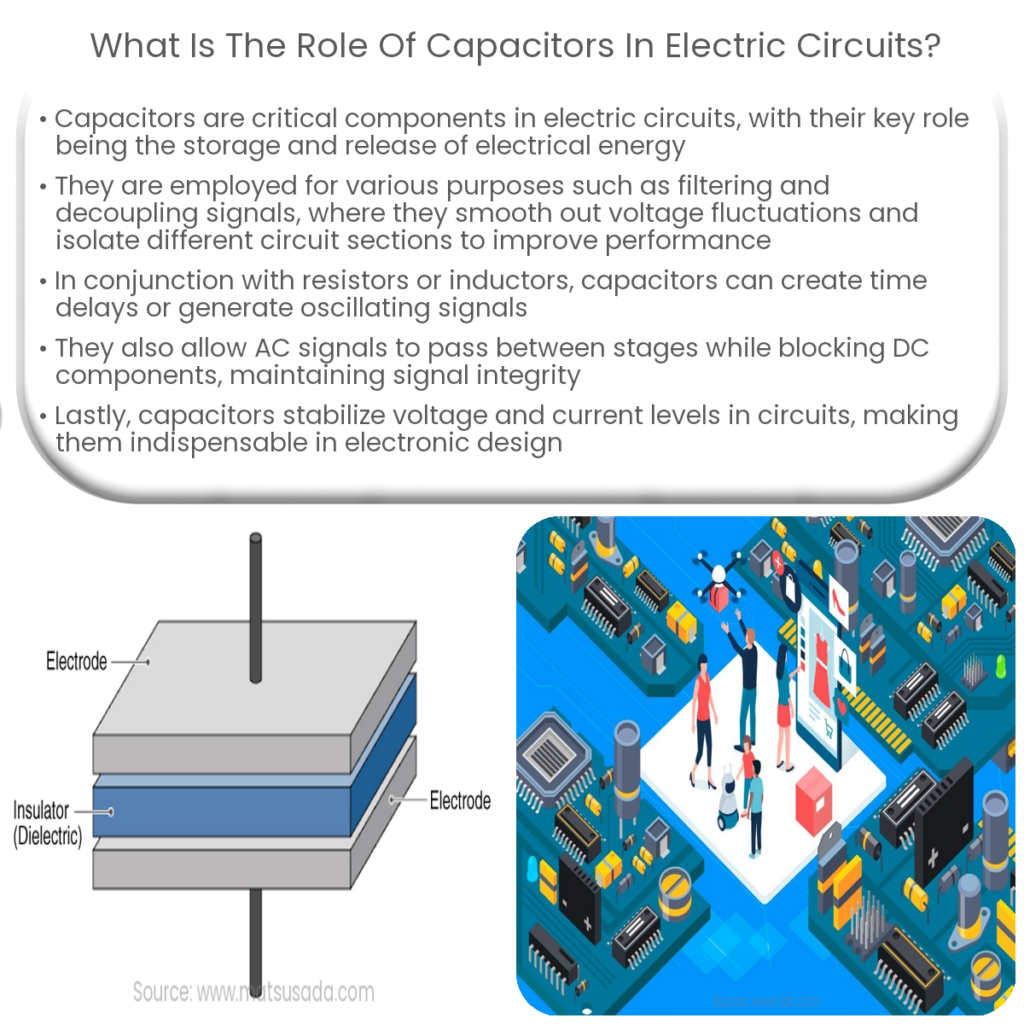
Capacitors play a vital role in electric circuits by storing energy, filtering signals, creating timing functions, coupling/decoupling signals, and stabilizing voltage and current levels.
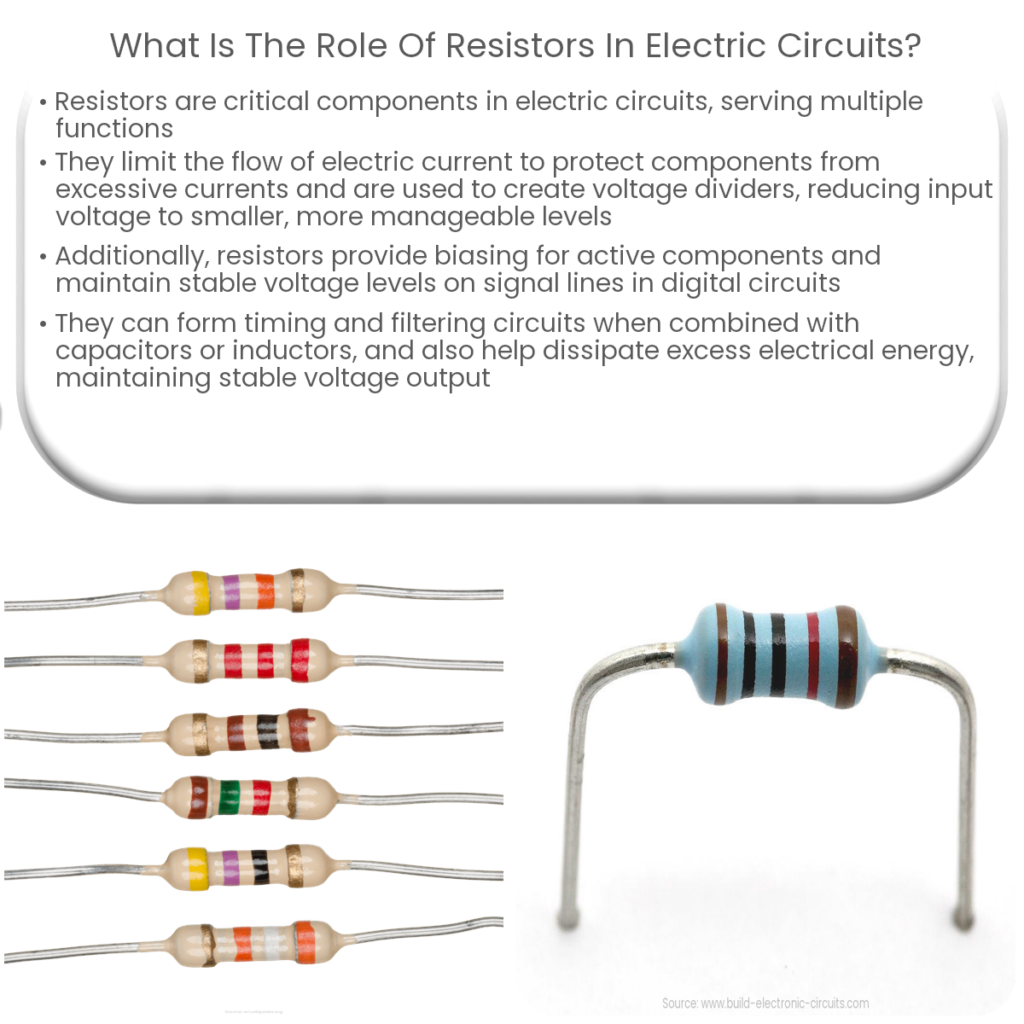
Resistors play a crucial role in electric circuits by limiting current, dividing voltage, providing biasing, stabilizing signal lines, creating timing, filtering, and dissipating power.
To calculate voltage, current, and resistance in a simple electric circuit, use Ohm’s Law: V = IR, I = V/R, and R = V/I, respectively.
Ohm’s law relates voltage, current, and resistance (V=I×R) in electric circuits, enabling calculation of unknown values, circuit design, and troubleshooting.
Series circuits have one current path, equal current through components, and divided voltage; parallel circuits have multiple paths, varying current, and equal voltage.
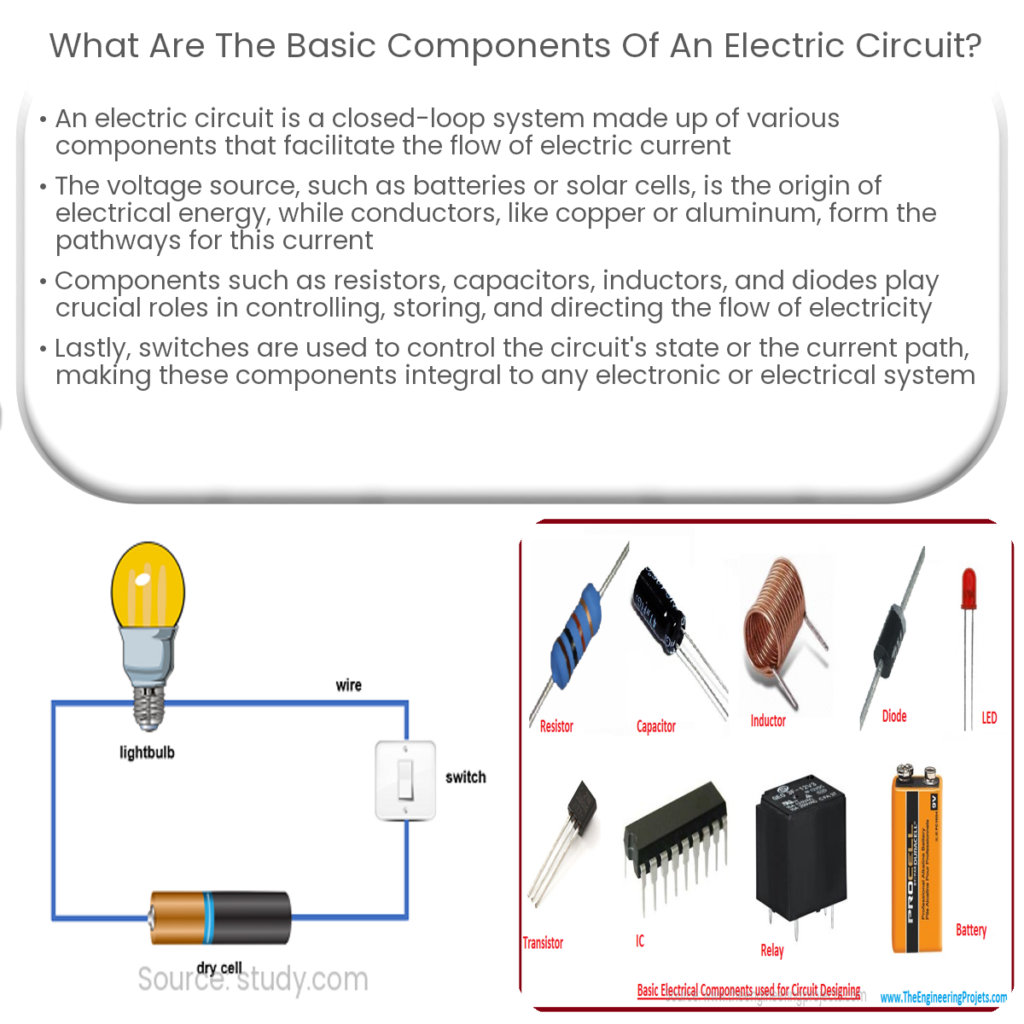
Basic components of an electric circuit include a voltage source, conductors, resistors, capacitors, inductors, diodes, and switches.
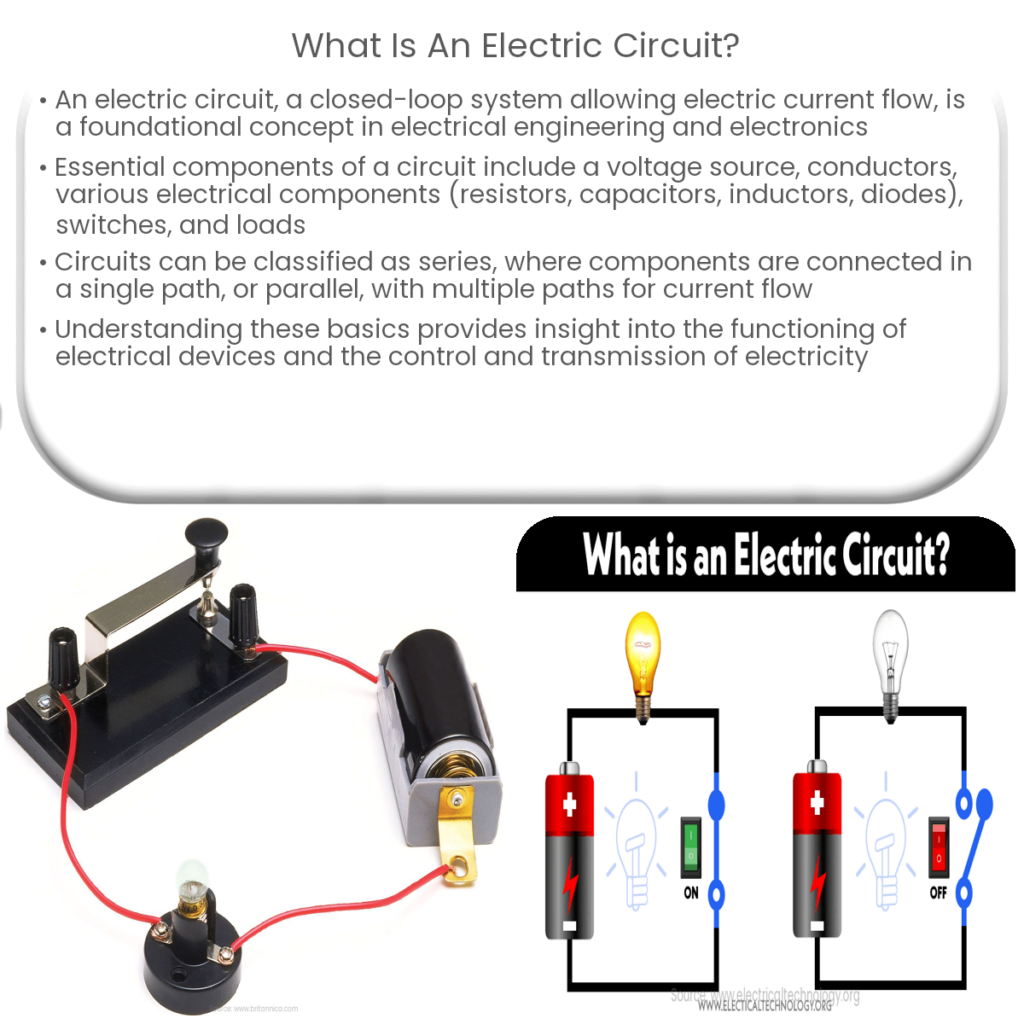
An electric circuit is a closed-loop pathway allowing electric current to flow through interconnected components, powered by a voltage source.
To design a magnetic induction NDT system, choose the right method, develop the sensor system, design data acquisition, create user interface, and test the system.
Different types of magnetic induction NDT methods include Eddy Current Testing, Magnetic Flux Leakage, Magnetic Particle Testing, Barkhausen Noise Testing, and Alternating Current Field Measurement.

The primary purpose of this project is to help the public to learn some exciting and important information about electricity and magnetism.
Our Website follows all legal requirements to protect your privacy. Visit our Privacy Policy page.
The Cookies Statement is part of our Privacy Policy.
The information contained on this website is for general information purposes only. This website does not use any proprietary data. Visit our Editorial note.
It’s simple:
1) You may use almost everything for non-commercial and educational use.
2) You may not distribute or commercially exploit the content, especially on another website.