
Fast-Switching Thyristor (FST)

Explore the role of Fast-Switching Thyristors (FSTs) in power electronics, their structure, operation, advantages, and future prospects.
Explore the role of Fast-Switching Thyristors (FSTs) in power electronics, their structure, operation, advantages, and future prospects.

Explore the workings, types, applications, advantages, and disadvantages of electromechanical relays in our comprehensive guide.
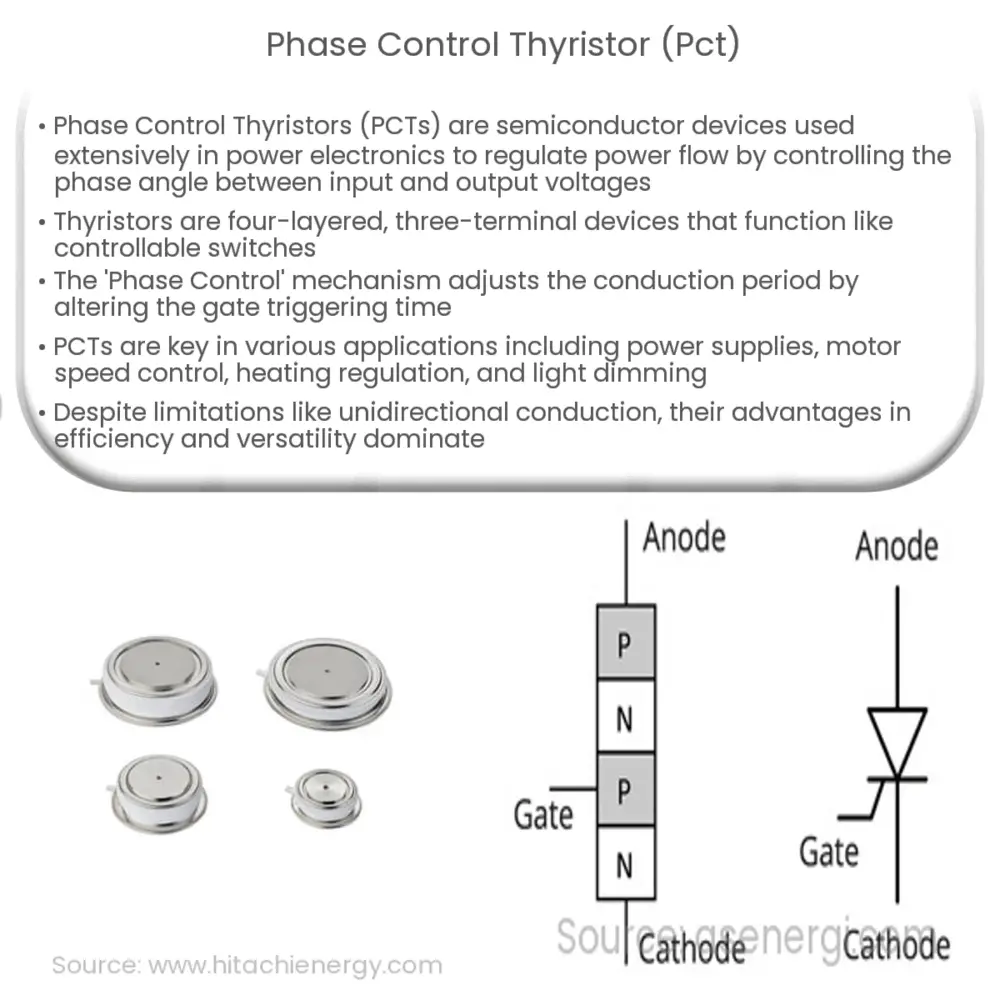
Explore Phase Control Thyristors (PCTs) – their basics, mechanism, features, applications, and impact on power electronics.

Explore the structure, operation, and applications of Integrated Gate-Commutated Thyristor (IGCT), a high-power semiconductor device.
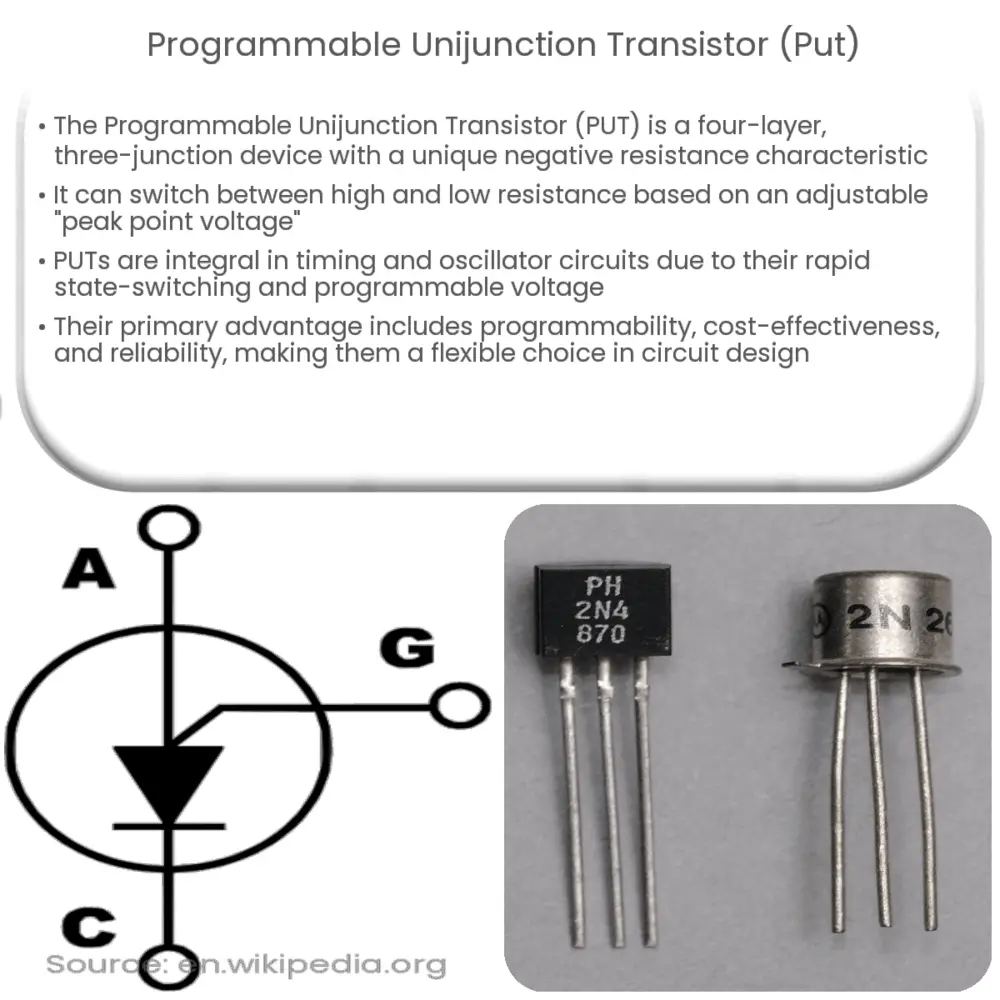
Dive into the world of the Programmable Unijunction Transistor (PUT), exploring its structure, operation, applications, and advantages.

Explore the world of Light-Activated Silicon-Controlled Rectifiers (LASCRs), their structure, operation, applications, advantages, and limitations.

Explore the bidirectional triode thyristor (triac), its structure, working principle, applications, advantages, and drawbacks in power electronics.

Explore the structure, functioning, applications, advantages, and limitations of Asymmetrical Thyristors (ASCR) in power electronics.

Explore the structure, working principle, applications, advantages, and drawbacks of Reverse Conducting Thyristors (RCTs) in power electronics.
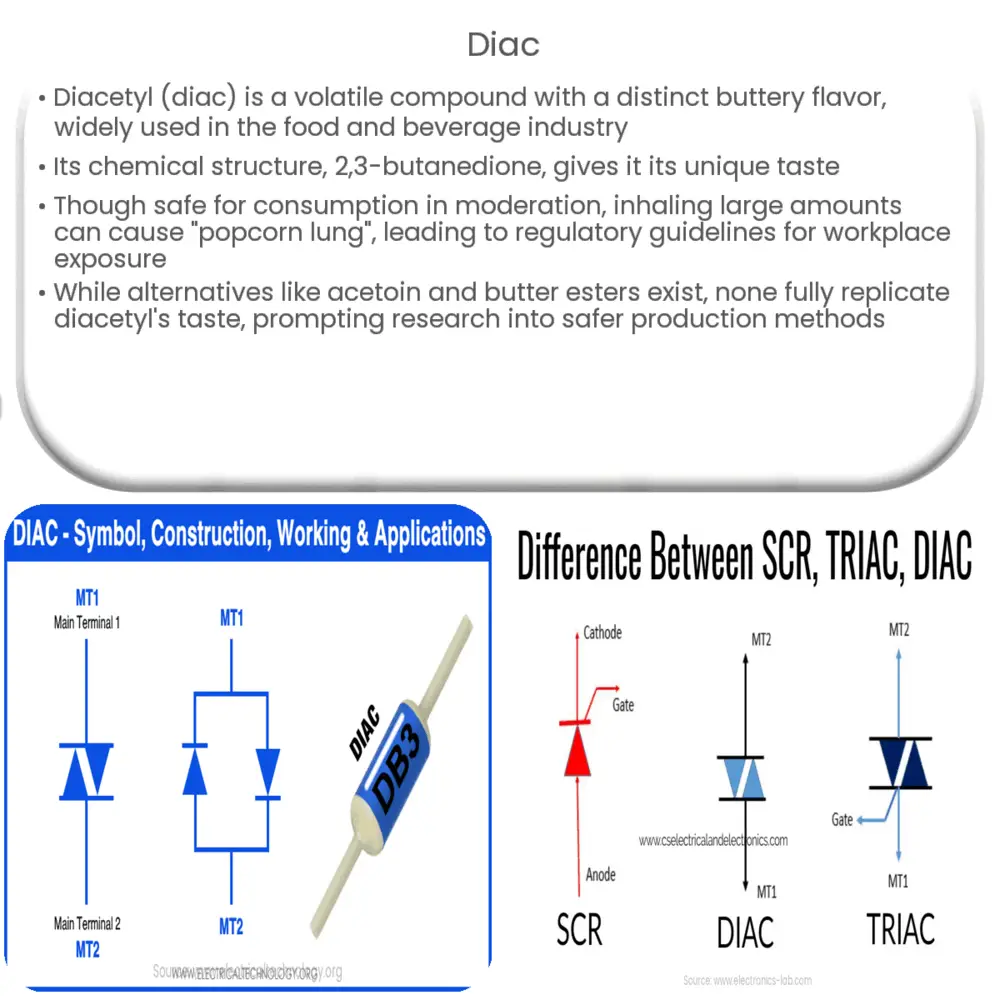
Dive into the world of diacetyl, its applications, health concerns, and potential alternatives in our comprehensive guide.

The primary purpose of this project is to help the public to learn some exciting and important information about electricity and magnetism.
Our Website follows all legal requirements to protect your privacy. Visit our Privacy Policy page.
The Cookies Statement is part of our Privacy Policy.
The information contained on this website is for general information purposes only. This website does not use any proprietary data. Visit our Editorial note.
It’s simple:
1) You may use almost everything for non-commercial and educational use.
2) You may not distribute or commercially exploit the content, especially on another website.


