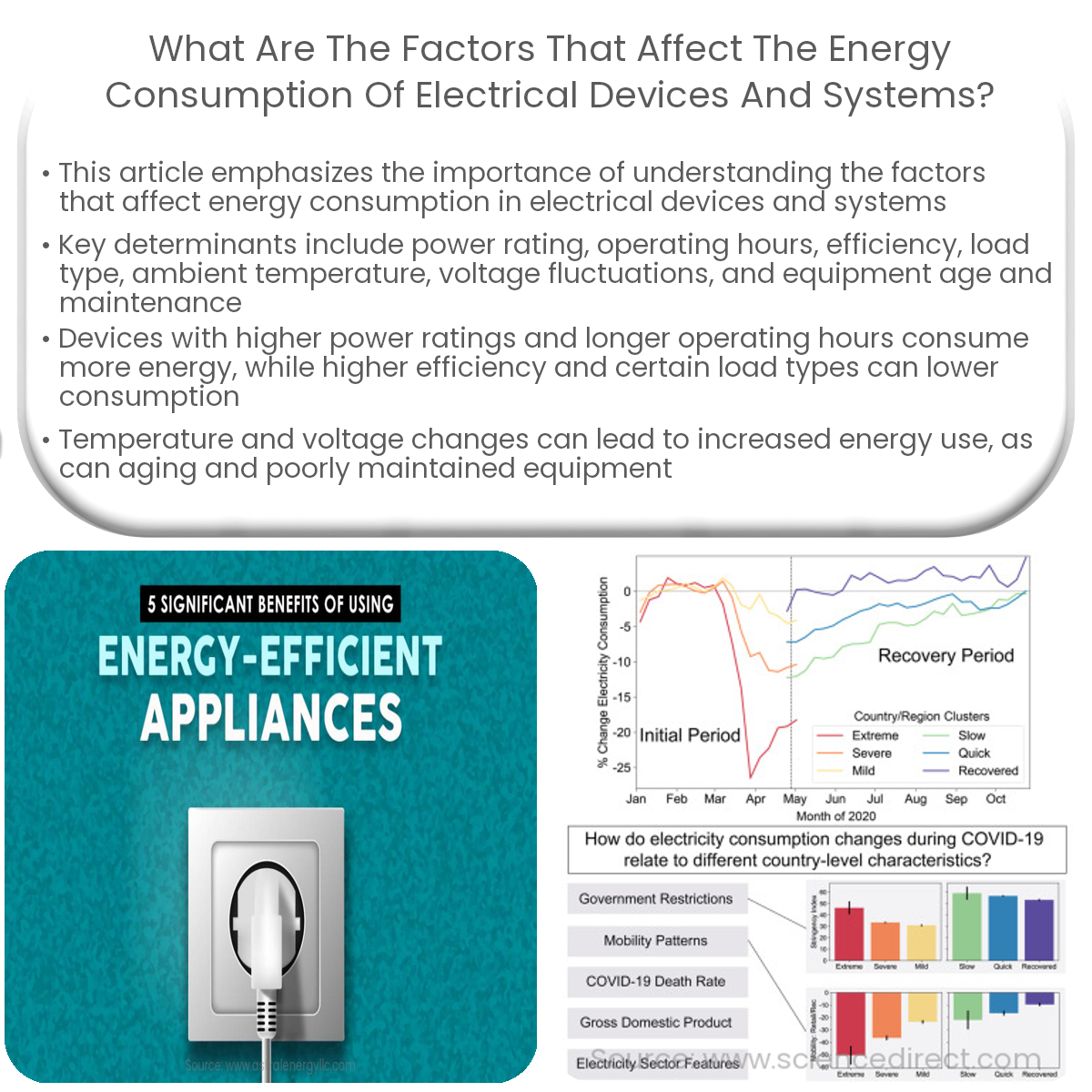
Factors affecting energy consumption include power rating, operating hours, efficiency, load type, ambient temperature, voltage fluctuations, and maintenance.
Factors Affecting Energy Consumption of Electrical Devices and Systems
Energy consumption is a critical aspect of electrical devices and systems, as it influences efficiency, costs, and environmental impact. Several factors affect energy consumption, and understanding these factors can help optimize the performance of devices and systems. This article discusses the key factors affecting energy consumption.
1. Power Rating
The power rating of an electrical device or system, typically expressed in watts (W) or kilowatts (kW), is a primary determinant of energy consumption. Devices with higher power ratings consume more energy during operation.
2. Operating Hours
The number of hours a device is used directly impacts its energy consumption. The longer a device is in operation, the more energy it will consume.
3. Efficiency
Efficiency is a measure of how effectively an electrical device or system converts input energy into useful output. Higher efficiency devices or systems will consume less energy for a given output.
4. Load Type
The type of electrical load connected to a system can influence energy consumption. For example, resistive loads like incandescent bulbs are less efficient compared to inductive or capacitive loads, such as motors or LED lights, which may consume less energy for the same output.
5. Ambient Temperature
Temperature can affect the energy consumption of electrical devices, as increased temperatures can lead to increased resistance in conductors, causing higher energy losses. Cooling systems, like air conditioners and refrigerators, also consume more energy in warmer environments.
6. Voltage Fluctuations
Voltage fluctuations can lead to changes in the energy consumption of electrical devices. Overvoltage or undervoltage conditions can cause devices to draw more current, increasing their energy consumption.
7. Equipment Age and Maintenance
As electrical equipment ages, its efficiency may decrease due to wear and tear, leading to increased energy consumption. Regular maintenance and timely replacement of worn components can help maintain energy efficiency.
Conclusion
Understanding the factors affecting energy consumption is essential for optimizing the performance and efficiency of electrical devices and systems. By considering power ratings, operating hours, efficiency, load types, ambient temperature, voltage fluctuations, and equipment maintenance, users can make informed decisions to reduce energy consumption and associated costs.