
Bonded fin heatsink

A bonded fin heatsink is an efficient thermal management solution that uses fins bonded to a baseplate, offering improved heat dissipation and customizable design for various applications.
A bonded fin heatsink is an efficient thermal management solution that uses fins bonded to a baseplate, offering improved heat dissipation and customizable design for various applications.

Pin fin heatsinks efficiently dissipate heat in high-performance electronics, offering a compact design, high surface area, and versatility in airflow conditions.

Heat pipe heatsinks efficiently manage heat in electronic devices, offering high thermal conductivity, compact size, and flexible design.

The Coriolis Vibratory Gyroscope is a compact, accurate motion sensor that measures angular velocity using the Coriolis effect, ideal for various industries.
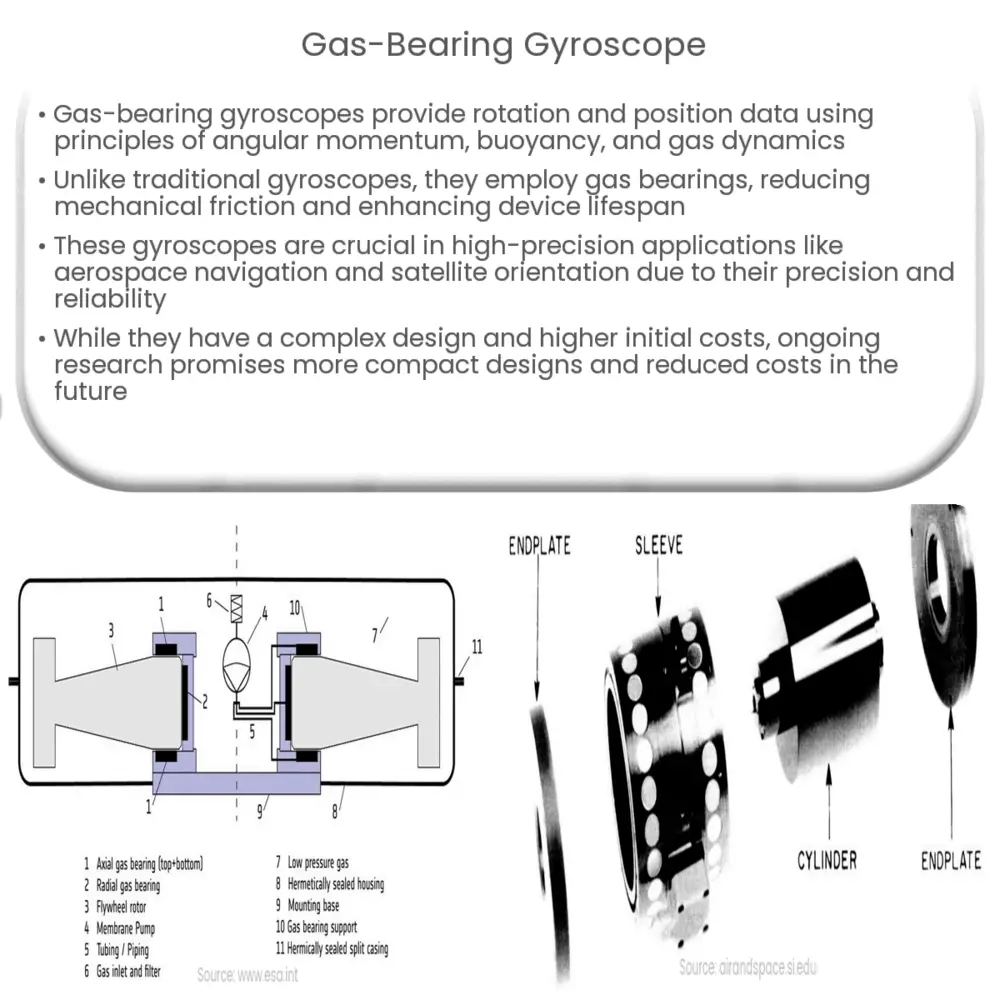
Explore the world of gas-bearing gyroscopes, their working principle, types, applications, pros and cons, and their future prospects.

Explore the principles, operation, types, and applications of synchronous generators, their role in power generation, and modern solutions to their challenges.

Solid-state gyroscopes are advanced motion sensors that offer improved precision, reliability, and compactness, revolutionizing various industries.

The concept of gyroscopes can be traced back to the early 19th century when French mathematician and physicist Jean-Bernard-Léon Foucault invented the first gyroscope. Since then, gyroscopes have undergone various advancements, including the development of mechanical, optical, and fiber-optic gyroscopes. However, these traditional gyroscopes often suffered from issues like mechanical wear, sensitivity to temperature changes, and high costs.

A magnetic gyroscope relies on the interaction between magnetic fields and charged particles to measure angular velocity. The core component of a magnetic gyroscope is a superconducting quantum interference device (SQUID), which is a highly sensitive magnetometer capable of detecting extremely small changes in magnetic fields. The SQUID is placed within a magnetic field, and as the device rotates, the magnetic field experienced by the SQUID changes. By measuring these changes, the angular velocity of the device can be determined.

When an external force is applied to a spinning gyroscope, it will not move in the direction of the applied force, but will instead “precess,” or rotate around an axis perpendicular to the force. This counterintuitive behavior is known as gyroscopic precession, and it forms the basis of many practical applications of the rotary gyroscope.

The primary purpose of this project is to help the public to learn some exciting and important information about electricity and magnetism.
Our Website follows all legal requirements to protect your privacy. Visit our Privacy Policy page.
The Cookies Statement is part of our Privacy Policy.
The information contained on this website is for general information purposes only. This website does not use any proprietary data. Visit our Editorial note.
It’s simple:
1) You may use almost everything for non-commercial and educational use.
2) You may not distribute or commercially exploit the content, especially on another website.
