
Wireless Relay

Wireless relay systems enable long-range data transmission without physical infrastructure, offering flexibility, cost savings, and extended range.
Wireless relay systems enable long-range data transmission without physical infrastructure, offering flexibility, cost savings, and extended range.

Explore the principles, types, characteristics, pros & cons, and applications of compound wound DC motors in this comprehensive guide.
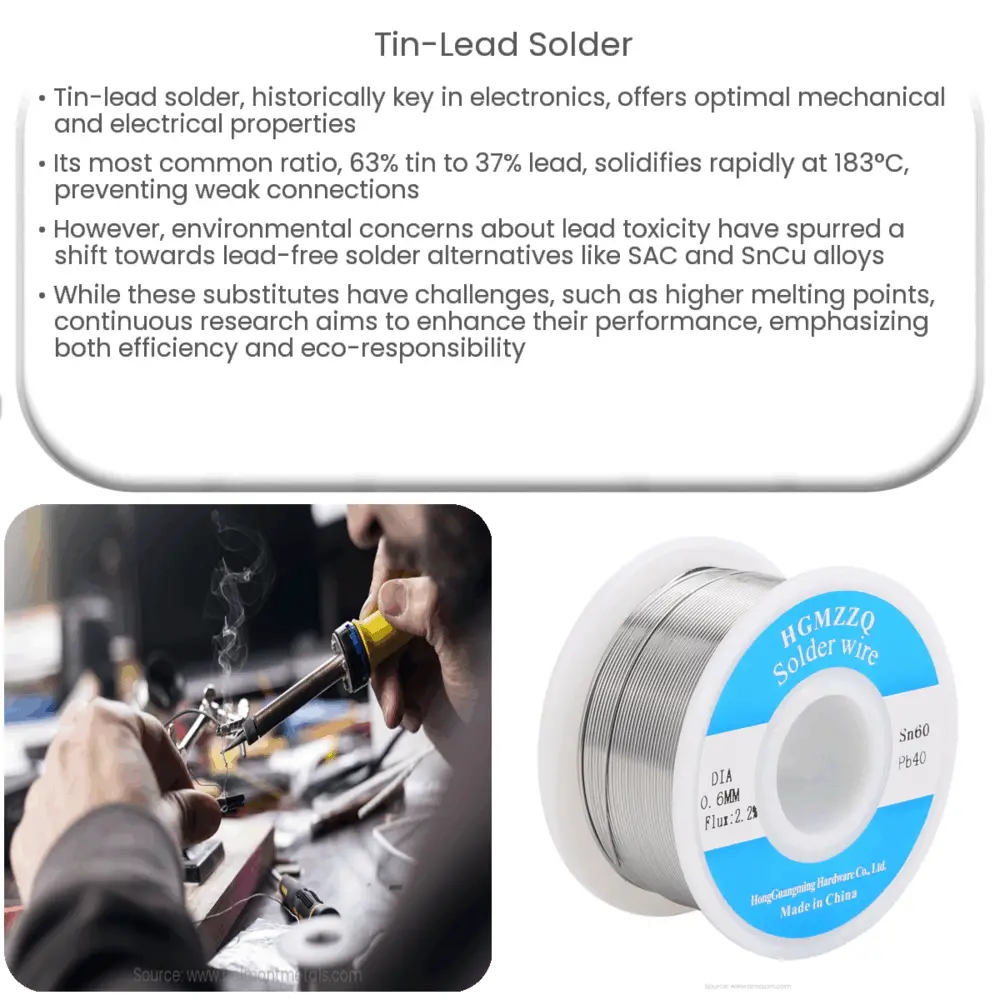
Tin-lead solder, widely used in electronics, is known for its mechanical and electrical properties. Health concerns are driving a shift to lead-free alternatives.
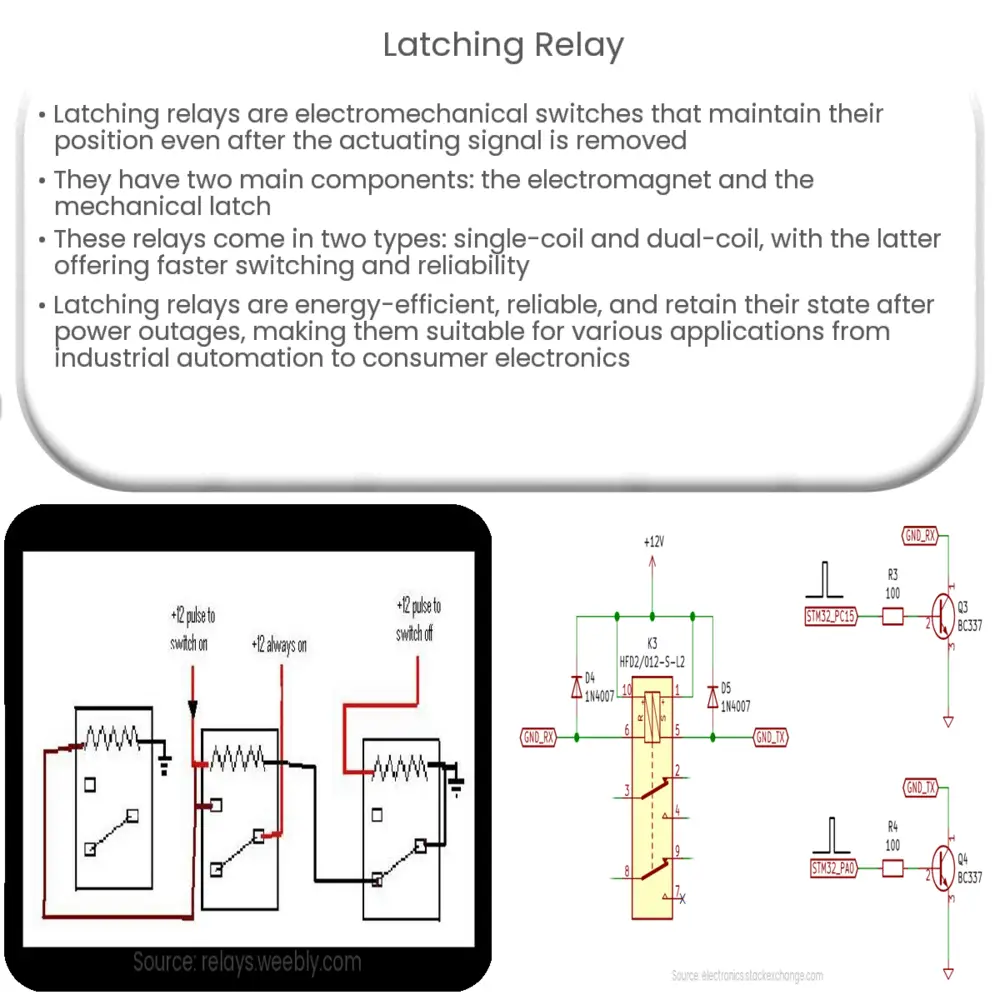
A latching relay is an energy-efficient, electromechanical switch that maintains its state after the actuating signal is removed, ideal for various applications.
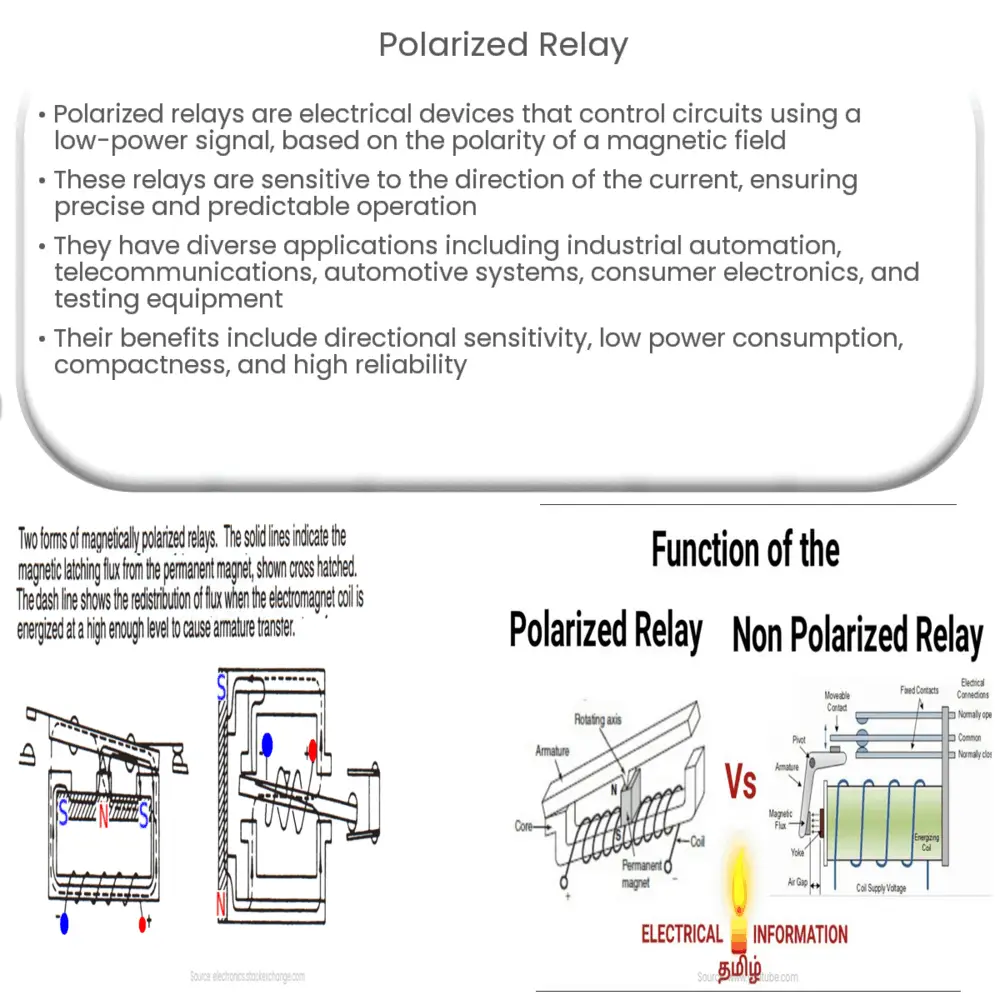
A polarized relay is an electromagnetic device sensitive to current direction, used for precise control in various applications like automation, telecommunications, and automotive systems.

An overcurrent relay is a protective device that detects excessive current in a power system and isolates the faulted section, preventing damage.
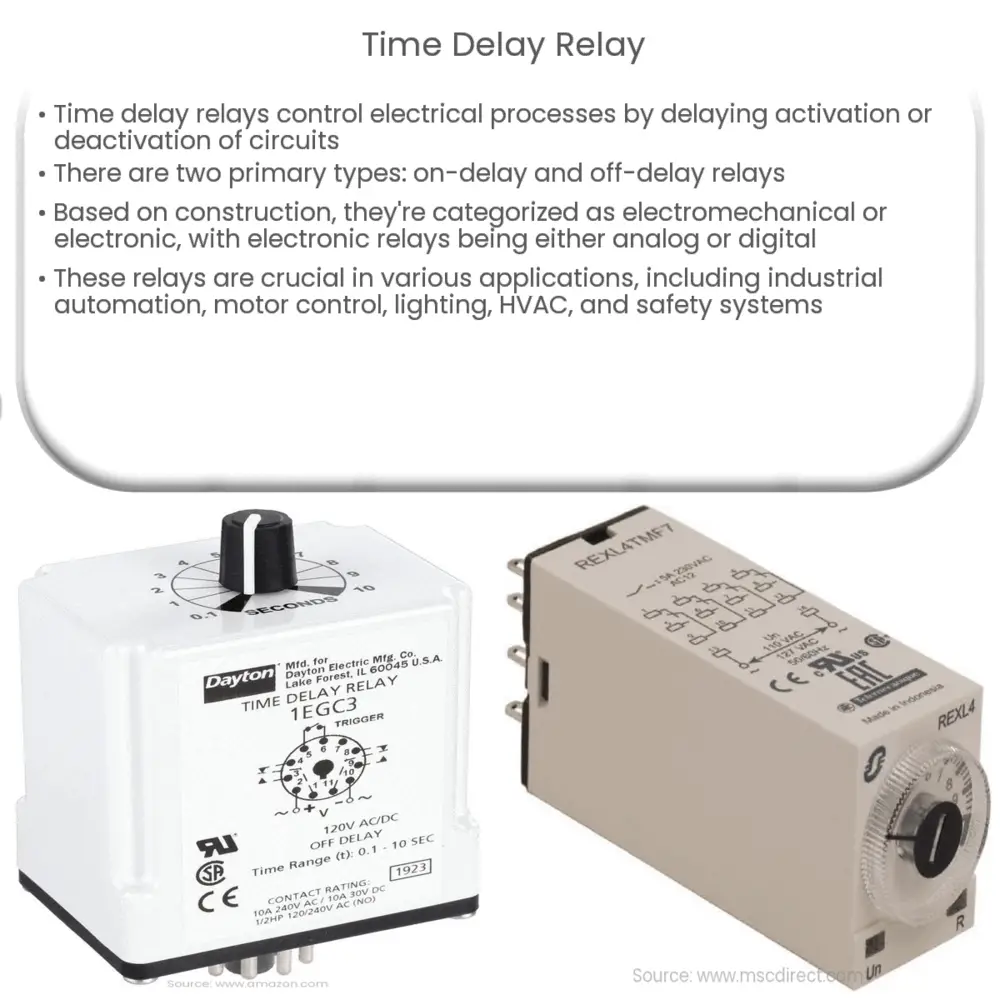
A time delay relay is an electrical component that controls the activation or deactivation of a connected load after a set time interval.

A voltage relay is a protective device that monitors voltage levels in power systems, disconnecting loads when voltage deviates from a predefined range.
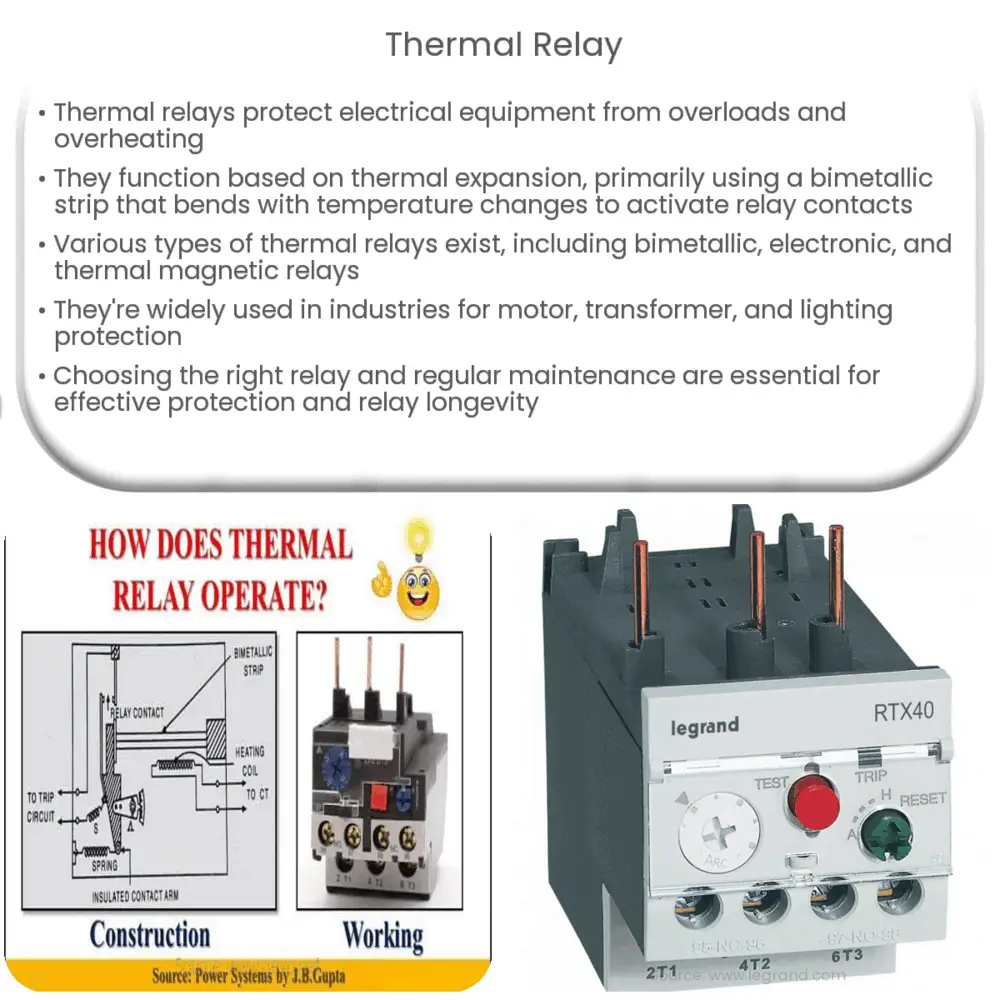
A thermal relay is an electromechanical device that detects temperature changes in electrical circuits, protecting equipment from overload and overheating.
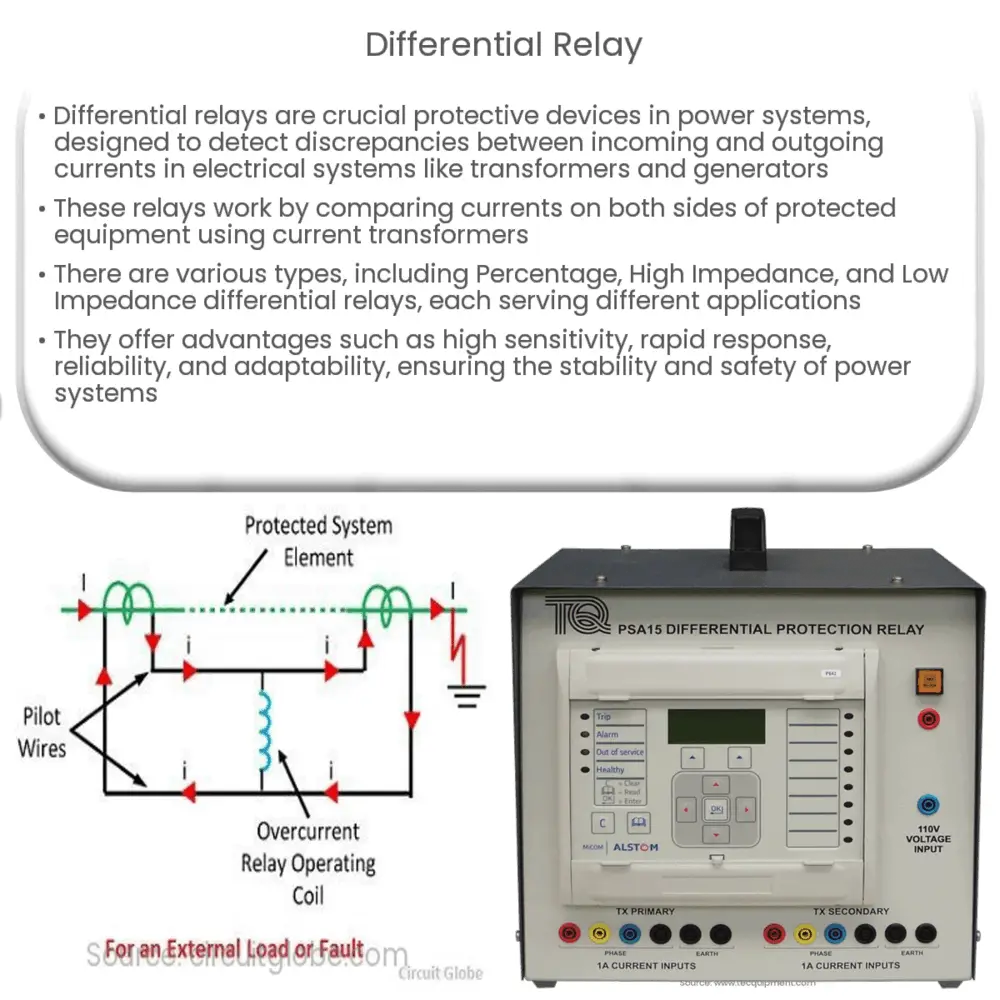
A differential relay is a protective device that detects imbalances in incoming and outgoing currents, safeguarding transformers, generators, motors, and busbars.

The primary purpose of this project is to help the public to learn some exciting and important information about electricity and magnetism.
Our Website follows all legal requirements to protect your privacy. Visit our Privacy Policy page.
The Cookies Statement is part of our Privacy Policy.
The information contained on this website is for general information purposes only. This website does not use any proprietary data. Visit our Editorial note.
It’s simple:
1) You may use almost everything for non-commercial and educational use.
2) You may not distribute or commercially exploit the content, especially on another website.
