
Microwave Attenuators

Explore the function, types, applications, and specifications of microwave attenuators – an essential component in modern telecommunication systems.
Explore the function, types, applications, and specifications of microwave attenuators – an essential component in modern telecommunication systems.

Explore the functionality, types, and applications of microwave power dividers, and discover key factors to consider when selecting these crucial components.

Microwave power combiners efficiently merge multiple input signals into one, enhancing performance in telecom, radar, and test equipment.

Microwave filters selectively allow specific frequencies to pass, enabling efficient signal transmission in communication systems.

Klystrons are vacuum tubes that generate and amplify high-frequency microwave signals, widely used in radar, satellite communication, and particle accelerators.
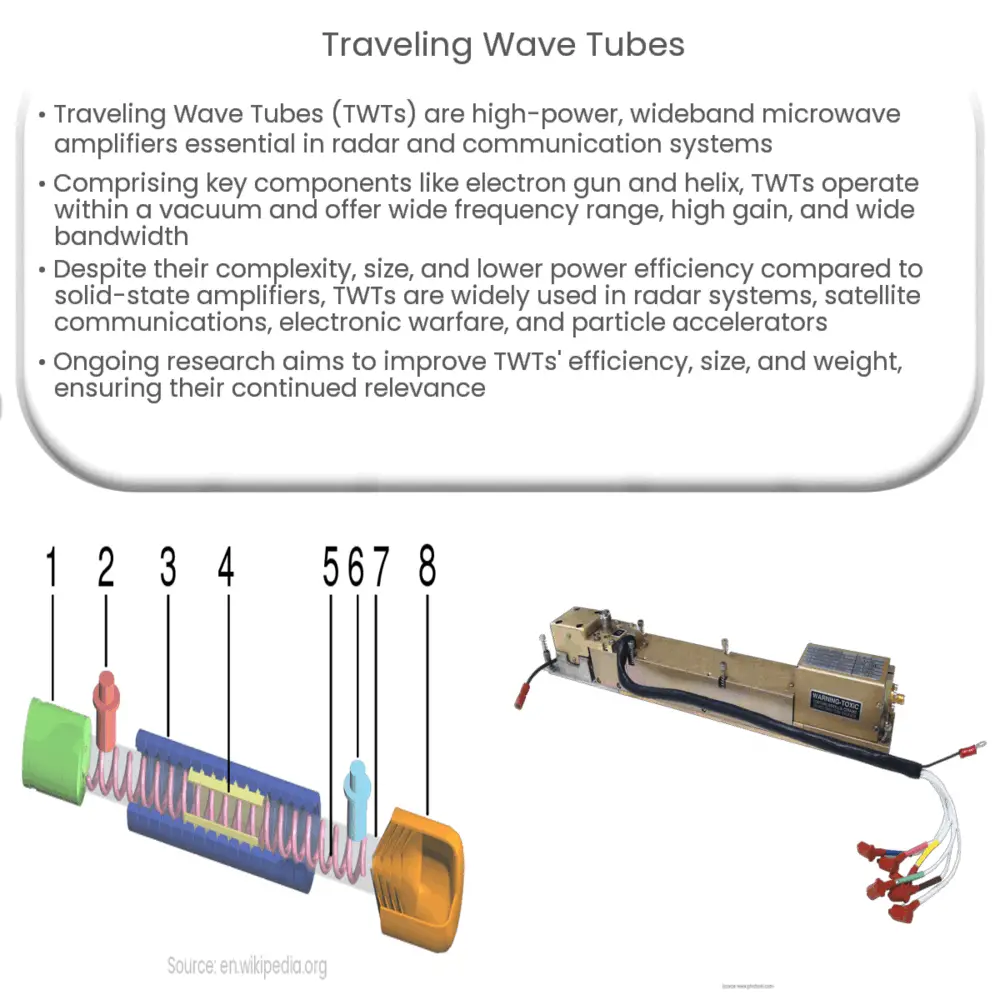
Traveling Wave Tubes are vacuum-based devices that amplify microwave signals with high gain and wide bandwidth, used in radar, communication, and satellites.

Gyrotrons are high-power microwave generators used in nuclear fusion, materials processing, communication systems, and medical applications.

Solar inverters convert DC power from solar panels into usable AC electricity, optimizing efficiency and enabling integration with the grid.

Explore the world of microwave devices, their applications, and technologies, while delving into emerging trends and future uses in various industries.

Magnetrons are high-powered vacuum tubes that generate microwaves, used in radar systems, microwave ovens, communication, and medical applications.

The primary purpose of this project is to help the public to learn some exciting and important information about electricity and magnetism.
Our Website follows all legal requirements to protect your privacy. Visit our Privacy Policy page.
The Cookies Statement is part of our Privacy Policy.
The information contained on this website is for general information purposes only. This website does not use any proprietary data. Visit our Editorial note.
It’s simple:
1) You may use almost everything for non-commercial and educational use.
2) You may not distribute or commercially exploit the content, especially on another website.
