
Explore the significance of RF Shields in protecting electronic devices from disruptive RF signals, their types, applications, manufacturing, and future trends.
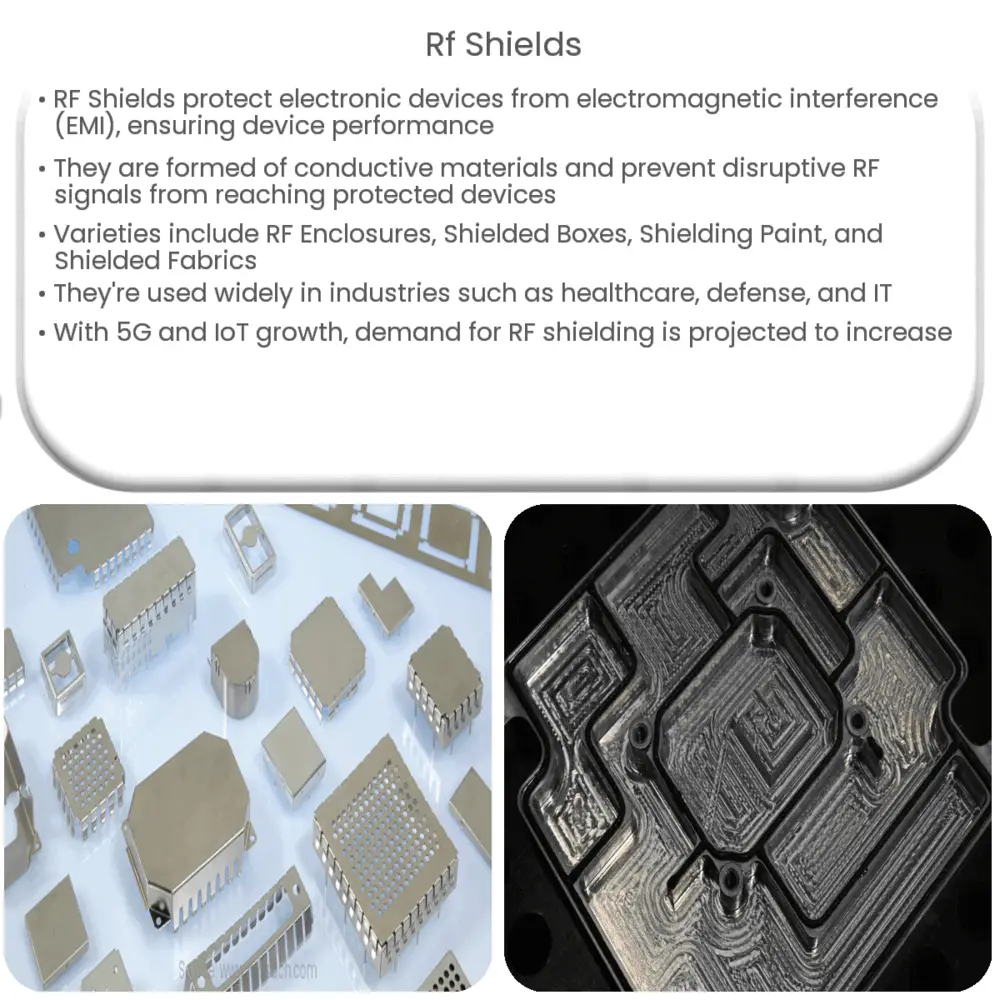
Understanding RF Shields
Radio Frequency (RF) Shields play a pivotal role in the technology and electronic industry. They are designed to serve a critical function – to protect electronic devices from electromagnetic interference (EMI). These shields help to maintain the integrity and performance of sensitive electronic components by limiting their exposure to disruptive RF signals.
The Importance of RF Shielding
As we increasingly rely on wireless communications, the impact of EMI becomes a critical concern. For instance, your mobile device, Wi-Fi router, and even your microwave oven emit RF signals. Without adequate RF shielding, these devices could potentially interfere with each other’s operation, leading to diminished performance or, in extreme cases, device failure.
The Functioning of RF Shields
RF shields work by forming a barrier around an electronic device or component. Made of conductive materials such as copper or aluminum, these shields absorb and redistribute the incoming RF signals, thereby preventing them from reaching the protected device.
Types of RF Shields
While these different types of RF shields serve the same fundamental purpose, they are applied in different scenarios based on the level of shielding required and the specific application.
RF Shielding Applications
RF shields are used across numerous industries, including healthcare, defense, telecommunications, and information technology. In the healthcare sector, for example, RF shields are integral to the operation of MRI machines, which must be isolated from external RF signals to produce accurate scans.
In the telecommunication sector, RF shields protect the sensitive components of network infrastructure, preventing disruptions that could impact service quality. Similarly, in defense and IT sectors, RF shields ensure the secure and reliable operation of crucial systems.
The Manufacturing of RF Shields
RF shields are typically constructed using conductive materials like copper, nickel, silver, or aluminum. They can be made using a variety of manufacturing processes, such as stamping, forming, or electroforming, depending on the design complexity and production volume. For high-volume manufacturing, stamping is usually the preferred method due to its cost-effectiveness and speed, whereas for more complex designs, electroforming might be the method of choice. Ensuring a high quality of manufacturing is crucial as even small defects could compromise the shield’s effectiveness.
Testing RF Shields
After production, it’s essential to test RF shields to ensure they provide the required level of protection. This testing process involves exposing the shield to a range of frequencies and intensities, then measuring how effectively it blocks these signals. Various international standards, such as those set by the International Electrotechnical Commission (IEC) and the Institute of Electrical and Electronics Engineers (IEEE), govern these testing processes to ensure consistency and reliability.
Future Trends in RF Shielding
With the advent of 5G technology and the Internet of Things (IoT), the demand for effective RF shielding is expected to grow significantly. As these technologies operate at higher frequencies and with more devices, the potential for EMI increases. Therefore, industry is continually researching and developing new materials and manufacturing methods to enhance RF shielding effectiveness while reducing costs.
Conclusion
In summary, RF shields are a crucial component in the world of electronics and wireless communication. They serve a vital role in protecting sensitive electronic devices and systems from disruptive RF signals, thereby ensuring optimal performance and reliability. As the use of wireless technology continues to expand, the importance of effective RF shielding is only set to grow. Whether it’s in our handheld devices, medical equipment, or large-scale network infrastructure, RF shields are the unsung heroes, quietly ensuring our technological world functions as expected.



