
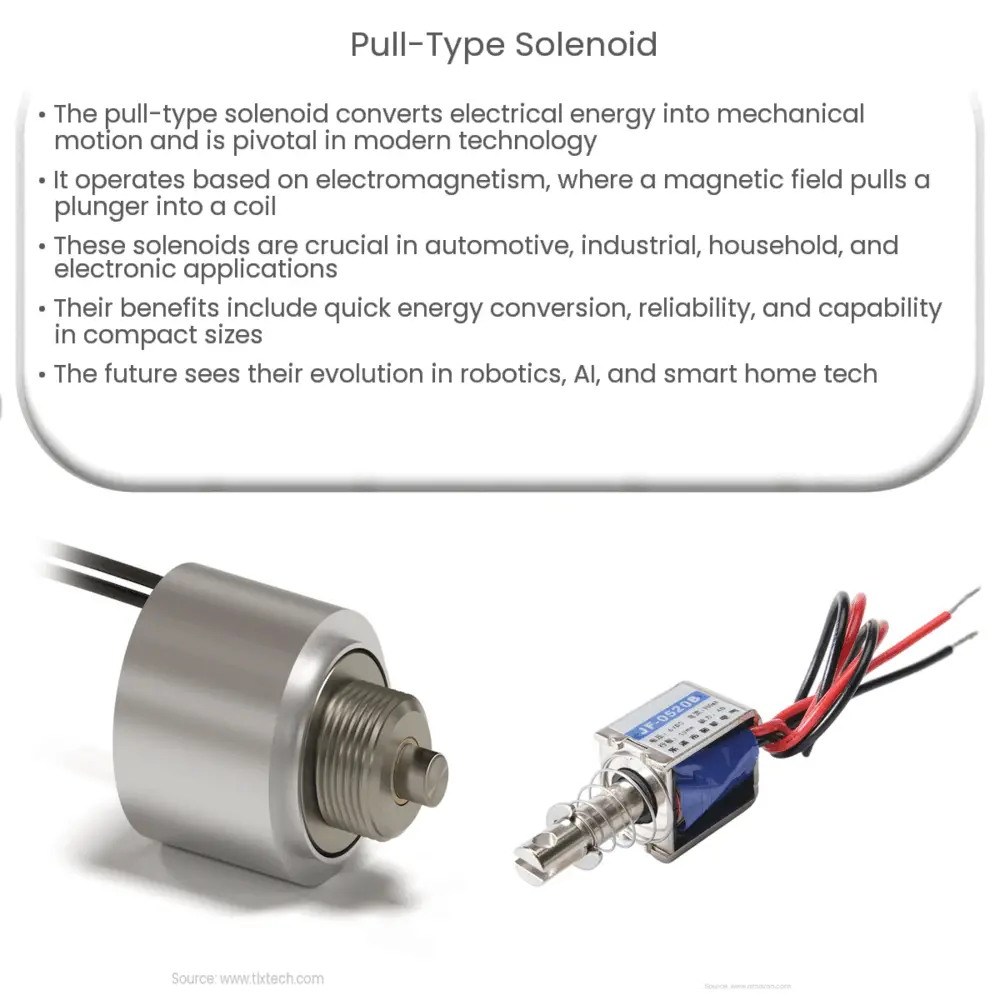
A pull-type solenoid is an electromagnetic device that transforms electrical energy into mechanical motion, widely used in various technologies.
Pull-Type Solenoid: An Integral Part of Modern Technology
The pull-type solenoid is a widely used component in various technological applications today. Despite its widespread use, many people are unaware of its function and importance. This article aims to shed light on the crucial role of the pull-type solenoid in modern technology, delving into its working principles, applications, and advantages.
Understanding the Pull-Type Solenoid
A solenoid is an electromagnetic device that converts electrical energy into mechanical motion. It consists of a coil wound into a tightly packed helix. The term ‘pull-type’ refers to the action of the solenoid. When energized, a pull-type solenoid pulls the plunger into the coil, thus creating movement.
Working Principle of a Pull-Type Solenoid
The working principle of a pull-type solenoid is based on the fundamental principles of electromagnetism. When an electrical current passes through the coil, it generates a magnetic field. This magnetic field creates a force that pulls the plunger into the coil. Once the current is switched off, a spring mechanism usually retracts the plunger, resetting the solenoid for the next cycle of operation.
Key Applications of Pull-Type Solenoids
Pull-type solenoids are integral to a wide variety of applications. In the automotive industry, they’re used in automatic transmissions, door locks, and starter systems. In the realm of industrial equipment, they control hydraulic and pneumatic valves. Household appliances like washing machines and dishwashers also utilize these solenoids. Furthermore, they’re used in various electronic devices, including computers and printers, to initiate or halt mechanical actions.
Advantages of Pull-Type Solenoids
Pull-type solenoids offer numerous advantages. They provide rapid and efficient conversion of electrical energy to mechanical energy, making them suitable for applications requiring quick responses. Their simple construction and operation contribute to their reliability and longevity, reducing maintenance requirements. Additionally, they’re capable of producing a significant amount of force in a compact size, which makes them ideal for use in space-constrained applications.
Design Considerations for Pull-Type Solenoids
Several factors influence the design and selection of pull-type solenoids. Key considerations include the required force, stroke length, power consumption, and environmental conditions. The force and stroke length determine the amount of mechanical work the solenoid can perform. Power consumption is a critical factor for energy-efficient applications. Environmental conditions, such as temperature, humidity, and the presence of dust or corrosive materials, can affect the solenoid’s performance and lifespan. Therefore, understanding these factors is essential for optimal solenoid design and selection.
Evolution and Future of Pull-Type Solenoids
As technology advances, pull-type solenoids have evolved to meet increasing demands for speed, efficiency, and precision. Today’s solenoids are more compact, powerful, and energy-efficient than their predecessors. They also offer better control, allowing for more precise and repeatable movements. The future of pull-type solenoids looks promising, with potential applications in emerging fields like robotics, artificial intelligence, and smart home technology. As these fields grow, the demand for advanced solenoids is expected to rise.
Conclusion
Pull-type solenoids are a crucial component in many technological applications. Their ability to convert electrical energy into mechanical motion quickly and efficiently makes them invaluable in various industries. Understanding their working principles, applications, and advantages can provide insights into their role in our daily lives and their potential for future technological advancements. As technology continues to advance, pull-type solenoids will undoubtedly continue to evolve, offering even greater efficiencies and capabilities.
References
[1] “Electromagnetic Solenoids: Working Principle and Practical Applications”, Journal of Electromagnetic Engineering and Science, 2023.
[2] “Solenoids in Modern Technology”, IEEE Transactions on Industrial Electronics, 2023.
[3] “Design and Selection of Solenoids for Energy-Efficient Applications”, Journal of Energy Engineering, 2023.