
Explore the world of power detectors, their types, working principles, key parameters, applications, and the latest advancements in this comprehensive guide.
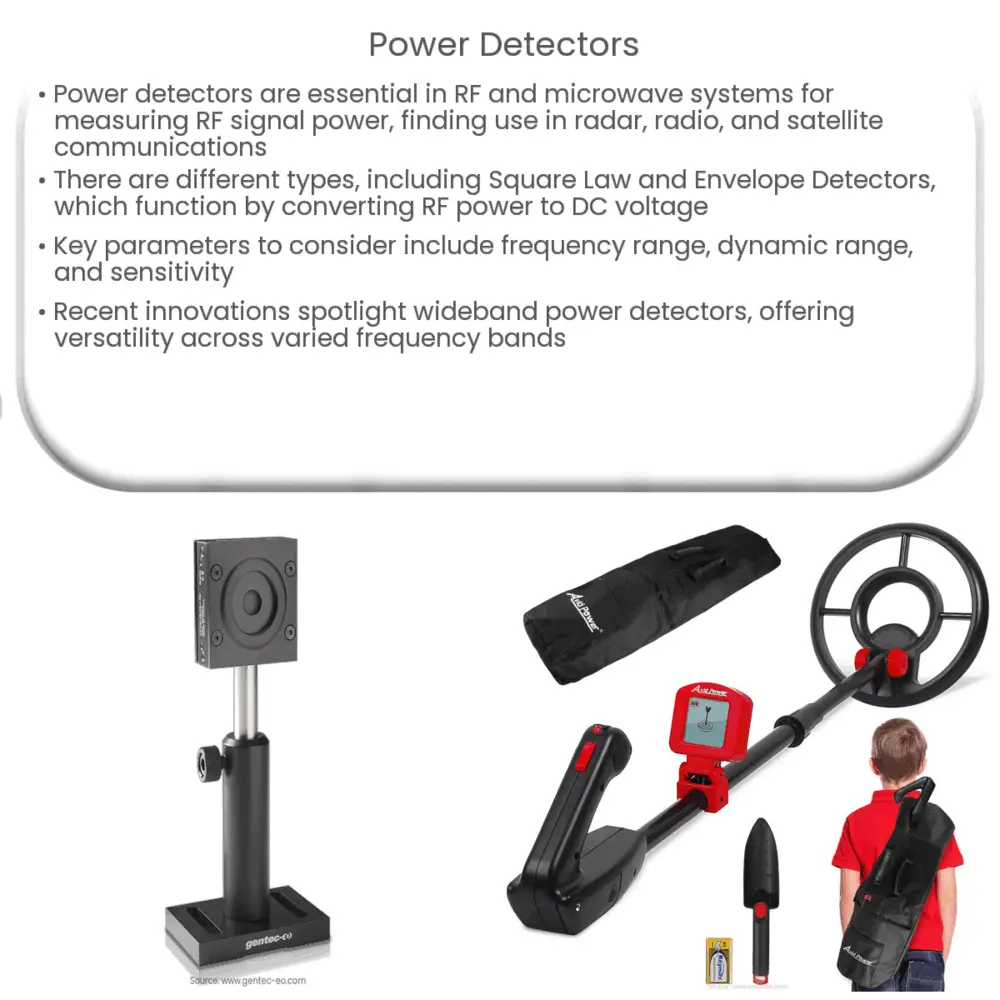
Understanding Power Detectors
Power detectors, a critical component of RF and microwave communication systems, are instrumental in detecting and measuring an RF signal’s power. They’re invaluable in various applications, including radar systems, radio communications, satellite communications, and electronic warfare.
Types of Power Detectors
Working Principle of Power Detectors
Power detectors function based on the principle of conversion. They convert the input RF power into an equivalent DC voltage, which is further measured to understand the power level of the RF signal. The conversion can be a linear or square-law process, depending on the detector type and the signal power level.
Key Parameters of Power Detectors
Some of the critical parameters of power detectors include:
The understanding and selection of power detectors based on these parameters is vital for optimal system performance.
Applications of Power Detectors
Power detectors have a wide range of applications in various domains:
Note: The application of power detectors extends beyond these domains, which will be covered in the next part of the article.
More Applications of Power Detectors
Continuing from the previous section, let’s explore more domains where power detectors play a critical role:
Considerations in Selecting Power Detectors
While selecting a power detector for a specific application, several factors need to be taken into account:
Recent Advances in Power Detectors
The world of power detectors is not static, with new technologies continually emerging to meet the ever-increasing demands of RF and microwave systems. Recently, the industry has seen a surge in the development of wideband power detectors that can operate over a larger frequency range. These detectors are more versatile, catering to modern systems that need to operate over different frequency bands.
Conclusion
In conclusion, power detectors are an indispensable component in a plethora of RF and microwave communication systems. Their ability to measure and monitor the power of RF signals ensures the optimal performance of these systems. With a thorough understanding of their types, working principles, parameters, and applications, one can make an informed choice when selecting a power detector for a particular application. The continual advancement in power detector technology further promises improved efficiency and versatility, propelling the growth and effectiveness of the RF and microwave communication realm.



