
Explore the importance of motor testing equipment, their types, key testing aspects, popular manufacturers, and the latest advancements in the field.
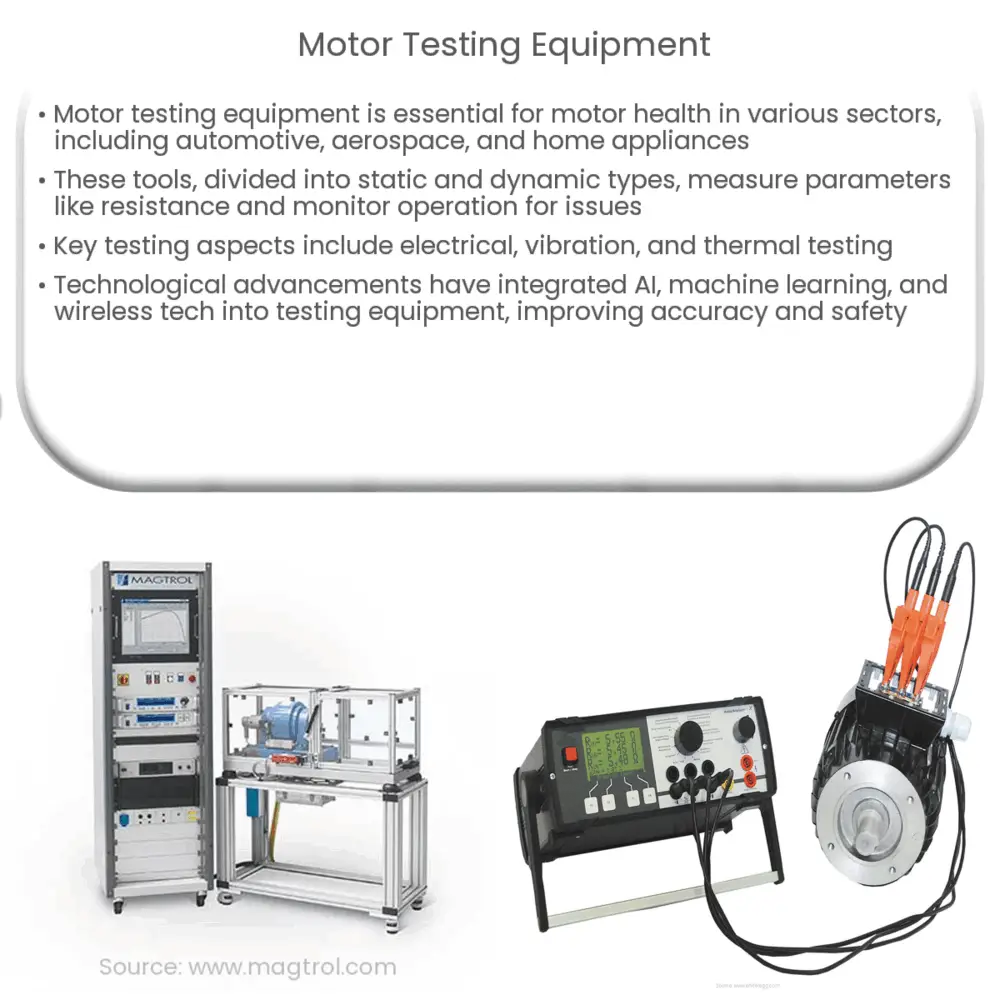
Understanding Motor Testing Equipment
Motor testing equipment is a broad category of tools and machinery designed for the inspection, diagnosis, and performance analysis of motors. These indispensable instruments ensure that motors, integral to countless industries and devices, function efficiently and without disruption.
Motor testing is essential across various sectors, including automotive, industrial machinery, aerospace, and home appliances. It helps identify potential issues before they cause serious malfunctions, ensuring longevity and consistent performance of these motors.
Types of Motor Testing Equipment
Motor testing equipment can be broadly classified into two types: static testing and dynamic testing devices.
- Static Testing Equipment: This type uses simple instruments like multimeters, megohmmeters, or micro-ohmmeters to measure electrical characteristics such as resistance, insulation resistance, and other parameters when the motor is not operating.
- Dynamic Testing Equipment: Dynamic testing equipment evaluates the motor while it is in operation, capturing a variety of measurements. Devices in this category include power quality analyzers, thermographic cameras, vibration analyzers, and more.
Key Aspects of Motor Testing
- Electrical Testing: Using equipment such as multimeters and oscilloscopes, this involves assessing various electrical parameters, including voltage, current, resistance, and insulation resistance, which provide valuable insights into motor health.
- Vibration Testing: This is performed while the motor is running to detect any unusual vibrations, signifying potential issues. Equipment such as vibration meters and analyzers are employed for this purpose.
- Thermal Testing: Excessive heat can signal problems within a motor. Infrared thermography cameras are typically used to visually inspect the thermal behavior of a motor while in operation, thus identifying any abnormal heating patterns.
Motor testing equipment not only ensures efficient performance but also significantly reduces the likelihood of unexpected motor failures. Their wide application across numerous industries is testament to their vital role in maintaining the health and longevity of motors, irrespective of their size or functionality.
Note: Always remember that the precise equipment and tests used may vary depending on the type of motor and the specific requirements of the testing procedure.
Common Brands and Manufacturers
There are numerous manufacturers providing state-of-the-art motor testing equipment. These include companies such as SKF, Fluke, Megger, and Baker Instruments, among others. They offer a wide range of products for both static and dynamic motor testing, enabling users to conduct comprehensive inspections and maintain the optimal performance of their motors.
Latest Advancements in Motor Testing Equipment
Like many sectors, motor testing equipment has also been touched by technological advancements. There’s a rising trend of incorporating intelligent features, wireless technology, and automation into motor testing equipment. AI and machine learning algorithms are increasingly used to automate data analysis, providing more accurate results and insights about potential motor issues.
- Wireless Technology: Modern testing equipment often includes wireless capabilities, enabling technicians to monitor and test motors remotely, thus enhancing the safety and efficiency of the testing process.
- AI and Machine Learning: AI-driven algorithms can analyze vast amounts of testing data, identify patterns, and predict potential motor issues. This feature significantly enhances the diagnostic capabilities of motor testing equipment.
Conclusion
In conclusion, motor testing equipment plays a crucial role in ensuring the proper functioning and longevity of motors across a multitude of sectors. From basic tools like multimeters to advanced AI-enabled analyzers, these devices allow for comprehensive inspection, monitoring, and diagnosis of motors.
With the advent of modern technologies like AI and wireless communication, the future of motor testing equipment looks promising. These advancements aim to provide more accurate diagnostics, enhanced safety, and operational efficiency. Therefore, continued investment in advanced motor testing equipment will not only enhance the quality of motors but also significantly mitigate the risks of unexpected failures.
Remember: Regular motor testing is a proactive measure that helps prevent unexpected breakdowns and promotes efficient motor performance, ultimately resulting in substantial cost savings in the long run.