
A cermet potentiometer is a variable resistor made of ceramic-metal composite, offering low noise, stability, and precision in various electronic applications.
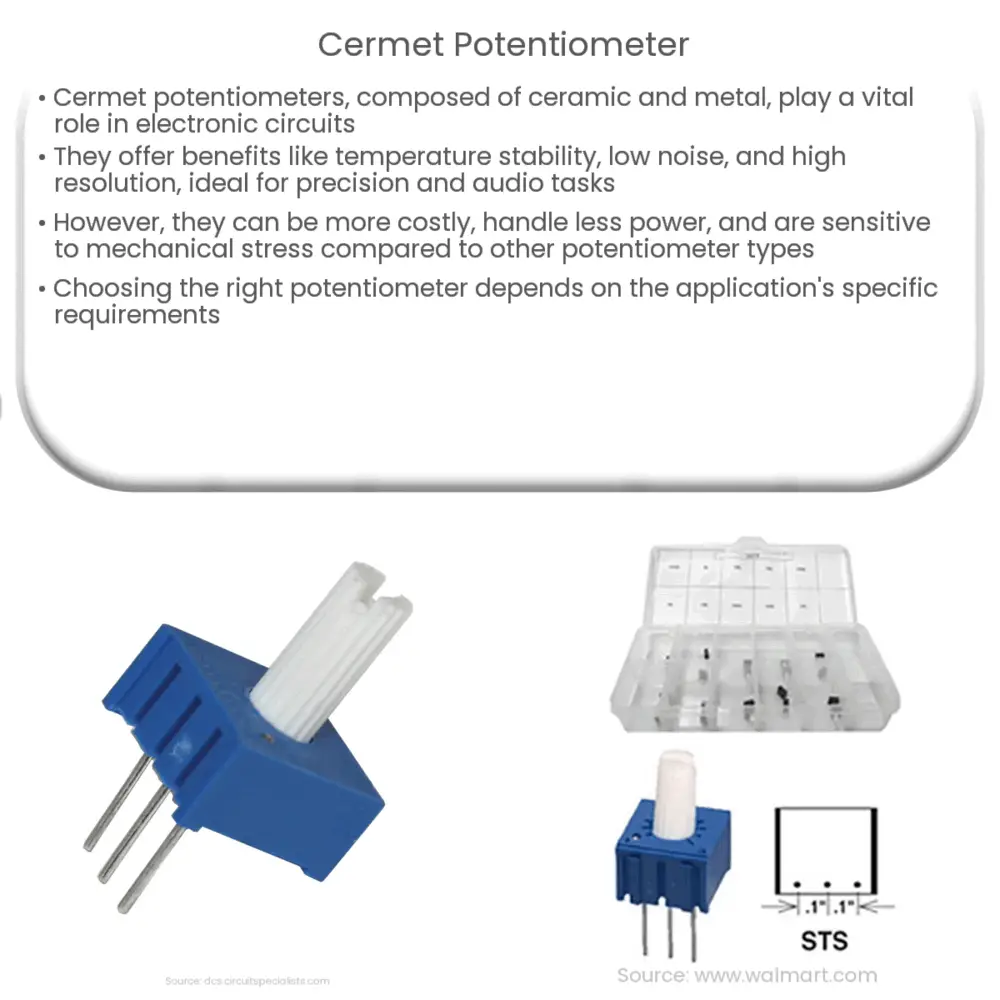
Cermet Potentiometer: A Comprehensive Overview
Introduction
A cermet potentiometer is a type of variable resistor that plays a crucial role in various electronic circuits and devices. The term “cermet” is a combination of the words “ceramic” and “metal,” which signifies the materials used in the construction of these potentiometers. This article provides an in-depth look at cermet potentiometers, their applications, advantages, and how they differ from other types of potentiometers.
Construction and Principle of Operation
A cermet potentiometer is comprised of a resistive element made from a cermet material, which is a composite of ceramic and metallic materials. The cermet material is often a combination of metal particles, such as tungsten or platinum, and ceramic oxides, like alumina or beryllia. This composite material is then deposited onto a substrate, usually made of glass, ceramic, or a similar insulating material.
The resistive element is connected to a pair of fixed terminals, while a third terminal, called the wiper, moves along the resistive track. As the wiper moves, it changes the resistance between the fixed terminals and the wiper, thereby allowing the user to control the output voltage or current in a circuit. The wiper is typically attached to a shaft, which can be rotated manually or adjusted by an automatic control mechanism.
Applications of Cermet Potentiometers
Cermet potentiometers find use in a wide range of applications due to their unique properties and characteristics. Some of these applications include:
- Volume control in audio equipment: Cermet potentiometers are commonly used in audio devices, such as amplifiers and mixers, to control the volume or signal level. Their low-noise performance and smooth operation make them ideal for these applications.
- Control of electrical devices: In industrial and consumer electronic devices, cermet potentiometers are employed to control various parameters, such as temperature, speed, or brightness, by adjusting the output voltage or current.
- Test and measurement equipment: Cermet potentiometers are used in precision instruments, like multimeters and oscilloscopes, to provide accurate and stable voltage or current adjustments.
Advantages of Cermet Potentiometers
Compared to other types of potentiometers, cermet potentiometers offer several advantages, which make them suitable for various applications. Some of these benefits include:
- Stability: The cermet material provides excellent temperature stability and resistance to wear, ensuring consistent performance over time and under varying environmental conditions.
- Low noise: Due to their smooth resistive track and high-quality construction, cermet potentiometers produce minimal electrical noise, making them suitable for audio and precision applications.
- High resolution: The precision manufacturing process of cermet potentiometers allows for a fine resolution, enabling precise control of voltage or current adjustments.
Disadvantages of Cermet Potentiometers
While cermet potentiometers offer numerous benefits, there are a few drawbacks associated with their use, such as:
- Cost: Cermet potentiometers are typically more expensive than other types of potentiometers, like carbon or wire-wound, due to their advanced materials and manufacturing processes.
- Limited power handling: Cermet potentiometers are not well-suited for high-power applications, as they have lower power ratings compared to wire-wound potentiometers.
- Sensitivity to mechanical stress: The cermet material can be sensitive to mechanical stress, which might lead to cracking or other forms of damage, especially when subjected to impact or excessive force.
How Cermet Potentiometers Compare to Other Types
When comparing cermet potentiometers to other types of potentiometers, such as carbon or wire-wound, it’s essential to consider the specific requirements of the application. The following comparisons highlight the key differences between these potentiometers:
- Carbon potentiometers: Carbon potentiometers are generally less expensive than cermet potentiometers and provide reasonable performance for many applications. However, cermet potentiometers offer better temperature stability, lower noise, and higher resolution, making them more suitable for precision or audio applications.
- Wire-wound potentiometers: Wire-wound potentiometers can handle higher power levels compared to cermet potentiometers, and they offer better durability in harsh environments. However, they are not as stable over temperature variations and may produce more electrical noise. Cermet potentiometers are better suited for applications requiring precise control and low noise.
Conclusion
Cermet potentiometers are a versatile and reliable option for many electronic applications, offering excellent temperature stability, low noise, and high resolution. While they may be more expensive and have lower power handling capabilities compared to other potentiometer types, their unique properties make them well-suited for precision control and audio applications. When selecting a potentiometer for a specific use case, it’s crucial to consider the requirements of the application and weigh the advantages and disadvantages of each potentiometer type to find the best solution.



