
What is the role of magnetic fields in the generation and propagation of electromagnetic waves?
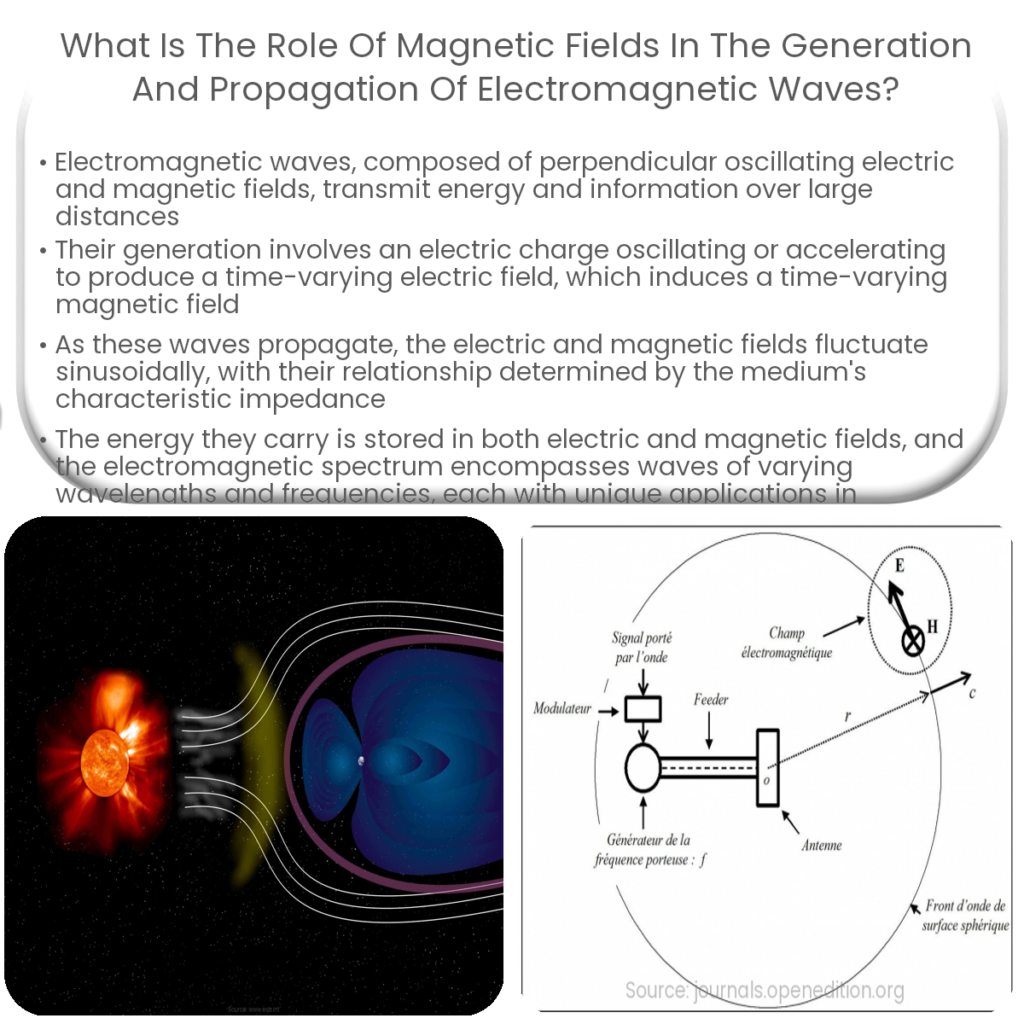
Magnetic fields are crucial for generating and propagating electromagnetic waves, as well as for transferring energy within these waves.
Magnetic fields are crucial for generating and propagating electromagnetic waves, as well as for transferring energy within these waves.

Magnetic fields are crucial in telecommunications for transformers, inductors, and antennas, and in data storage for hard drives, tapes, and magnetic memory.

Magnetic fields are vital in antenna and RF device design, influencing electromagnetic wave propagation, reception, radiation patterns, and signal processing.
MRI uses strong magnetic fields to align hydrogen nuclei in the body, which then emit radio signals to create detailed images of internal structures.
Magnetic fields in MPI excite magnetic nanoparticles, enabling visualization of their distribution for medical imaging applications.

To shield a device from magnetic fields, use high-permeability materials, design effective shields, and apply techniques like distance and orientation.

Magnetic fields are used in MRI, TMS, and magnetic drug targeting for diagnostic imaging, brain stimulation, and targeted drug delivery.

Magnetic fields can affect cellular processes, nervous systems, behavior, growth, development, and overall health in humans, animals, and plants.

Some precautions include maintaining a safe distance, using proper shielding, wearing PPE, removing metallic objects, marking hazardous areas, and training.

Magnetic fields can affect wildlife navigation, potentially impact human health, and cause local disturbances in the Earth’s magnetic field.

The primary purpose of this project is to help the public to learn some exciting and important information about electricity and magnetism.
Our Website follows all legal requirements to protect your privacy. Visit our Privacy Policy page.
The Cookies Statement is part of our Privacy Policy.
The information contained on this website is for general information purposes only. This website does not use any proprietary data. Visit our Editorial note.
It’s simple:
1) You may use almost everything for non-commercial and educational use.
2) You may not distribute or commercially exploit the content, especially on another website.
