
What is the difference between half-wave and full-wave rectification?

Half-wave rectifiers use only one half of the AC waveform, while full-wave rectifiers use both halves, resulting in better efficiency and smoother output.
Half-wave rectifiers use only one half of the AC waveform, while full-wave rectifiers use both halves, resulting in better efficiency and smoother output.
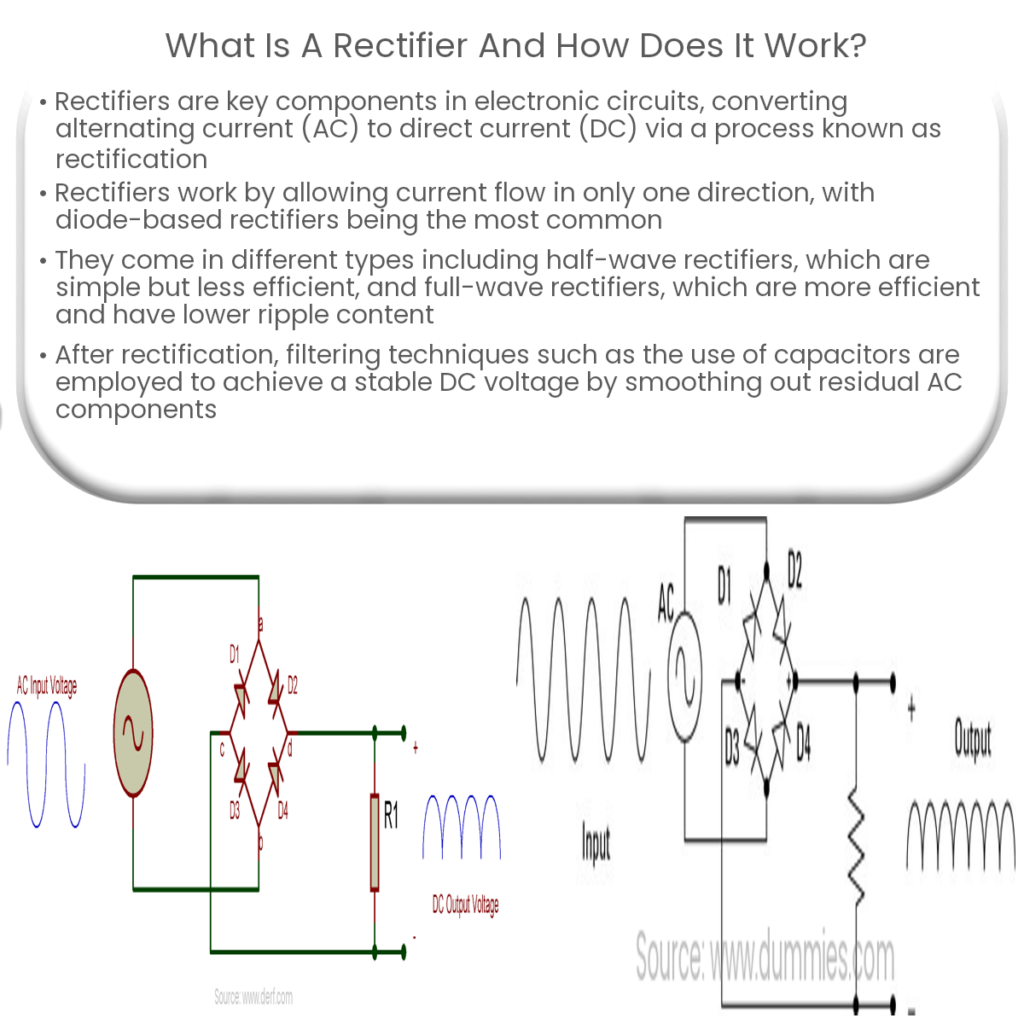
A rectifier is an electronic component that converts alternating current (AC) to direct current (DC) by allowing current to flow in only one direction.

Linear circuits follow linearity principles and are predictable, while nonlinear circuits exhibit complex behavior and don’t follow linearity rules.

DACs and ADCs are used in audio and video processing, communication systems, data acquisition, control systems, and medical devices, enabling signal conversion.
An analog-to-digital converter (ADC) is an electronic device that converts analog signals, such as voltages or currents, into digital form.
A digital-to-analog converter (DAC) is a device that converts digital signals into analog signals for use in various applications like audio systems.
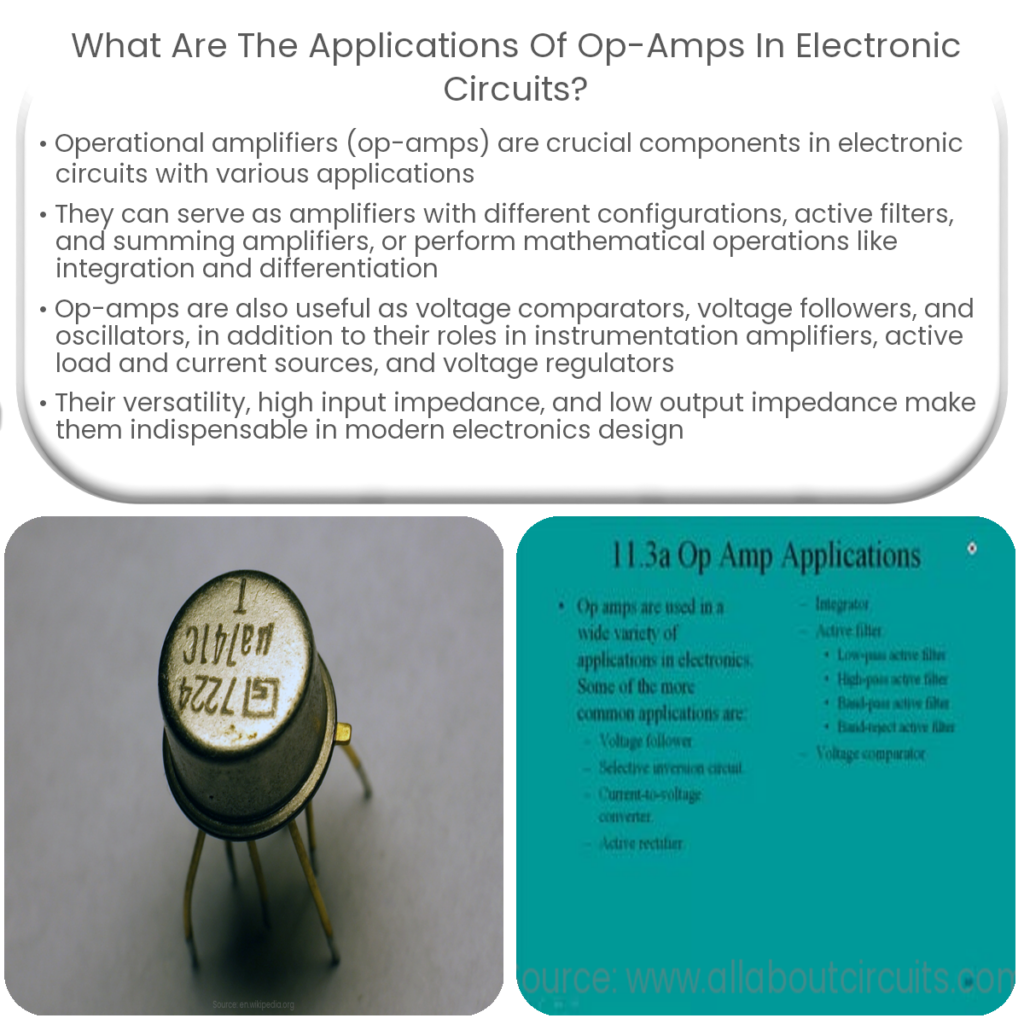
Op-amps are used in amplifiers, filters, summing amplifiers, integrators, differentiators, comparators, voltage followers, oscillators, and voltage regulators.

Basic op-amp configurations include inverting, non-inverting, summing, difference amplifiers, and voltage followers, each serving different purposes.
Operational amplifiers, or op-amps, are high-gain voltage amplifiers used in signal processing, filtering, and as active circuit components.
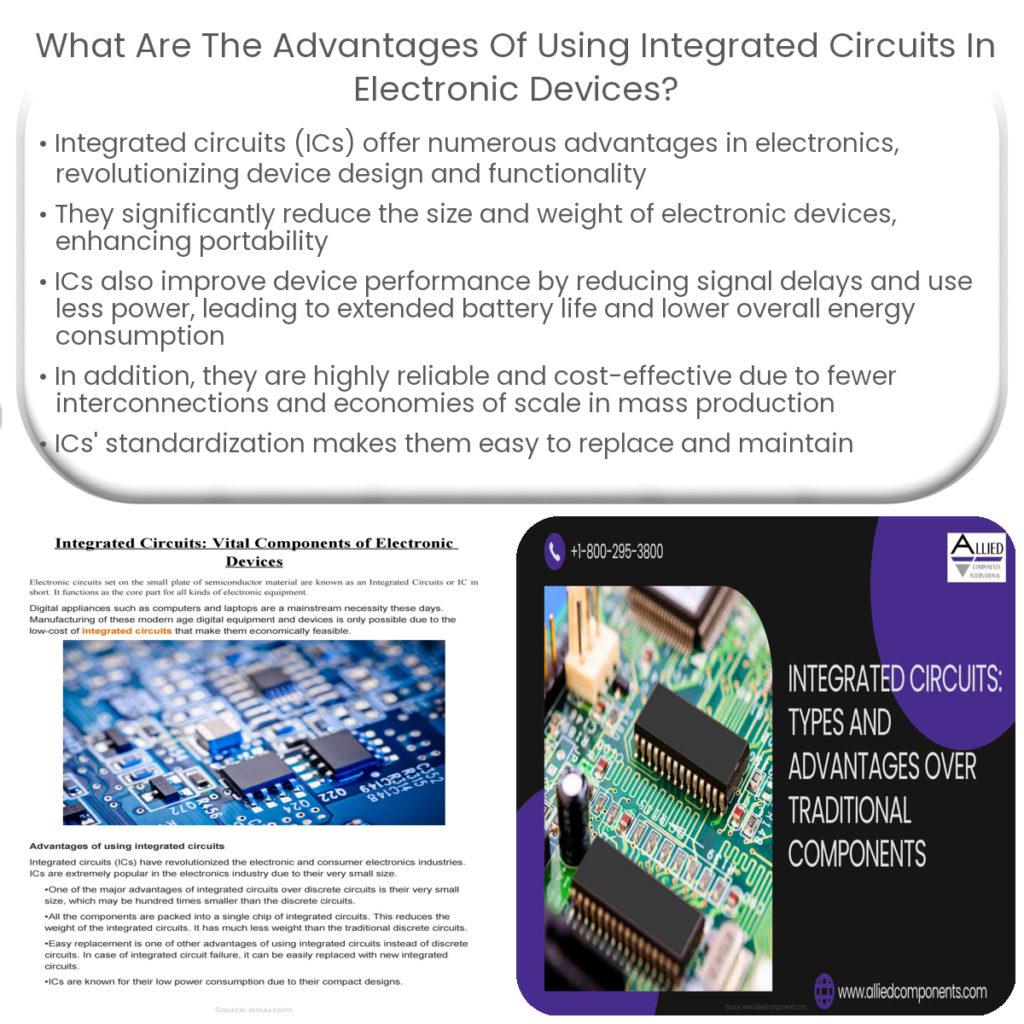
ICs offer size reduction, improved performance, lower power consumption, increased reliability, cost-effectiveness, and easy maintenance in devices.

The primary purpose of this project is to help the public to learn some exciting and important information about electricity and magnetism.
Our Website follows all legal requirements to protect your privacy. Visit our Privacy Policy page.
The Cookies Statement is part of our Privacy Policy.
The information contained on this website is for general information purposes only. This website does not use any proprietary data. Visit our Editorial note.
It’s simple:
1) You may use almost everything for non-commercial and educational use.
2) You may not distribute or commercially exploit the content, especially on another website.


