
What is magnetic levitation and how does it work?
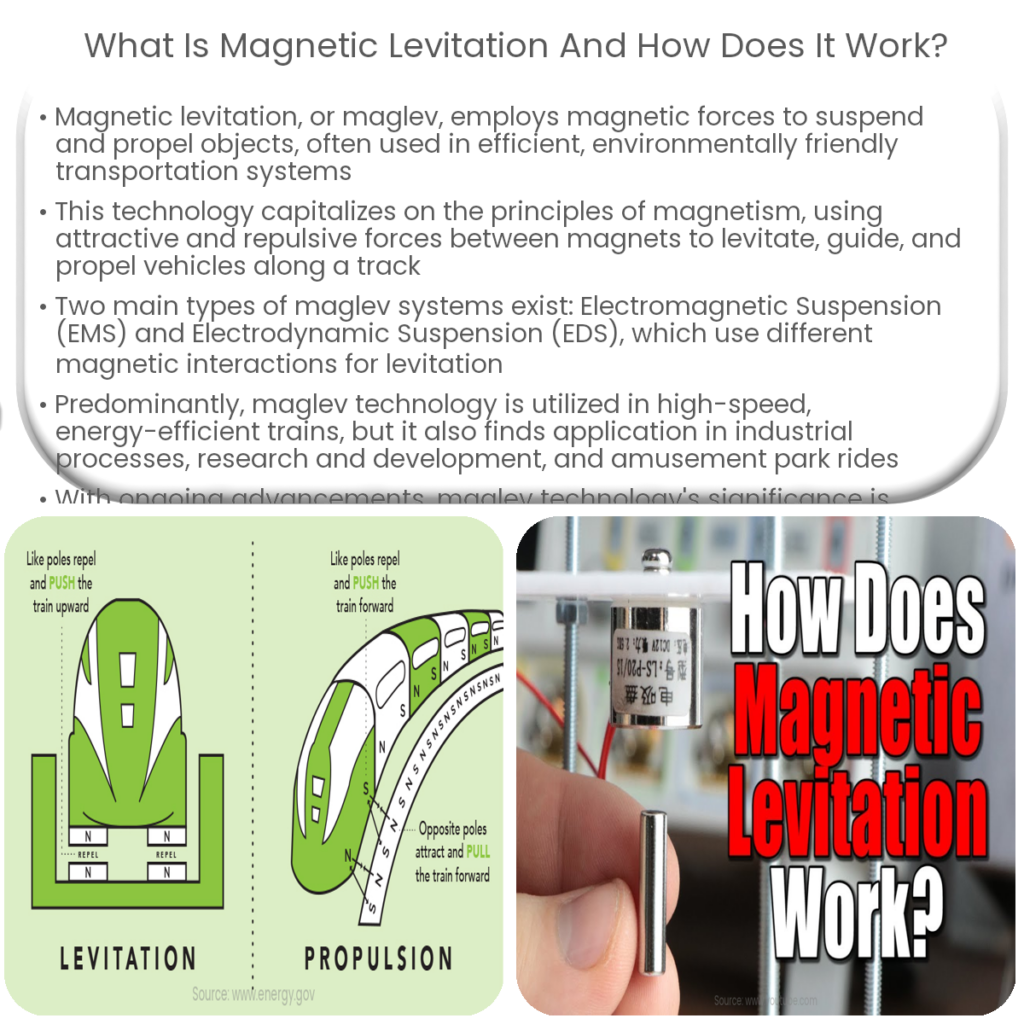
Magnetic levitation, or maglev, uses magnetic forces to suspend, guide, and propel objects, often in transportation systems like high-speed trains.
Magnetic levitation, or maglev, uses magnetic forces to suspend, guide, and propel objects, often in transportation systems like high-speed trains.

Superconductors are used in maglev transportation, MRI machines, energy storage and transmission, particle accelerators, fusion power, and research.
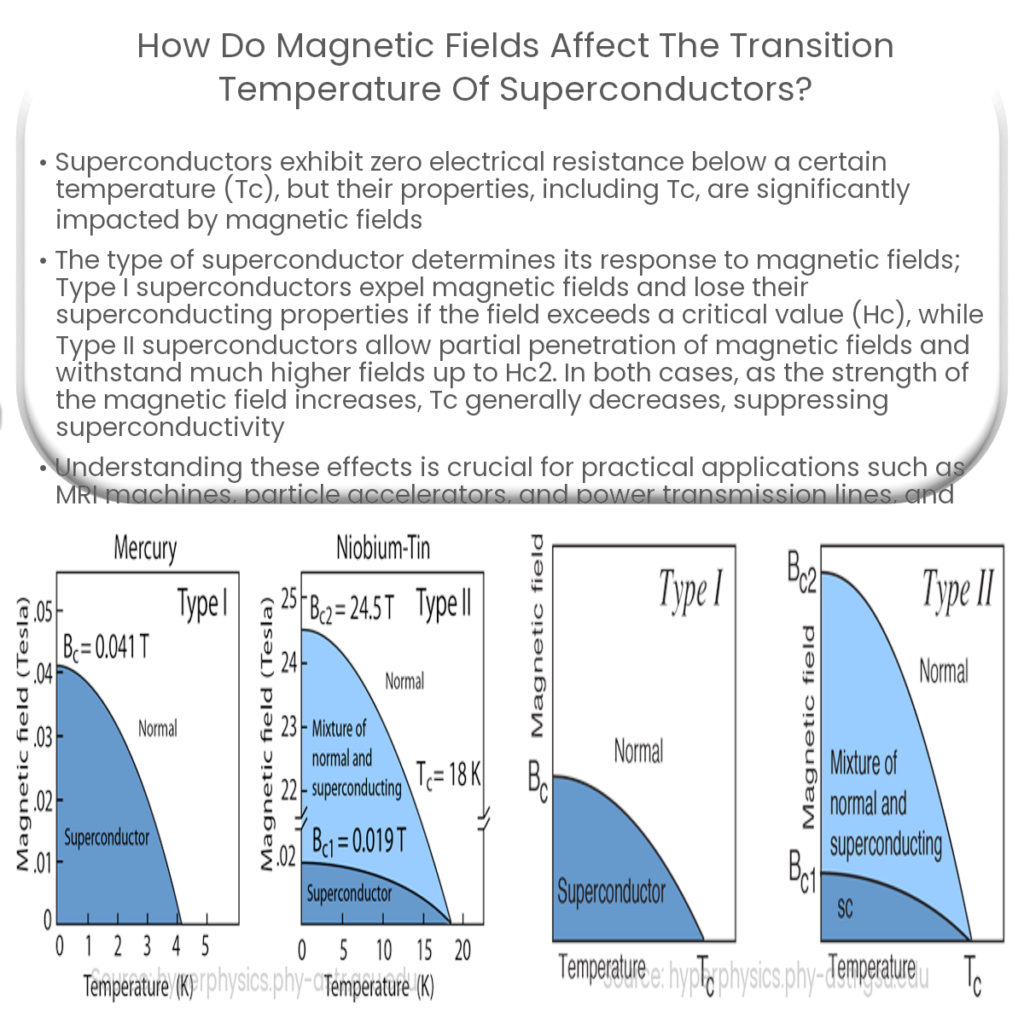
Magnetic fields can suppress superconductivity, causing a decrease in the transition temperature of superconductors as the field strength increases.
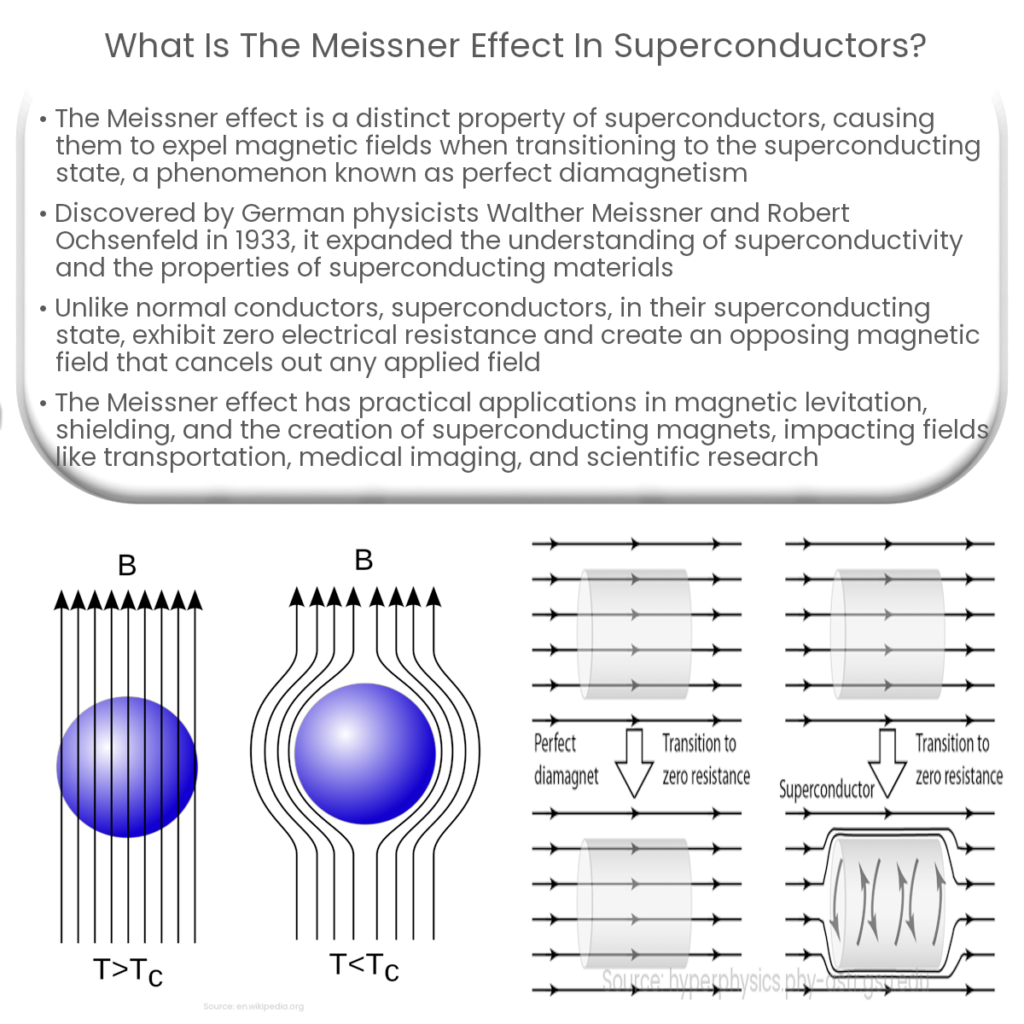
The Meissner effect is the expulsion of magnetic fields from a superconductor when it transitions to a superconducting state, exhibiting perfect diamagnetism.

Magnetic fields affect superconductors by either enhancing or hindering their properties, impacting performance and energy dissipation in applications.
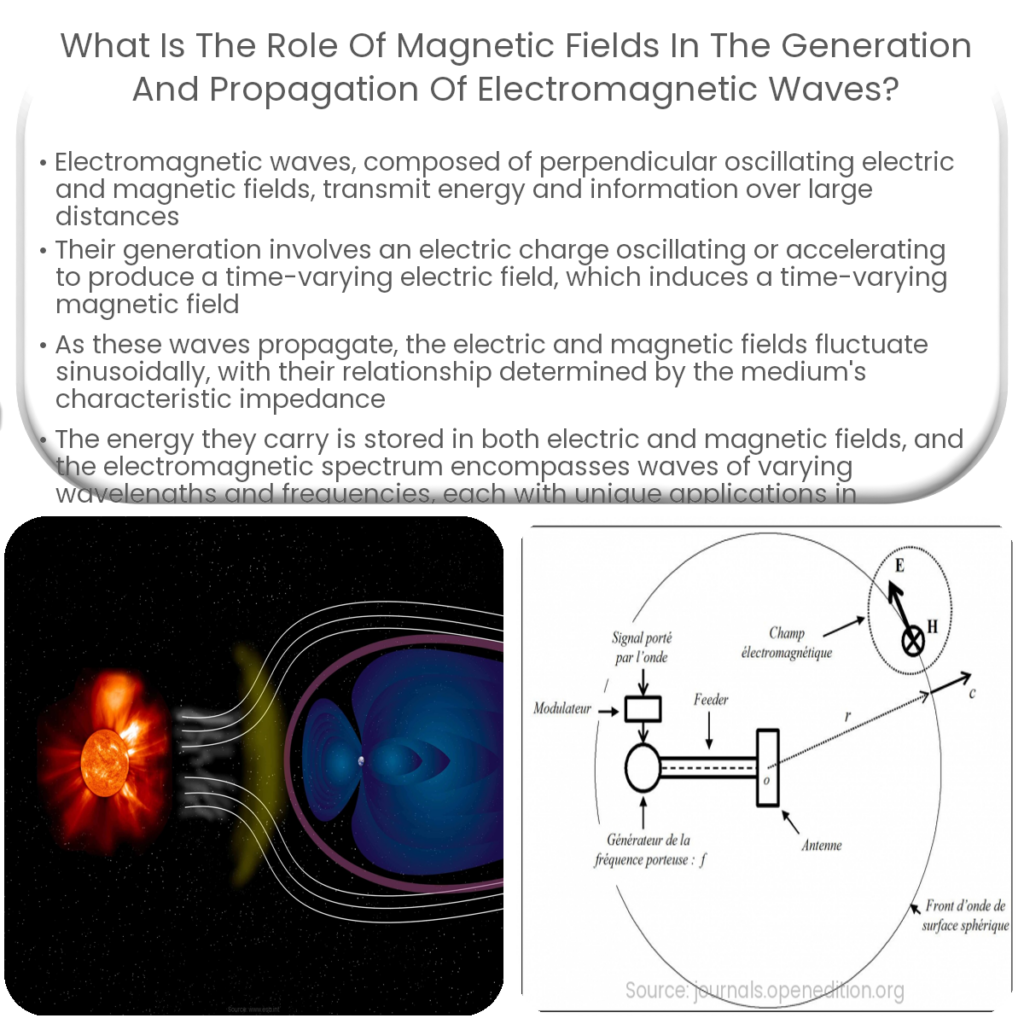
Magnetic fields are crucial for generating and propagating electromagnetic waves, as well as for transferring energy within these waves.
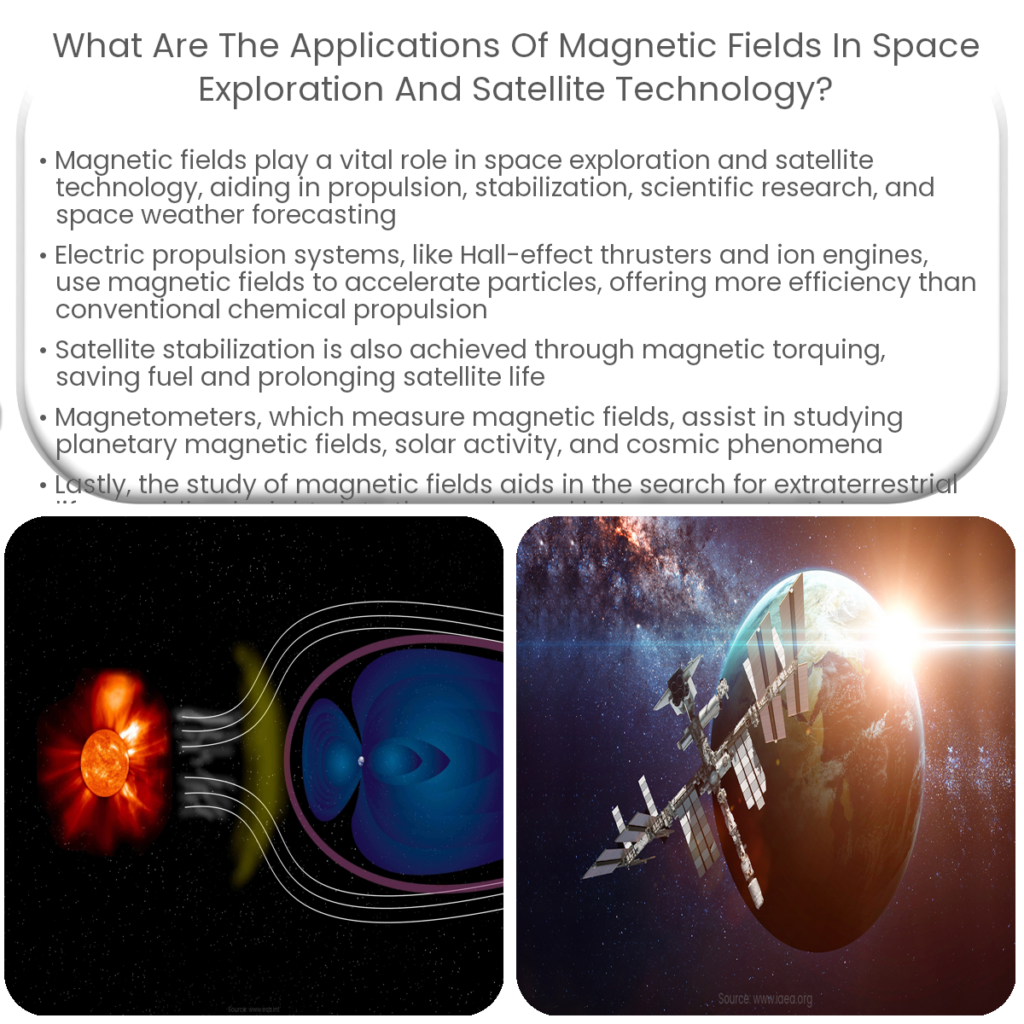
Magnetic fields are used in satellite propulsion, stabilization, space research, space weather forecasting, spacecraft navigation, and planetary studies.

Magnetic fields are vital in antenna and RF device design, influencing electromagnetic wave propagation, reception, radiation patterns, and signal processing.

Magnetic fields are crucial in telecommunications for transformers, inductors, and antennas, and in data storage for hard drives, tapes, and magnetic memory.
Magnetic fields in MPI excite magnetic nanoparticles, enabling visualization of their distribution for medical imaging applications.

The primary purpose of this project is to help the public to learn some exciting and important information about electricity and magnetism.
Our Website follows all legal requirements to protect your privacy. Visit our Privacy Policy page.
The Cookies Statement is part of our Privacy Policy.
The information contained on this website is for general information purposes only. This website does not use any proprietary data. Visit our Editorial note.
It’s simple:
1) You may use almost everything for non-commercial and educational use.
2) You may not distribute or commercially exploit the content, especially on another website.


