
Benchtop impedance analyzer
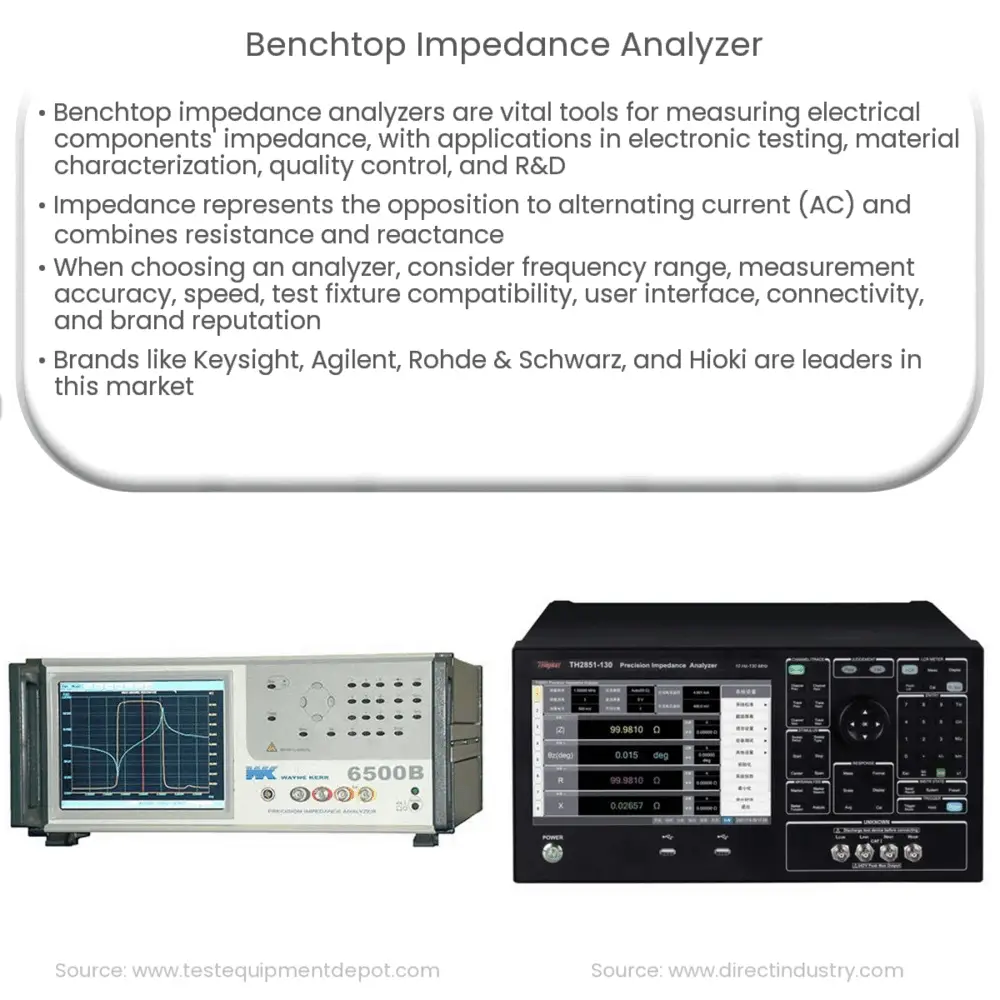
Benchtop impedance analyzers accurately measure electrical components’ impedance, aiding in testing, R&D, and quality control across various industries.
Benchtop impedance analyzers accurately measure electrical components’ impedance, aiding in testing, R&D, and quality control across various industries.

Explore the significance of handheld impedance analyzers in various sectors, their key features, and future prospects in our comprehensive guide.

Explore the swinging choke’s working principle, applications, technical aspects, and limitations in electronics and electrical engineering.

A filter choke is an electronic component that blocks high-frequency AC noise while allowing DC to pass through, ensuring signal integrity in circuits.

Explore fixed choke shotguns, their advantages and disadvantages, common types, and tips for selecting and maintaining the ideal shotgun for your needs.

Adjustable chokes control fluid flow in various industries, offering flexibility, efficiency, and safety in numerous applications.

A radial lead choke is an electronic component used for filtering and energy storage, featuring a coil wound around a magnetic core in various circuits.

Axial lead chokes are compact, cost-effective inductors used in electronic circuits for AC suppression, EMI reduction, and signal filtering.

Explore the role, functionality, and types of feedhorns in communication systems, their manufacturing process, and modern applications.

An SMD choke is a compact, surface-mount inductor used for filtering high-frequency signals, reducing noise, and regulating electrical signals in modern electronics.

The primary purpose of this project is to help the public to learn some exciting and important information about electricity and magnetism.
Our Website follows all legal requirements to protect your privacy. Visit our Privacy Policy page.
The Cookies Statement is part of our Privacy Policy.
The information contained on this website is for general information purposes only. This website does not use any proprietary data. Visit our Editorial note.
It’s simple:
1) You may use almost everything for non-commercial and educational use.
2) You may not distribute or commercially exploit the content, especially on another website.


