
Explore the world of motor starters, their types, components, applications, and importance in protecting and controlling electric motors.
Introduction to Motor Starters
Motor starters are fundamentally essential devices in electrical engineering, playing a crucial role in the control of electric motors. Before we dive into the intricacies, it’s crucial to understand the basics of their function and importance.
What is a Motor Starter?
A motor starter is a device or group of devices that assist in the startup of an electric motor, providing protection against inrush currents and excessive load. Without a motor starter, the sudden surge of current during startup can potentially damage the motor, leading to significant operational and financial implications.
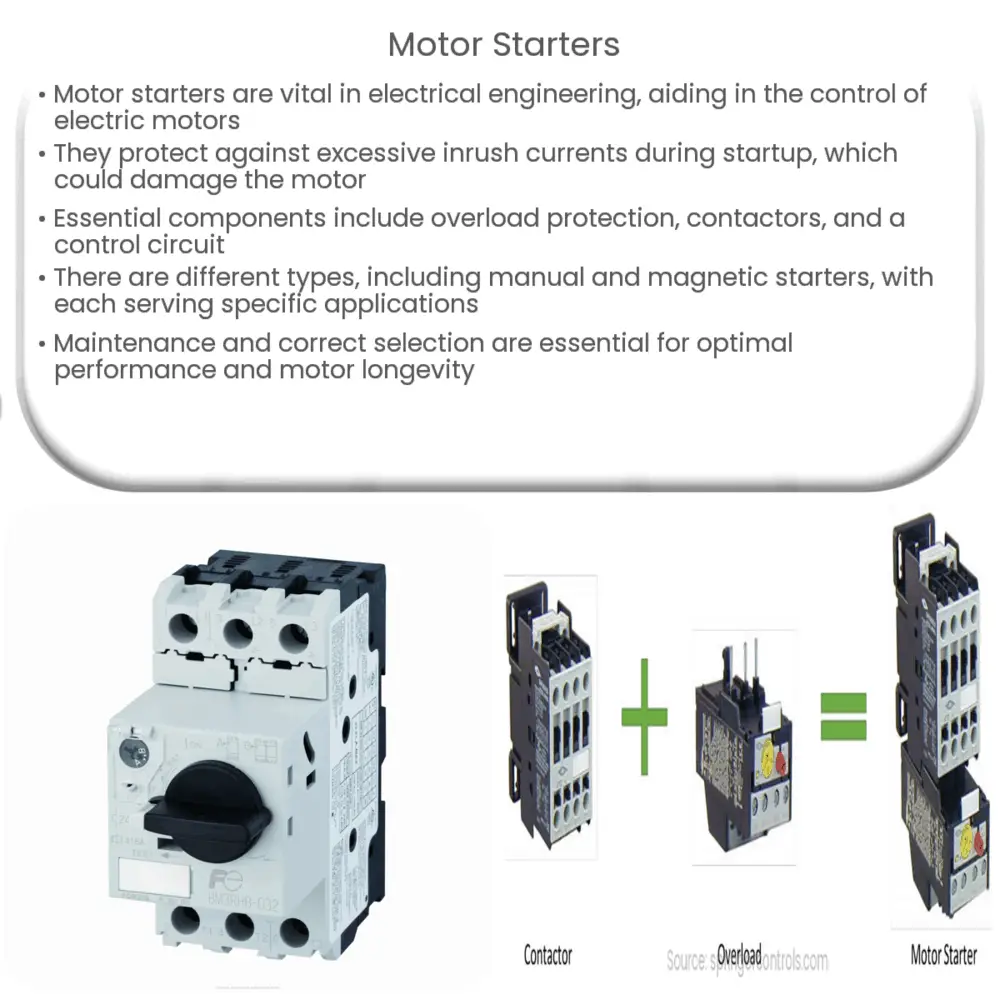
Components of a Motor Starter
- Overload Protection: This component is designed to protect the motor from consuming excessive current which can result in overheating and subsequent failure. Overload protection can be thermal or electronic, each type with its own unique features.
- Contactors: Contactors serve the purpose of connecting or disconnecting the power to the motor. They act like a switch, but are designed to handle large currents that a typical switch cannot.
- Control Circuit: This is the brain of the motor starter, controlling the contactor’s operations. The control circuit uses lower voltage signals to control the high voltage current feeding the motor.
Types of Motor Starters
Motor starters are classified based on their construction, functionality, and mode of operation. The two primary types are:
- Manual Motor Starters: These starters require an operator to manually initiate the start or stop operation of the motor. They are often used in simple motor applications where automated control isn’t necessary.
- Magnetic Motor Starters: As opposed to manual motor starters, magnetic motor starters use a magnet to create a magnetic field that controls the operation of the motor. They are more sophisticated and include features like overload protection and stop/start control.
Benefits of Using a Motor Starter
Motor starters bring substantial advantages to the table. From safeguarding the motor to ensuring the smooth operation of industrial processes, these devices are indispensable.
Understanding Motor Starter Operations
A motor starter operates in a straightforward manner. When the start button on the motor starter is pressed, a small current passes through the starter coil which creates a magnetic field. This magnetic field, in turn, closes the contactor, allowing the high voltage current to flow to the motor and initiate its operation. When the stop button is pressed, the magnetic field collapses, the contactor opens, and the motor comes to a stop.
Motor Starters in Industrial Applications
Motor starters are widely used in numerous industrial applications where electric motors are a critical part of the operation. This includes industries like manufacturing, chemical processing, oil and gas, mining, and more. They’re used in applications like conveyors, pumps, fans, and many other types of machinery where controlled motor operation is crucial.
Maintenance of Motor Starters
Like any other electronic equipment, motor starters also require routine maintenance to ensure efficient performance and longevity. Regular checks for any signs of wear and tear, routine cleaning, and periodical replacement of parts like contactors and overload relays can significantly enhance the life and performance of the motor starter.
Selecting the Right Motor Starter
Selecting the right motor starter for your application can be critical to the efficiency and longevity of your motor. Considerations such as the size and type of the motor, application requirements, environmental conditions, and safety regulations are essential factors in selecting the right motor starter.
Conclusion
In conclusion, motor starters are an essential component of any electric motor operation, providing the necessary protection and control required for smooth and efficient operation. From controlling inrush currents at startup to providing crucial overload protection, motor starters serve multiple vital roles. As the world becomes more and more reliant on machines and automation, the importance of devices like motor starters is only set to increase. Understanding their functionality, maintenance, and selection can greatly benefit anyone involved in the design, operation, or maintenance of electric motors.