
Explore the workings, types, benefits, and applications of magnetic lifters, their maintenance needs, and factors to consider when choosing one.
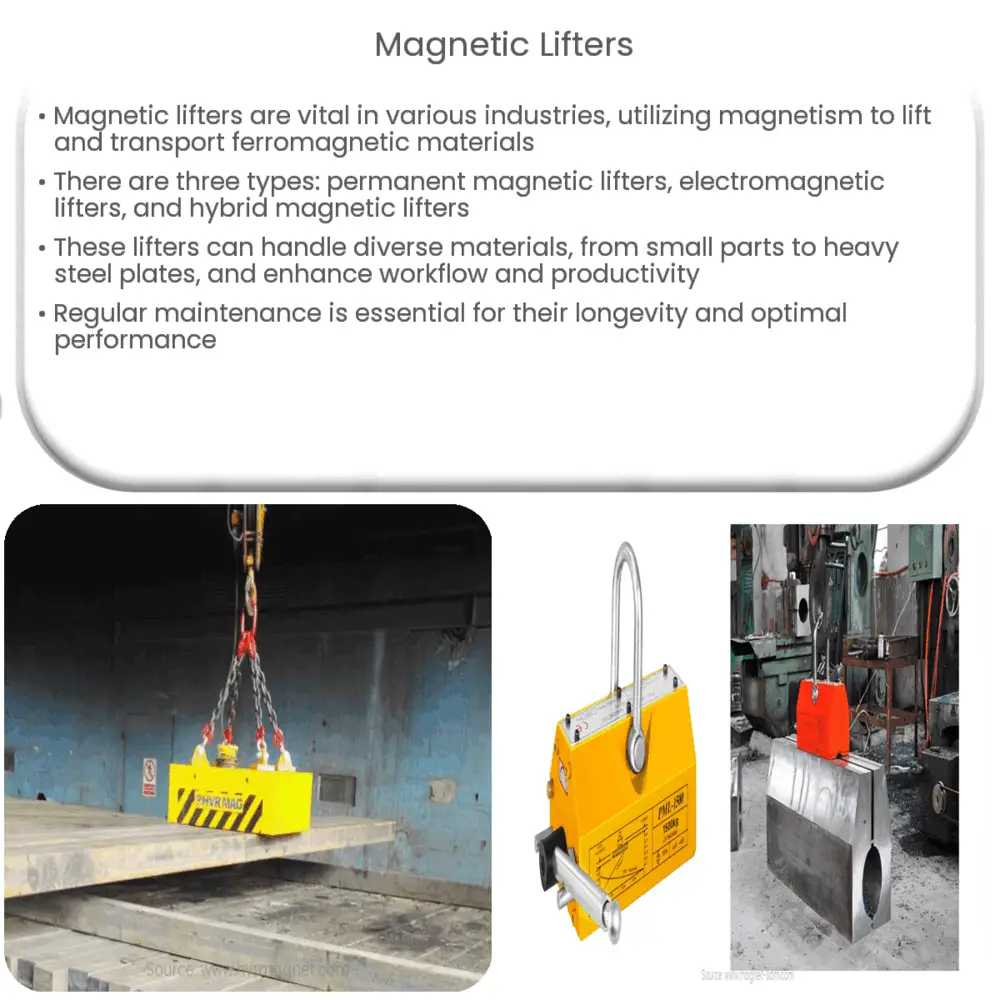
Magnetic Lifters: An Essential Component in Industrial Applications
Magnetic lifters, a type of material handling equipment, have become increasingly important in various industrial environments. These devices employ the power of magnetism to lift and transport ferromagnetic materials safely and efficiently, providing both practicality and convenience.
The core working principle behind magnetic lifters lies in their ferromagnetic core. When the lifter is engaged, a strong magnetic field is generated, enabling the device to hold onto the object. The magnetic field is then disengaged when the object needs to be released, offering precise control over the lifting and moving processes.
Types of Magnetic Lifters
- Permanent Magnetic Lifters: These lifters use permanent magnets to create a powerful magnetic field. They are highly energy-efficient as they do not require any electrical power to maintain their magnetic field. Once activated, they will hold the load securely until manually disengaged.
- Electromagnetic Lifters: These types of lifters employ electromagnets, which are magnets whose magnetic field can be turned on and off by supplying or disconnecting an electric current. This gives them an advantage of precise control over the lifting and releasing processes, but at the expense of constant power supply.
- Hybrid Magnetic Lifters: Combining the best of both worlds, hybrid lifters use a combination of permanent magnets and electromagnets. They provide the energy efficiency of permanent magnets while also offering the control advantages of electromagnets.
Benefits of Magnetic Lifters
One of the key advantages of magnetic lifters is their ability to handle a variety of materials. They can lift anything from small metal parts to heavy steel plates or even round or cylindrical objects, making them versatile in many industrial settings.
Their non-contact lifting method also reduces the chance of damaging the material, as opposed to traditional methods like slings or chains which can scratch or deform the surface. This non-contact approach also contributes to safety, reducing the risk of accidents caused by manual handling.
Another significant benefit of magnetic lifters is their efficiency. They enable quick and easy lifting of objects, which can significantly improve workflow and productivity in industrial operations.
Applications of Magnetic Lifters
Magnetic lifters find use in a wide range of industries due to their versatility and efficiency. Here are a few key applications:
- Manufacturing: In manufacturing industries, these lifters are used to handle heavy machinery parts, thereby simplifying the process of assembly and disassembly.
- Construction: They are extensively used in the construction industry to lift and move heavy steel structures, iron bars, and other ferromagnetic materials.
- Scrap Handling: In scrap yards and recycling centers, magnetic lifters help in handling and sorting various types of ferrous scrap.
- Shipbuilding: The shipbuilding industry uses magnetic lifters to handle large, heavy metal plates and sections during the construction of ships.
Maintenance of Magnetic Lifters
Despite their robust design, magnetic lifters require regular maintenance to ensure their longevity and optimal performance. Some key maintenance tasks include regular cleaning to remove any debris that might affect the magnetic field, routine inspection for signs of wear and tear, and proper storage when not in use to protect the lifter from damage.
Considerations When Choosing a Magnetic Lifter
When choosing a magnetic lifter, several factors should be taken into account. These include the type and weight of the materials to be lifted, the lifter’s lifting capacity, the available power supply (for electromagnetic lifters), and the overall safety features of the device. Additionally, it’s essential to consider whether the lifter has a manual or automatic release mechanism, which affects its ease of use and control precision.
Conclusion
In conclusion, magnetic lifters have proven to be invaluable tools in various industries, providing a reliable and efficient method of handling ferrous materials. Their versatility, coupled with the ability to improve safety and efficiency, has made them an essential component of modern industrial operations. While choosing the right magnetic lifter requires careful consideration of several factors, the benefits they offer are undoubtedly worth the investment.